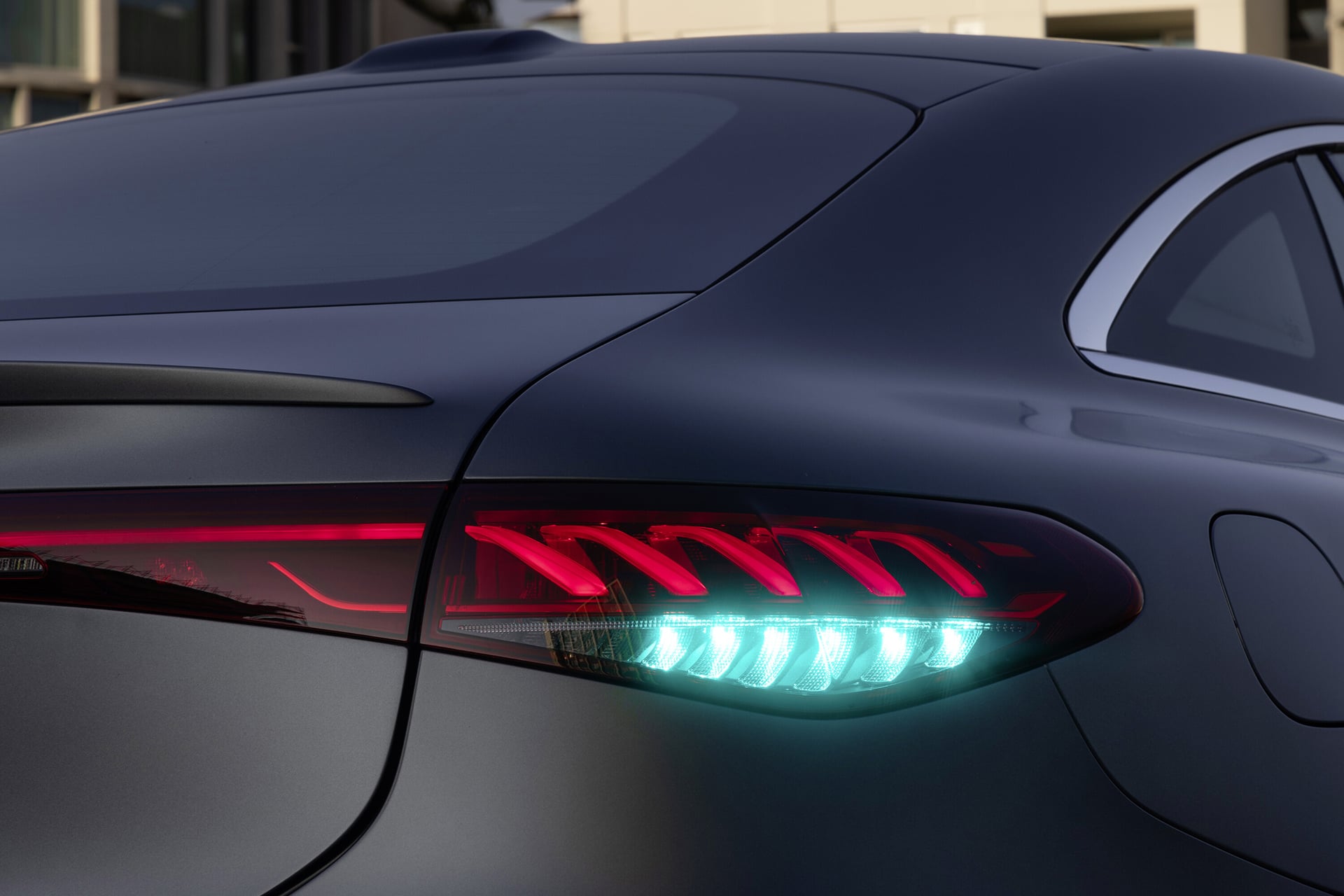
China has decided to ‘turn off’ the blue lights that signal when advanced driver assistance systems (ADAS) are in operation. According to an investigation by Chinese specialized vehicles, the Ministry of Industry and Information Technology (MIIT) determined that passenger cars no longer receive these external indicators for not complying with the national standard for vehicle lighting GB4785. The restriction applies to models approved from July 27.
The move was made public by a screenshot of a ministry statement released by industry blogger Sun Shaojun and later checked by industry sources with the Yicai newspaper. There has been, so far, no formal publication of the text. Changan has attested to the authenticity of the guidance, and Geely has stated that it will strictly comply with national rules pending supplementary requirements.
A color off the list
The regulatory conflict is old. The mandatory GB4785-2019 limits the colors of vehicle exterior lighting to white, red, yellow and amber. Blue and green are not on the list, which has kept these lights in a gray zone since they became popular. The expectation of the sector is that the national committee for automotive standardization will publish complementary requirements to the standard to close the gap.
There is also a curious detail in the chronology. A draft put out for public consultation in 2021 even proposed the mandatory use of blue-green lights in vehicles with level 3 autonomy or higher. The provision was not included in the final version of the rule, which was completed in 2025.
Photo: Sohu | Reproduction
From Li Auto L9 to 2.5 million cars
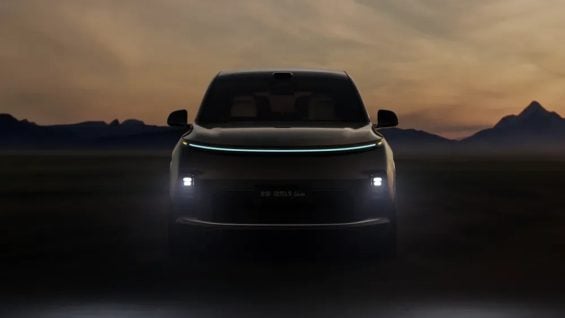
The trend began in August 2022, with the launch of the Li Auto L9 SUV and its five blue indicators. Aito, Xpeng, Nio, Xiaomi, and Geely adopted the feature next. On Li Auto’s 2026 models, the lights have been integrated into the front LED strip called the “Star Ring”, which changes color when assisted driving is activated. A survey by the consultancy DVN points to 755 thousand vehicles equipped with the system in China by September 2025, with a projection of 2.5 million in 2026 alone.
Critics maintain that blue distracts other drivers at night, can be confused with the arrows and ends up serving as a shield of responsibility, encouraging those behind the wheel to rely too much on the system. Defenders argue that the signage warns other road users that the car is under assisted driving. The Chinese regulator cites the risk of light pollution and accidents.
For cars already sold, the MIIT is still studying how to proceed, and there is no ban in force. Experts heard by the Chinese press assess that manufacturers may resort to remote updates (over-the-air) to change the color or disable the function. The most direct impact falls on the LED supply chain, which has invested in components and production lines specific to the resource.
Comments are the sole responsibility of their authors and do not represent the opinion of this site. Comments containing profanity or offensive language will not be published. If you identify anything that violates the terms of use, please report it.