

China is over-manufacturing electric cars and will ‘spawn’ them in the rest of the world
Weaker domestic demand and cut in incentives push manufacturers out; exports should reach 10 million units in the year
By
Júlia Haddad
Published on 2026-07-07 at 07:00 PM
Published on 2026-07-07 at 07:00 PM
Be the first to comment.
Summarize with:
The slowdown in the electrified market in China has led the country’s automakers to accelerate the offensive abroad. Still the world’s largest market for electric cars, China sees sales slip below last year’s peak, pressured by reduced government incentives and weaker domestic demand.
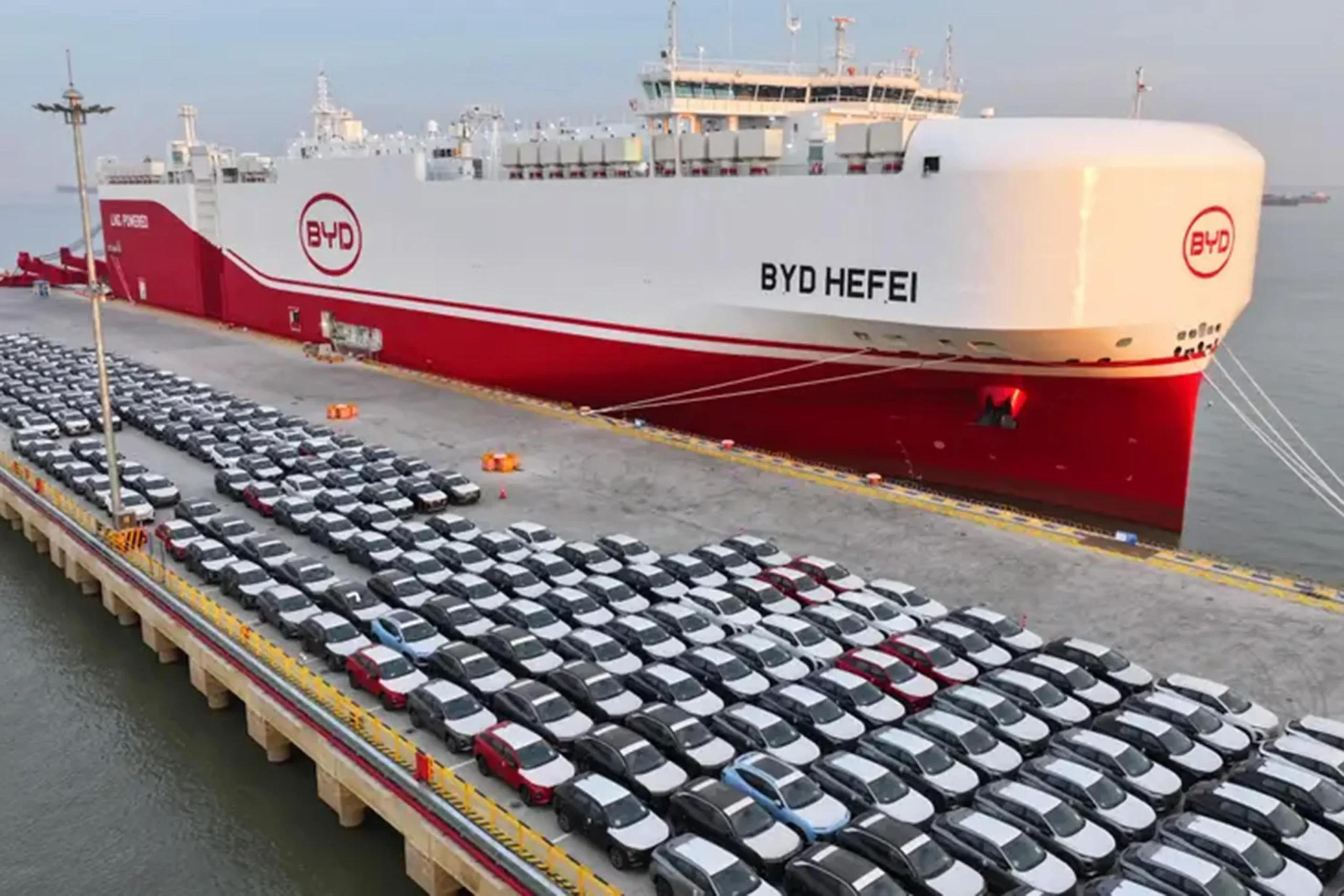
The movement is big: Chinese brands are expected to end 2026 with about 10 million vehicles exported, a jump of 41% compared to 2025, when they shipped 7.1 million units, according to a projection by consulting firm AlixPartners. Sales abroad have become the main lever of scale in the face of the brake on domestic consumption, and have helped the country maintain the global leadership in exports achieved last year, when it overtook Japan. Chery leads the line among the local ones, with 1.34 million units shipped in 2025.
In the domestic market, the numbers continue to fall. Data from the China Passenger Vehicle Association show that 1.04 million battery electric and plug-in hybrids were registered in June, a decrease of 7% compared to the same month in 2025. In the first half of the year, sales totaled 4.73 million units, a decrease of 13% on an annual basis.
Several factors explain the performance. The Chinese economy is still recovering at a slow pace, part of the consumers postpone buying in anticipation of new price cuts, and state support for so-called new energy vehicles (NEVs) has been dwindling every year.
This year, Beijing began to gradually withdraw the sales tax exemption granted to manufacturers. In addition, it confirmed that annual tax benefits for battery electrics, plug-in hybrids, models with range extender and fuel cell commercial vehicles will be reduced from January 1, 2027. The rebate, however, is modest: today it ranges from 360 to 660 yuan ($53 to $97) a year.
With increasingly narrow margins, profitability remains restricted to a few. Currently, only three Chinese automakers operate profitably in the electric segment. According to AlixPartners, at most four others are expected to break even by 2030, while smaller manufacturers tend to be acquired by larger rivals or leave the market.
The external bet, however, is not without risks. Higher tariffs in Europe and North America make Chinese cars more expensive, squeeze margins and make long-term planning difficult — just when brands rely most on out-of-home sales.
SEE MORE ABOUT

0 Comments
Comments are the sole responsibility of their authors and do not represent the opinion of this site. Comments containing profanity or offensive language will not be published. If you identify anything that violates the terms of use, please report it.