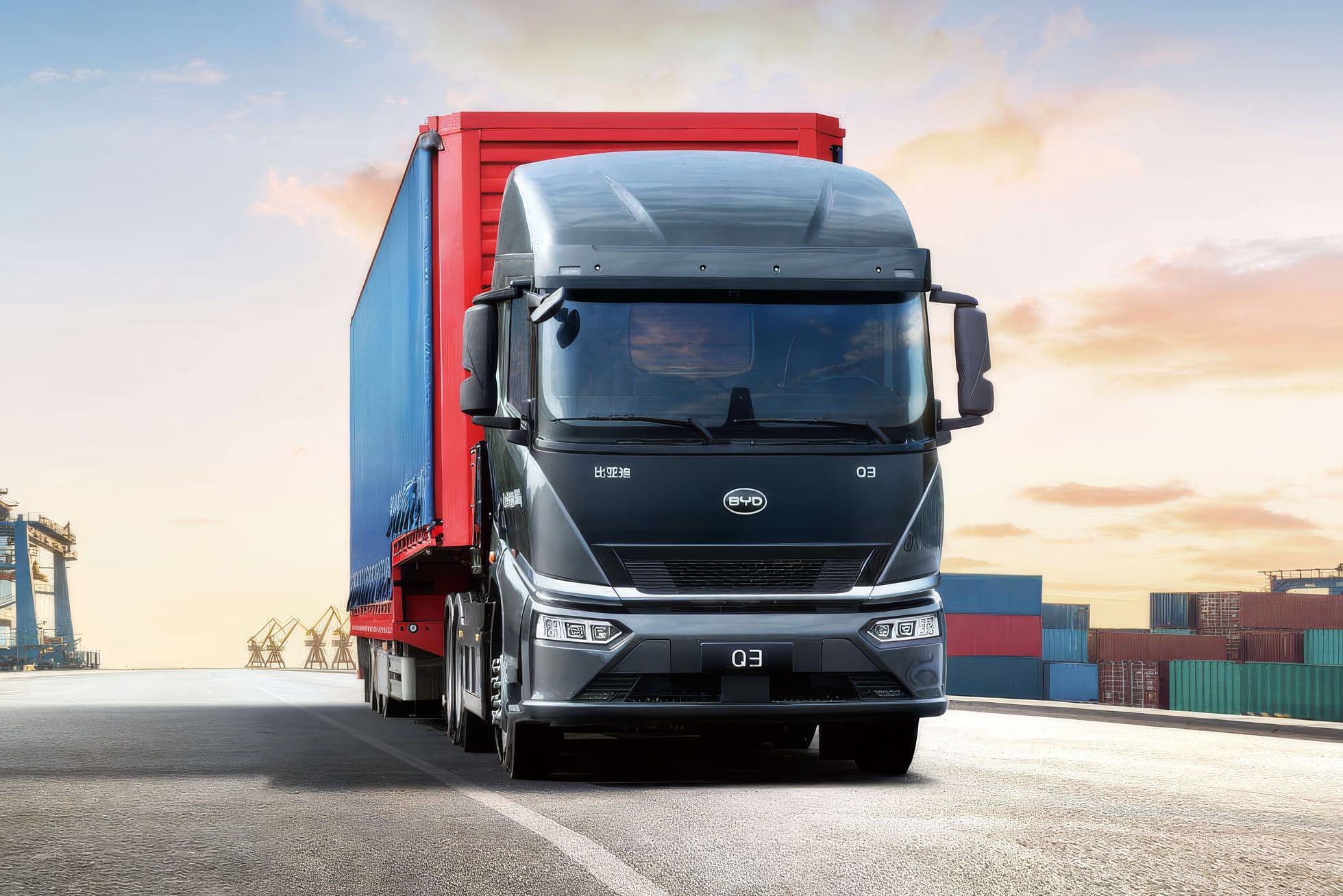
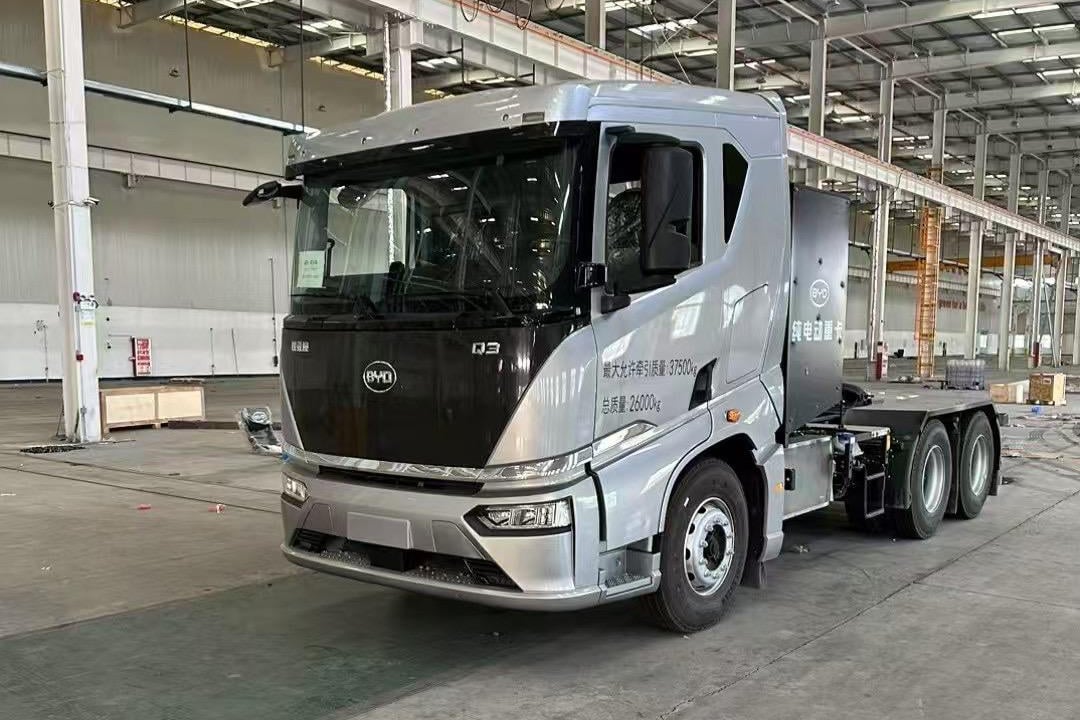
BYD is preparing its entry into the Brazilian heavy-duty truck market with a 60-ton Gross Total Weight (GVW) electric tractor. The model will be imported and will start with port operations and short routes, according to the Modern Transport Agency.
The vehicle may be the main novelty of the Chinese automaker at Fenatran 2026, in November, in São Paulo, but its presence at the fair is not confirmed. Bruno Paiva, BYD’s director of truck and bus chassis sales, told the publication that, if the schedule does not close, the launch will be done in another way later this year.
The announcement advances on the tests revealed by Transporte Moderno in April, when BYD was evaluating ten 6×2 electric tractors in Bahia. The reason is the size of the market. “Almost half of the market is heavy vehicles. If you want to be in the truck market, you need to be in the heavy vehicle market,” Paiva said. The brand arrived at trucks in Brazil for light and medium vehicles, with T35, T75, T18 and T23.
Ports and short routes before long distances
Photo: BYD | Reproduction
BYD does not intend to immediately put the heavy truck in mining and agribusiness. The bet is to start with predictable routes, such as routes between the region of São Paulo and the ports with return to origin, in which the company knows the distance and stopping points and can install chargers — an operation that Paiva calls tailor-made, or tailor-made. The logic is to circumvent the main bottleneck of heavy vehicle electrification: instead of depending on the public grid, the automaker controls recharging.
Blade battery and recharge up to 360 kW
The technical bet is the Blade battery, made of lithium iron phosphate (LFP), already used in the brand’s electric buses in the country. With cells in an elongated format, it makes better use of the space in the package and, according to BYD, offers greater energy density – which weighs in a 60-ton vehicle, where each kilogram of battery competes with the paid charge. “With less battery we have more energy capacity,” said the executive. The company claims to work with recharging of up to 360 kW, against 180 kW that Paiva attributes to some competitors.
Nationalization will depend on demand and is a key part of credit: lines such as Finame, from BNDES, require local content, and Paiva cites 60% as a reference. The Manaus battery factory is being adapted for the Blade and will be able to supply the trucks. “The heart will be Brazilian,” he said.
Comments are the sole responsibility of their authors and do not represent the opinion of this site. Comments containing profanity or offensive language will not be published. If you identify anything that violates the terms of use, please report it.