

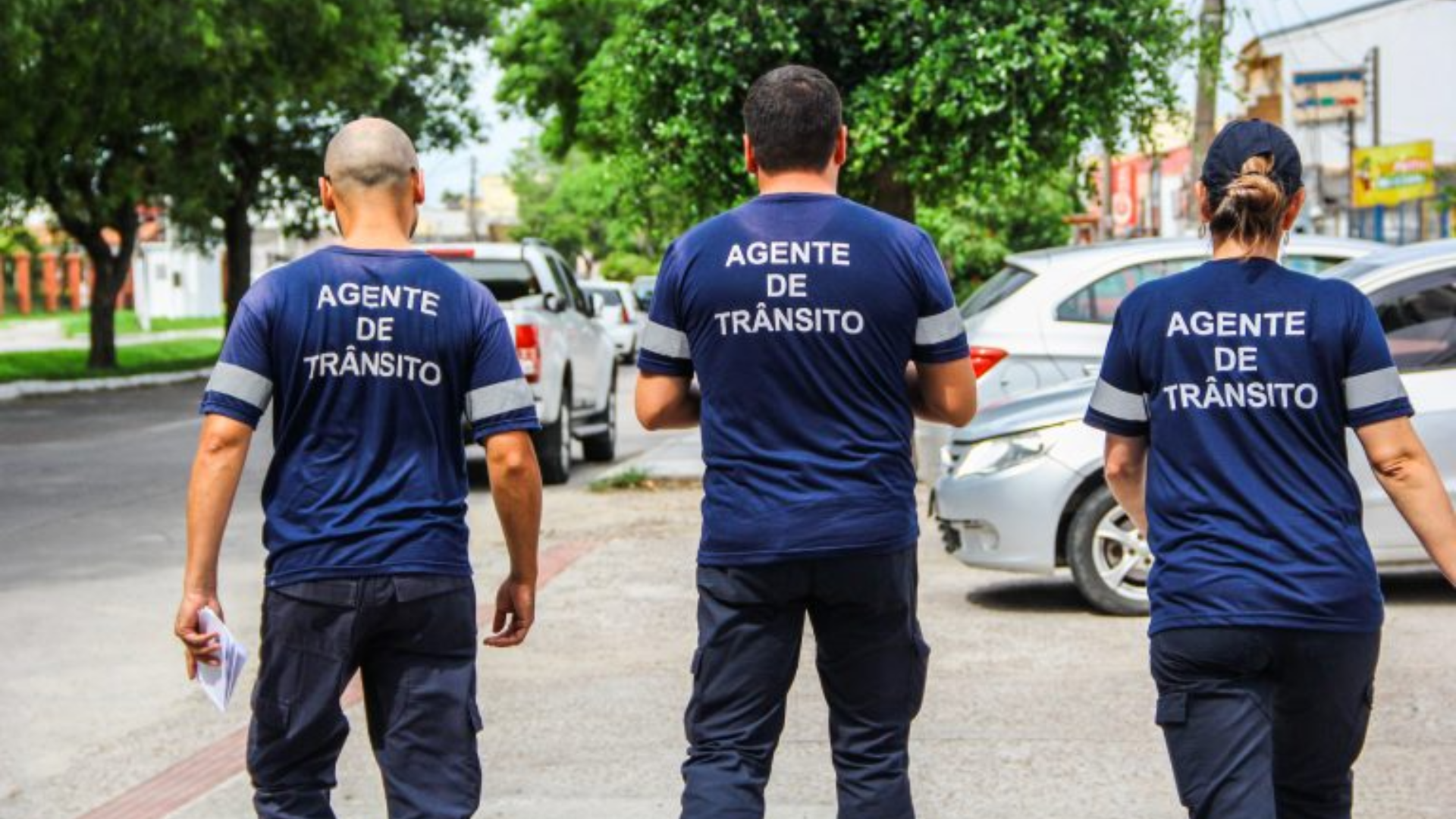
Bill allows traffic agents to carry firearms
The proposal establishes career guidelines and restricts the use of weapons to professionals in external and ostensive activities
By
Julia Vargas
Published on 2026-04-29 at 07:00 PM
Updated on 2026-04-29 at 07:25 PM
Published on 2026-04-29 at 07:00 PM
Updated on 2026-04-29 at 07:25 PM
Be the first to comment.
Summarize with:
The Public Safety Commission (CSP) of the Federal Senate has given the green light for changes in road inspection in Brazil. This Tuesday (28), the collegiate approved Bill 2.160/2023, which establishes the General Law of Traffic Agents. The text, authored by Deputy Nicoletti (PL-RR) and with rapporteurship by Senator Efraim Filho (União Brasil), seeks to standardize the career at the national level and brings, as a central point of debate, the authorization for the carrying of firearms by the category.
With the approval in the CSP, the project now goes to the Constitution and Justice Commission (CCJ), before being able to be sanctioned by the president or eventual return to the Chamber, if it undergoes substantial changes.
SEE ALSO:
- Have you been in a traffic accident? Check out what to do
- Chamber of Deputies wants plaques to have city and state again
- Who can apply traffic fines? Meet the agents and when to file an appeal
Criteria and restrictions for the carrying of weapons by traffic agents
Unlike previous more comprehensive proposals, the text approved in the committee brings an amendment by the rapporteur that limits the right to weapons. The carrying of firearms will be restricted exclusively to traffic agents who perform external and ostensive activities, such as policing, inspection on public roads and road patrolling.
To ensure the legal and technical certainty of the measure, the authorization will not be automatic. The text provides for three requirements:
- Specific training in police schools;
- Existence of internal inspection and control mechanisms (internal affairs/ombudsman offices);
- Alignment with the guidelines of the Disarmament Statute.
According to Senator Efraim Filho, the limitation is necessary to “reconcile the appreciation of the public servant with the restrictive nature of gun control in the country”, focusing on the protection of the agent who is exposed to direct risk on the streets.
What else does the new General Law of Traffic Agents provide?
In addition to the war issue, PL 2.160/2023 works as a regulatory framework for the category. If approved, traffic agents will be officially recognized as public servants with a typical State career.
This change directly impacts the structure of municipal and state traffic agencies, defining clear functions that range from traffic education and statistical data collection to the effective exercise of administrative police power. The project also highlights that the new rules do not conflict with the competencies already established for the Municipal Guards.
New requirements for entry into the career
The project also aims to raise the level of professionalization of the sector by establishing national minimum requirements for new public tenders. Among the requirements listed in the text, the following stand out:
- Education: Complete higher education;
- Qualification: CNH or Driving Permit (category B or higher);
- Training: Specific training course with a curriculum defined by Contran;
- Profile: Physical, mental and psychological aptitude, as well as proven moral suitability.
The proposal also recognizes that the activity carried out by these professionals is of permanent risk, which may set precedents for future discussions on social security benefits and hazard pay.
Next steps in the process
If the CCJ approves the text without modifications, it may go directly to the sanction of the President of the Republic. If there are changes in the merits, the matter returns for analysis by the federal deputies.
SEE MORE ABOUT

0 Comments
Comments are the sole responsibility of their authors and do not represent the opinion of this site. Comments containing profanity or offensive language will not be published. If you identify anything that violates the terms of use, please report it.