


Apps promise rides with female drivers, but they are only 10.6% of those who drive
Uber Mulher's national expansion bumps into a professional base that shrank for the second year in a row, shows survey with rides from 2024 to 2026
By
Júlia Haddad
Published on 2026-09-17 at 11:00 AM
Published on 2026-09-17 at 11:00 AM
Be the first to comment.
Summarize with:
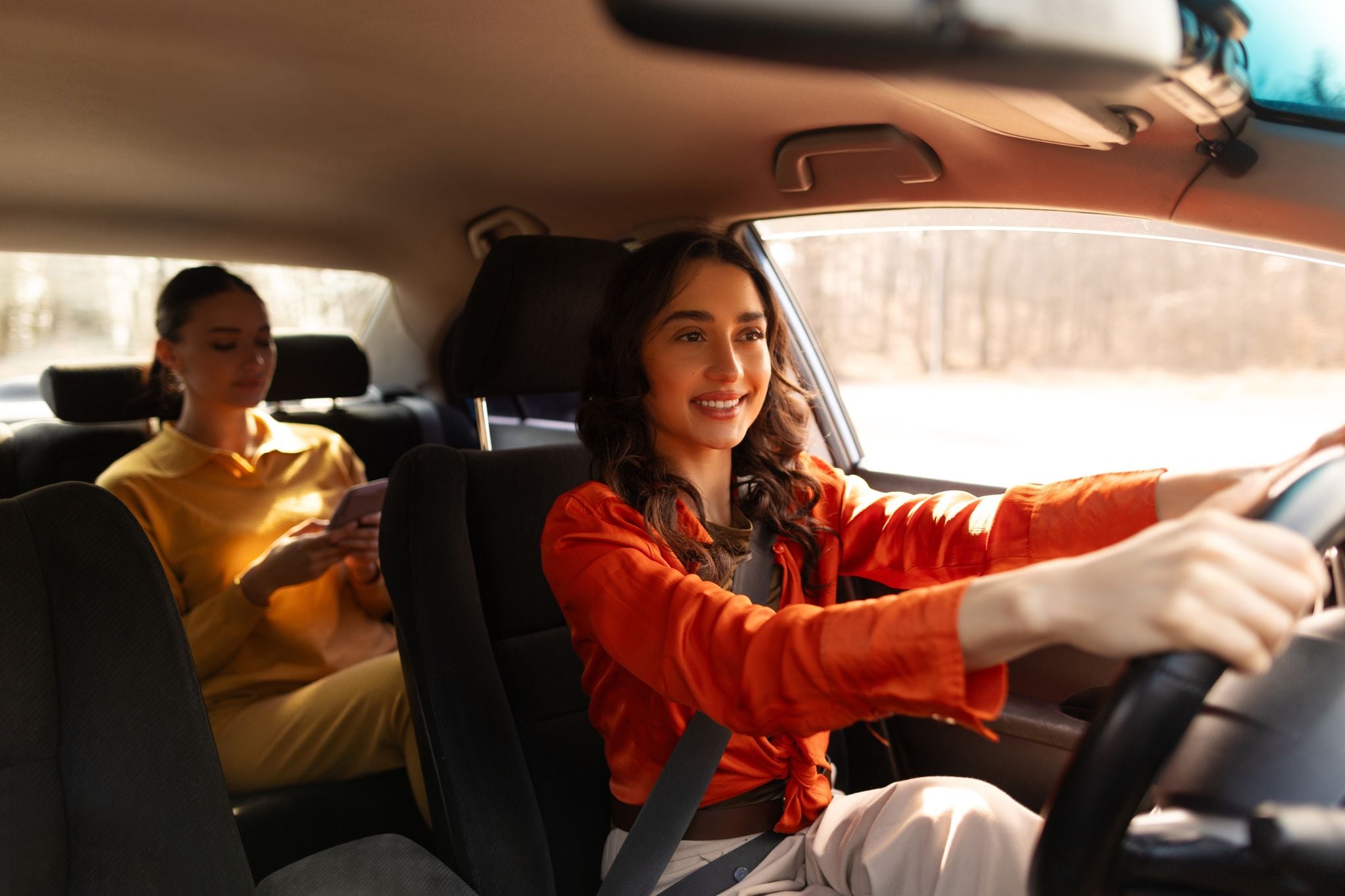
Women represent 10.61% of ride-hailing drivers in Brazil, and the share has been shrinking just as platforms expand services aimed at passengers. The data are from a survey by Machine, a technology company that provides systems for mobility and delivery operators, based on rides and deliveries recorded in 2024, 2025 and 2026.
The index went from 11.53% in 2024 to 11.21% in 2025 and reached 10.61% this year. The drop is small, but it occurs on a base that was already low: just over one in ten people behind the wheel is a woman. In delivery, female participation followed a similar trajectory, rising from 5.55% to 5.85% between 2024 and 2025 and falling to 5.76% in 2026. In practice, less than one in 17 delivery women by app is a woman.
Demand on one side, supply on the other
The numbers give the dimension of the challenge faced by the modalities that allow passengers to prioritize female drivers. The topic returned to the debate with the national expansion of Uber Mulher, a feature previously tested in some capitals that increases the chances of the ride being attended by a female driver.
99 and BlaBlaCar also offer tools aimed at women’s safety, such as driver identification, real-time trip sharing, and reporting channels. There is even potential demand among users, but the number of professionals available to serve it remains small. Without expanding the female presence at the other end of the operation, a filter or an exclusive category has a restricted scope.
A structural
ceiling For Júlia Camossa, the statistician responsible for Data Machine, the data do not indicate a gradual expansion of the female presence, but a kind of structural ceiling, in which annual variations do not change the composition of the market.
According to her, the obstacle is not only in entering the activity, but in factors such as permanence, working conditions, occupational risk and the organization of the work itself, which weigh unequally on women.
The background helps explain why security is no longer a differential and has started to influence the choice of the platform: Brazil recorded 1,470 femicides in 2025, according to the Ministry of Justice and Public Security.
This year’s survey by the Sustainable Cities Institute also points out that seven out of ten women living in large capitals say they have already suffered some type of harassment. Transportation by app does not explain these numbers, but it is one of the everyday spaces in which the perception of vulnerability appears – both for those who travel in the back seat and for those who work behind the wheel.
SEE MORE ABOUT

0 Comments
Comments are the sole responsibility of their authors and do not represent the opinion of this site. Comments containing profanity or offensive language will not be published. If you identify anything that violates the terms of use, please report it.