


Anchieta-Imigrantes System will have free flow toll from August 1st
Fare of R$ 40.60 will be divided into two charges of R$ 20.30, one on the way up and one on the way down the mountain; understand Siga Fácil
By
Júlia Haddad
Published on 2026-07-16 at 02:00 PM
Published on 2026-07-16 at 02:00 PM
Be the first to comment.
Summarize with:
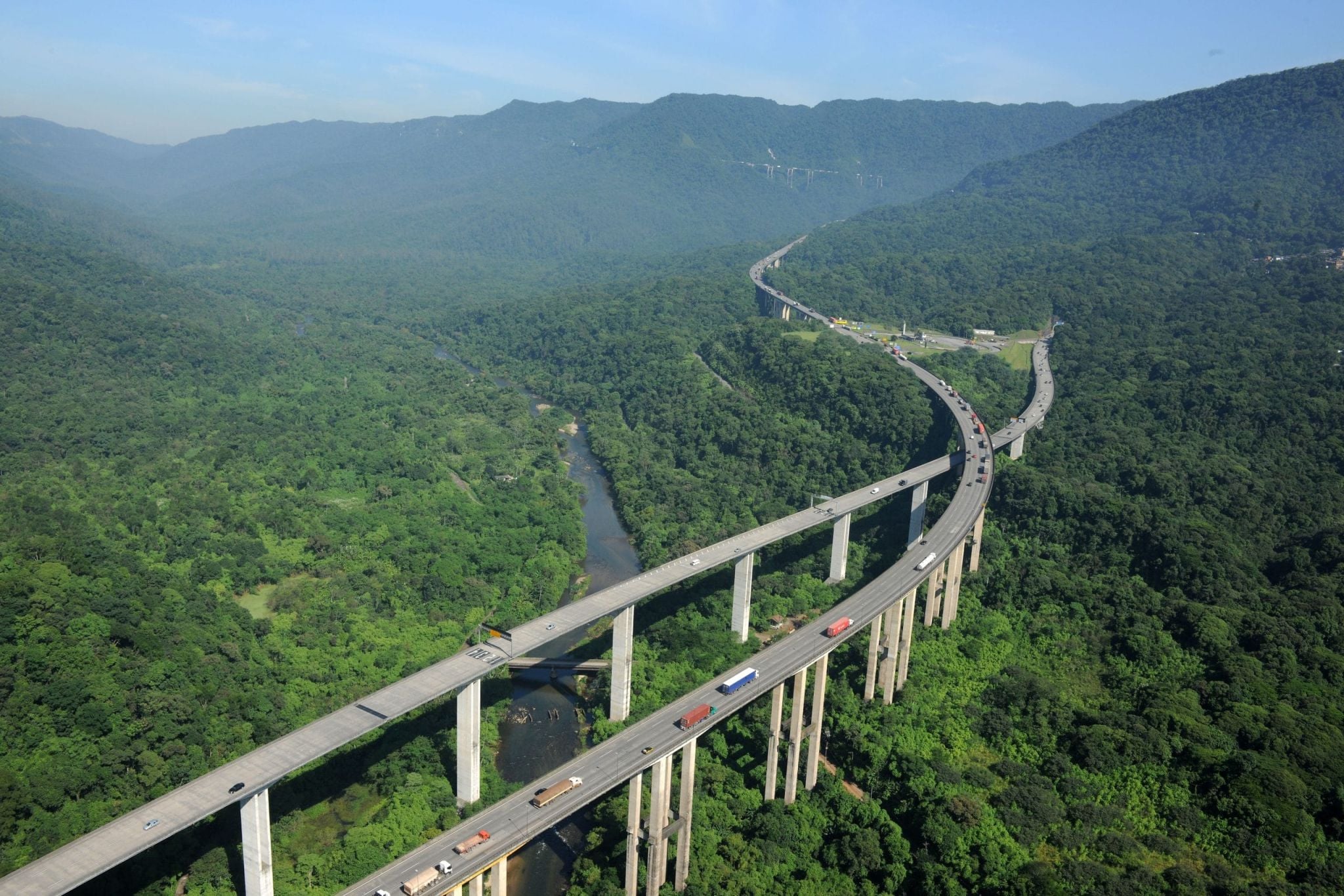
The Anchieta-Imigrantes System will operate with electronic tolls in the free flow model as of August 1st. Approved by Artesp (São Paulo State Transportation Agency), the Siga Fácil system, from the concessionaire Ecovias Imigrantes, will replace the traditional toll plazas with automatic vehicle identification gantries, eliminating the need to stop for payment on the two highways that connect the capital of São Paulo and the ABC to Baixada Santista.
Where about 110 thousand vehicles pass per day, the new model promises greater traffic fluidity. With the change, the charge will no longer occur only in the coastal direction and will be made in both directions of the trip: the current fare of R$ 40.60 will be divided into two charges of R$ 20.30, one on the descent and the other on the ascent of the mountain.
Before the start of the operation, Ecovias Imigrantes carried out tests throughout June to validate the equipment, identification systems and operational processes. The gantries installed at km 20 of Imigrantes and km 33 of Anchieta registered the passage of about 2.5 million vehicles — 1.9 million passenger cars (76%) and 600 thousand commercial vehicles (24%).
Of this total, 77% already used electronic tags for automatic payment, according to the concessionaire. Among trucks and buses, adherence reached 93%; in passenger vehicles, it was 71%. “The test period in the Anchieta-Imigrantes System was complex due to the volume of traffic and severe weather conditions,” said Fernando Ferreira, manager of road operations at Ecovias Imigrantes, who classified the ecosystem as able to start the operation safely.
Drivers without tags will have up to 30 days, after passing through the gantries, to pay the fare through the concessionaire’s official channels, through the Siga Fácil portal or through the Digital Toll platform, which accepts payments via Pix and credit card.
In use for more than two decades in countries such as Chile, the United States, Portugal, and Taiwan, free flow was regulated in Brazil by law 14.157/2021. Initially adopted on an experimental basis in the Rio-Santos section of BR-101, the technology already operates on highways in Minas Gerais, São Paulo, Paraná, Rondônia and Rio Grande do Sul, according to ANTT.
The expansion, however, faces political resistance: in São Paulo, deputies contest the installation of the electronic toll; in Rio Grande do Sul, the issue motivated the opening of a CPI that would have pointed out flaws in the roads that adopted the model. In April, the federal government even determined the cancellation of fines applied to drivers who did not pay the fare.
Projects such as PL 987/2026, which proposes to extinguish automatic collection, and PL 1,678/2026, in addition to PLs 533/2026 and 1,795/2026, which seek to limit fines and require prior notification before any penalty, are also being processed.
SEE MORE ABOUT

0 Comments
Comments are the sole responsibility of their authors and do not represent the opinion of this site. Comments containing profanity or offensive language will not be published. If you identify anything that violates the terms of use, please report it.