Airless tire hits the streets, but there’s a catch: it doesn’t exceed 20 km/h
AirFree technology debuts in autonomous vehicles carrying elderly people in Japan and marks the first commercial use of the tire that does not puncture
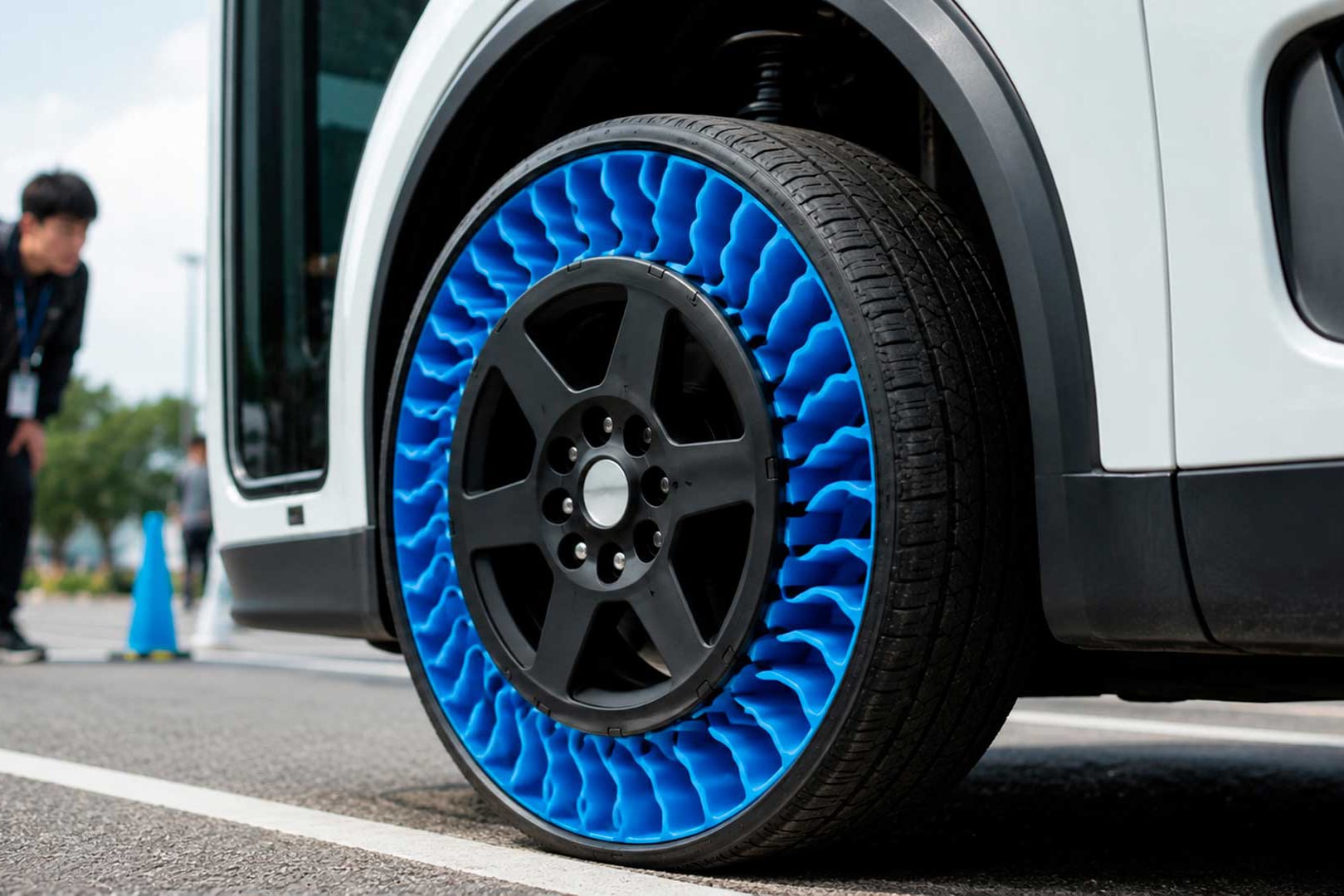
AirFree tires use thermoplastic resin structure instead of air (Photos: Bridgstone | Disclosure)
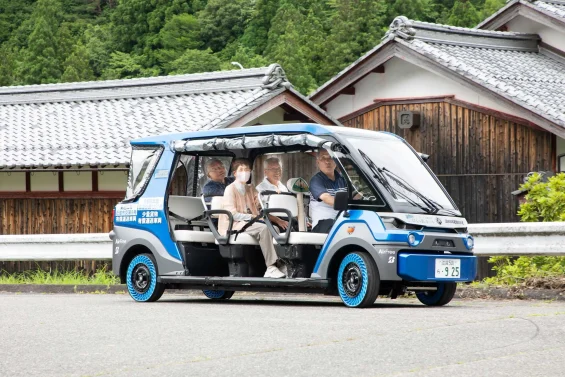
After nearly two decades of development, Bridgestone has begun the first commercial operation of its AirFree airless tires. The technology has gone on to equip a fleet of autonomous vehicles used to transport the elderly in Higashiomi, a mountain city in Japan with an increasingly aging population, and marks the system’s debut outside of experimental projects.
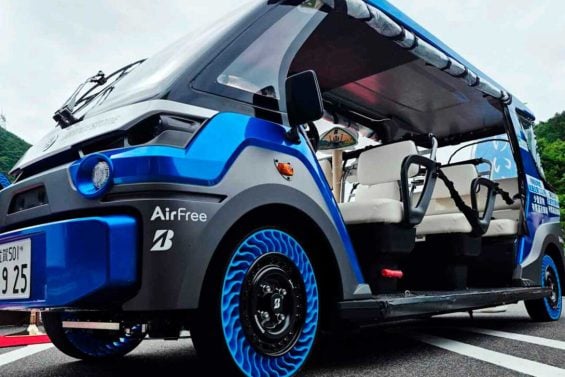
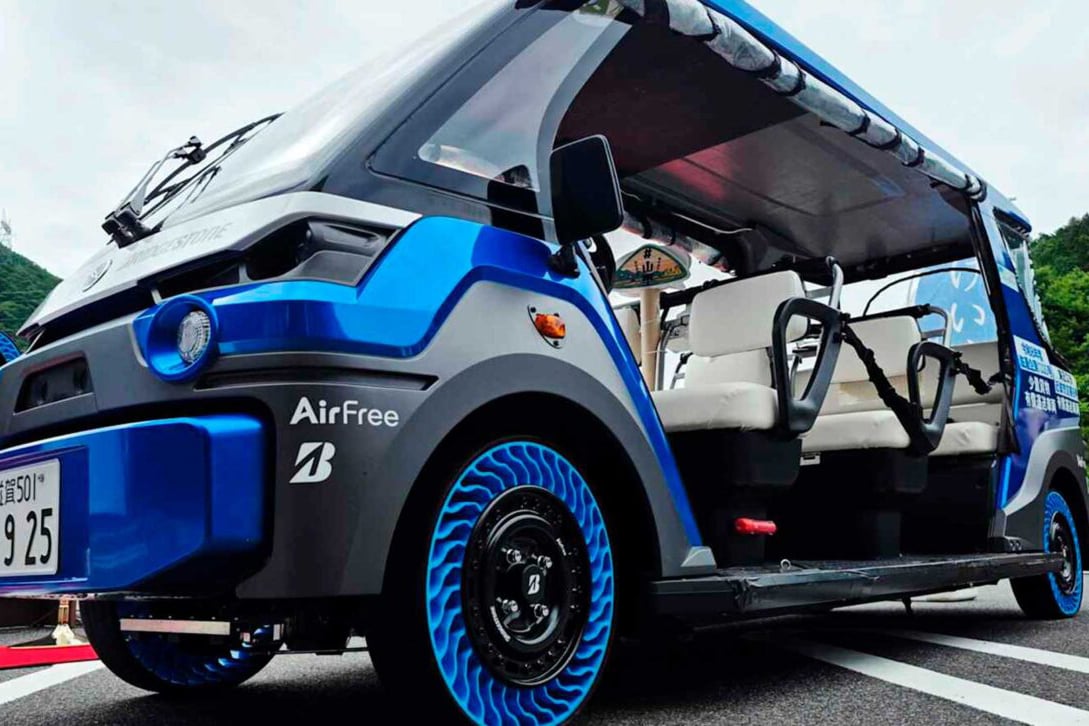
The vehicles, similar to elongated golf carts and powered by electricity, operate at low speeds and travel on controlled paths — a scenario considered ideal for the first commercial application of the technology. Until then, AirFree tires had only been used in tests of limited duration.
How does it work?
Bridgestone introduced its first prototype airless tire in 2008, while the current third-generation was unveiled in 2023. Unlike conventional tires, AirFree dispenses with internal pressure by employing a structure formed by spokes of recyclable thermoplastic resin, covered by a thin rubber tread. According to the manufacturer, both the rubber and the spokes can be retreaded or recycled, and the rods receive a high-visibility blue color, called “Empowering Blue”.
According to the company, the main advance came with the development of a more flexible structure, capable of better distributing loads on the tire without compromising the comfort of the occupants. The solution replaced the initial approach, based on more rigid materials. “The breakthrough came when the team stopped trying to harden the material and started betting on a flexible resin,” said Bridgestone engineer Masaki Ota.
The tires were also evaluated in tests with journalists aboard the autonomous vehicles, limited to 20 km/h — the speed at which they demonstrated climbing steep hills and traveling on poorly paved roads. According to the Nikkei Asia website, the technology is still only suitable for low-speed applications, which means it is far from equipping passenger cars.
Bridgestone has not yet released a timeline for large-scale production of AirFree tires. The company says it is studying a business model that includes recycling services and is also developing a version of the technology for lunar vehicles, with a metal structure inspired by the same concept. The race for the airless tire is not only hers: rival Michelin presented its Uptis concept for passenger cars in 2019, in partnership with GM, with a debut scheduled for 2024 that has not yet materialized. The French company, however, already sells the Tweel airless tire for smaller applications, such as golf carts and lawn mowers.
Comments are the sole responsibility of their authors and do not represent the opinion of this site. Comments containing profanity or offensive language will not be published. If you identify anything that violates the terms of use, please report it.