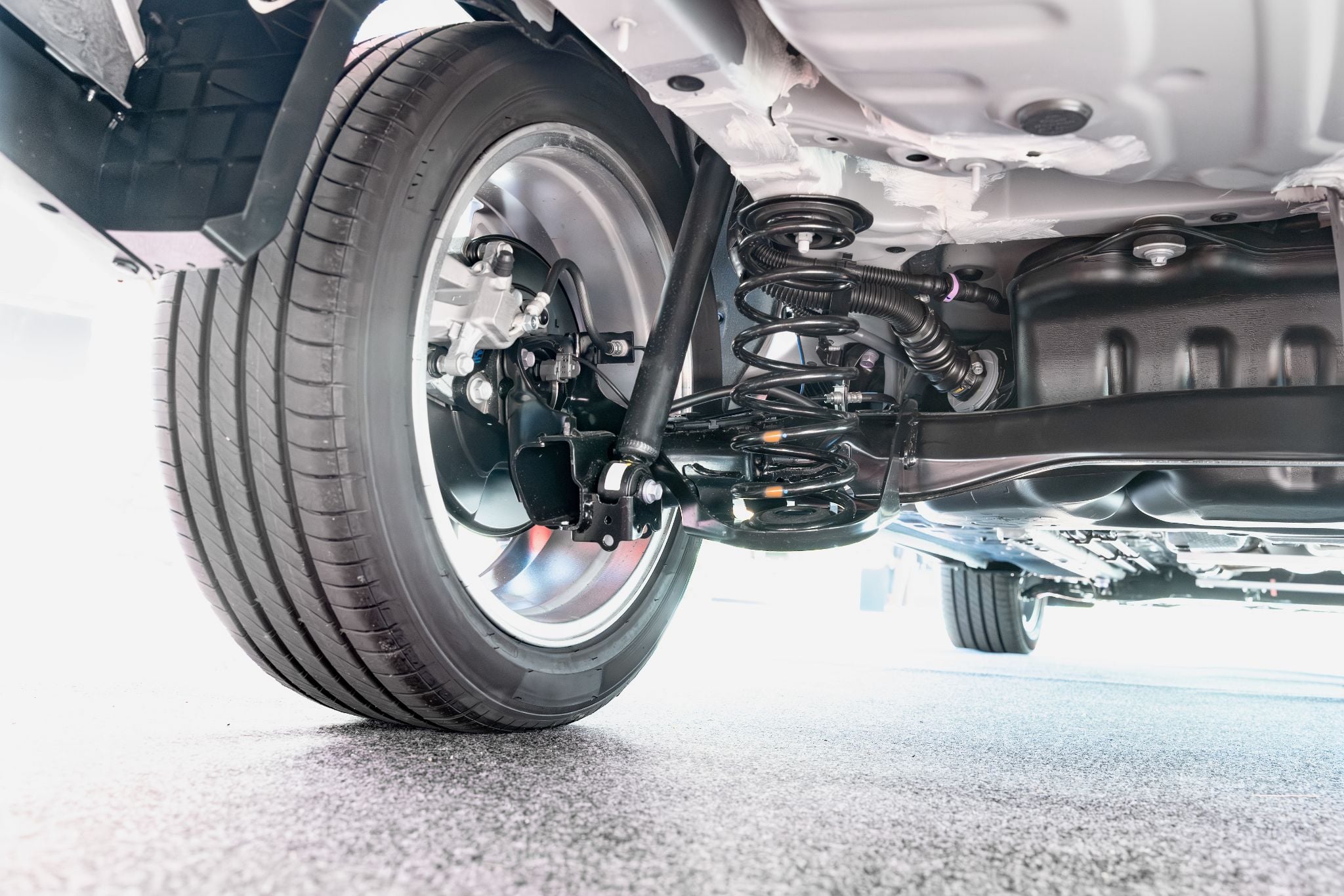
The engine of electric cars does not need periodic overhaul like a combustion engine, so scheduled maintenance is focused on suspension, tires, brakes, fluids and filters. Some of these components are specific to these vehicles, such as tires, but what about shock absorbers?
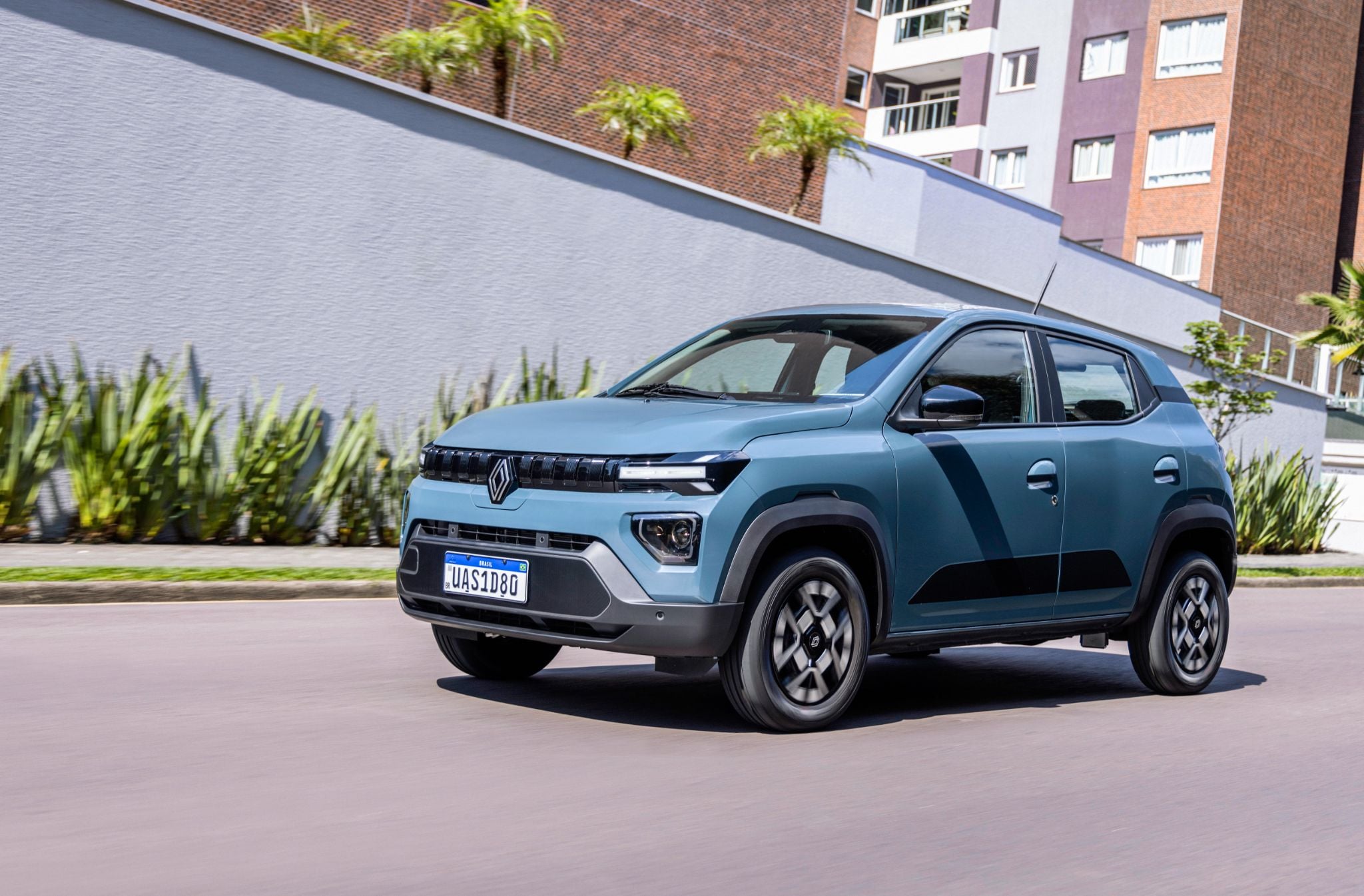
An electric car is usually heavier than a combustion equivalent due to the battery pack. A clear example of this is with the Renault Kwid, which weighs 820 kg with the 1.0 flex and 969 kg in the E-Tech model.
As it is heavier, the Kwid E-Tech uses different components in the suspension when compared to the flex model (Photo: Renault | Disclosure)
This difference in weight and its distribution requires changes in the brake and suspension systems. In a front-wheel drive combustion car, most of the weight is on the front axle, in an electric the heaviest part is the battery pack on the floor.
According to Renault, the suspension adjustment takes into account several factors, not just the type of engine:
This set is regulated for each car considering items such as mass, wheelbase and the vocation of the vehicle, whether sportier or more comfortable, for example. Therefore, the adjustment of the suspension set (which includes the shock absorbers) does not depend on the type of engine.”
The construction of a shock absorber for electric cars has a construction similar to that made for a combustion model. The biggest differences are in the load and set-up, to deal with the weight differences.
The director of Electromobility at the Brazilian Association of Automotive Engineering (AEA), Eduardo Zambelli, explains this in more detail:
In this context, electric vehicles do not require, in principle, a different damper architecture, but they have relevant particularities from an engineering point of view. Among them are:
Greater vehicle mass resulting from the energy storage system (high-voltage battery);
Change in mass distribution and reduction in the height of the center of gravity due to the positioning of the battery on the floor;
Different dynamic excitations associated with instantaneous torque delivery; Specific NVH (Noise, Vibration and Harshness) requirements, due to the absence of conventional powertrain noise.
These factors are considered in the process, leading to the definition of damping curves (force vs. speed), damping ratio, compression and rebound characteristics, as well as integration with springs, stops and anti-roll bars.”
In the end, the shock absorber is developed and validated by manufacturers always thinking about the application. The type of engine is just one of the factors in the account.
And when it comes to replacement?
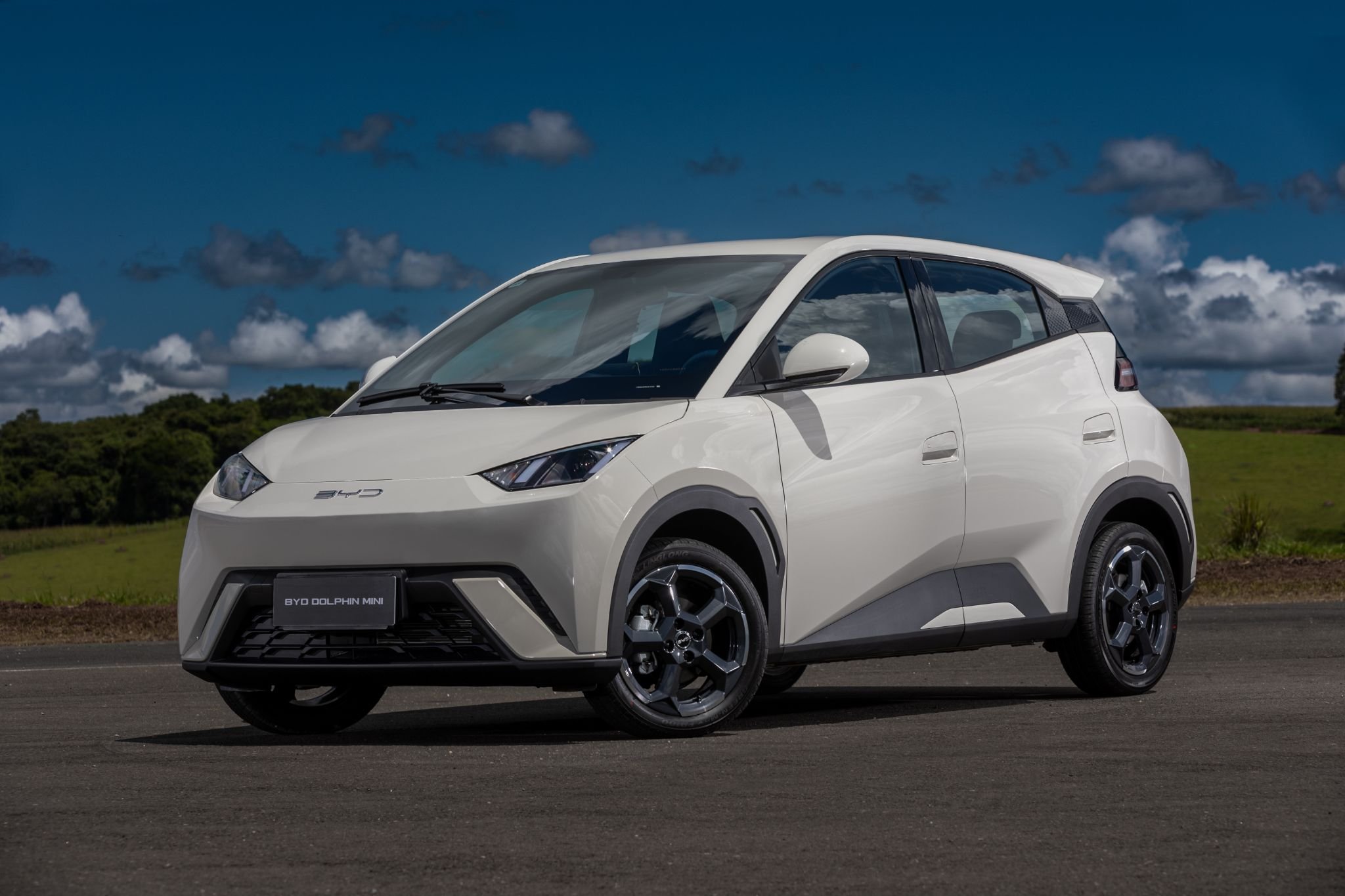
Models that sell well already have the piece at more affordable prices (Photo: BYD | Disclosure)
With this information, the dear reader should already know what to expect when he needs to change the shock absorber in his electric car. The value of the part does not differ much from that charged for a combustion car in the same segment.
As some electric models sold in smaller quantities or are from brands with a smaller presence in the country, the price may be higher because of availability. However, in the most popular cars, such as BYD, the values are not far from the average.
When exchanging, the recommendation is to always use original parts. Eduardo Zambelli points out that parallel parts not approved by the manufacturer may not reproduce the original characteristics.
Shock absorbers are one of the parts that do not have fixed durability, it depends on the use and the way the driver drives. In electric cars it is the same, as well as care.
Comments are the sole responsibility of their authors and do not represent the opinion of this site. Comments containing profanity or offensive language will not be published. If you identify anything that violates the terms of use, please report it.