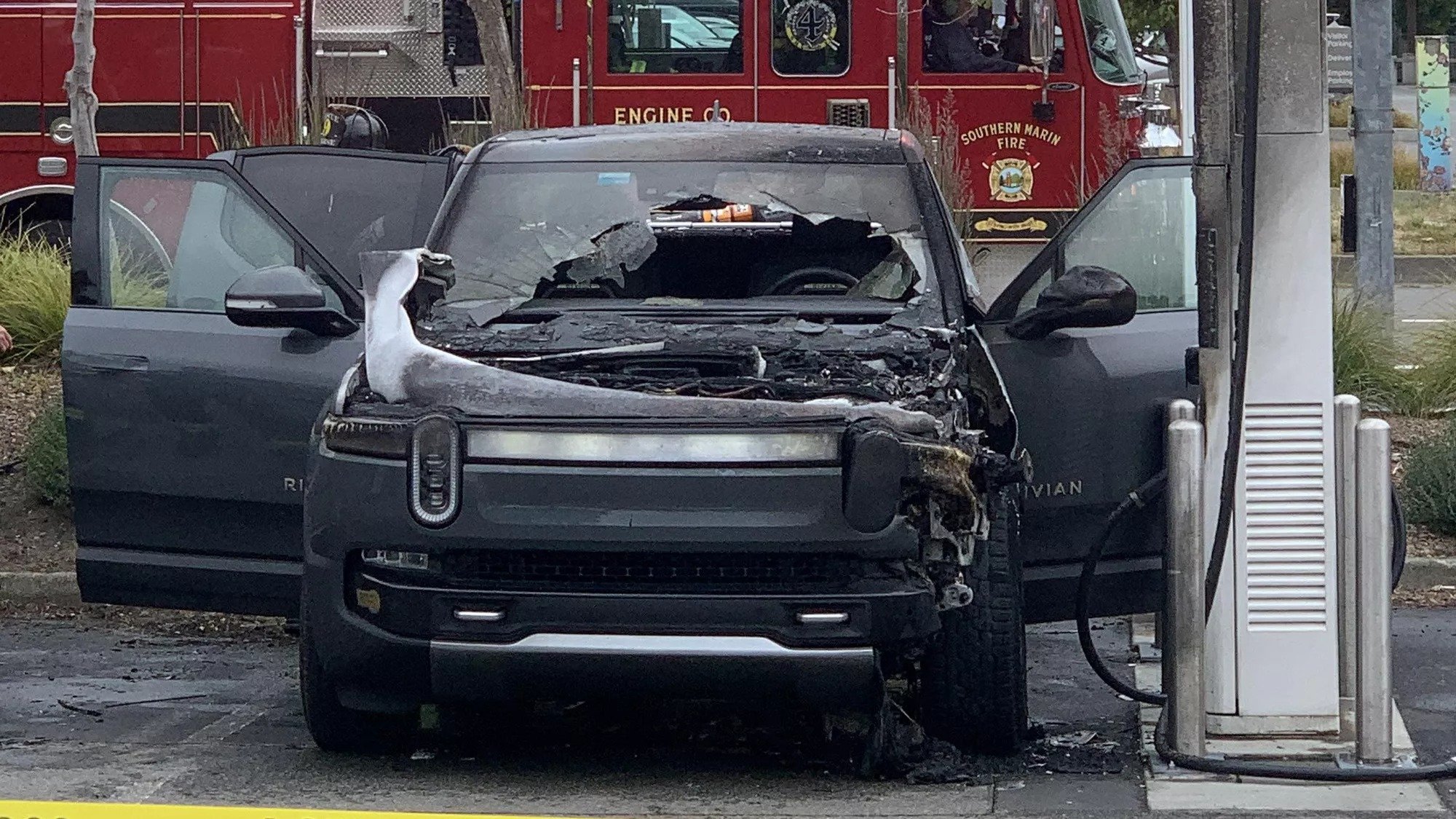
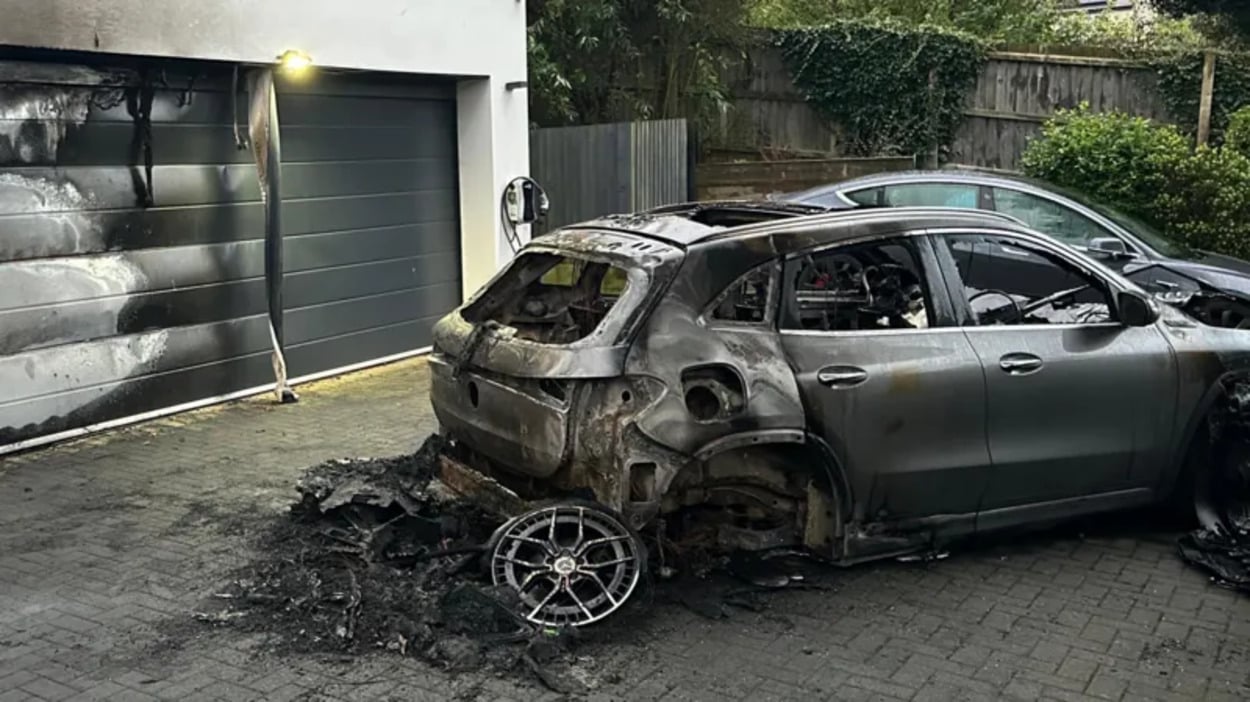
In April 2026, the sale of new cars reached the highest level in the last 13 years, with great emphasis on the sale of electric cars, which had a growth of 173.75%, according to the National Federation of Automotive Vehicle Distribution (Fenabrave). Although battery-powered models have already fallen in favor of the Brazilian consumer, there are still myths and misinformation, especially when reports of fires come into play.
In recent months, several cases of electric cars that caught fire have had repercussions in the media, raising questions and fear on the part of drivers. In this article you understand once and for all what is fact when it comes to electric cars and their possible risks in relation to fires and recharging.
Why does the electric car catch fire? What causes flames to start?
The electric car, like other types of automobiles, is subject to common causes of fire, such as short circuits in auxiliary systems, mechanical failures, vandalism, or even external sources of fire. But, it has an extra factor: the battery, the main part of the vehicle.
When the flames reach or start in this component, the fire has an aggravating factor. This situation can be caused by:
Physical damage in a collision, for example, with deformations or perforations that can cause internal shorts;
Risk charging, when there is use of inadequate, non-approved equipment or in case of electrical installations that are not adapted for recharging a vehicle;
Internal failures of the part, which are rarer and are usually the result of a manufacturing defect.
How likely is an electric car to catch fire?
Even though they draw a lot of attention, electric vehicle fires are still an exception compared to cases involving combustion cars, creating a certain alarmism around these models.
In general, electrified vehicles sold in Brazil already have technologies that protect the battery, the main part of the vehicle and which presents the greatest danger of fire. Electric and hybrid models have temperature management systems for this energy source to keep it in optimal operating conditions. There are also physical barriers and chemical protections to prevent a breakdown in a cell, for example, from leading to a fire.
But it is still possible that the flames reach this component of the vehicle, either from an improvised recharge, as was the case with the BYD Dolphin that caught fire in Santa Maria (RS), or arising from some failure of the model. And when that happens there is a great risk.
Differences between an electrified vehicle fire and a combustion model
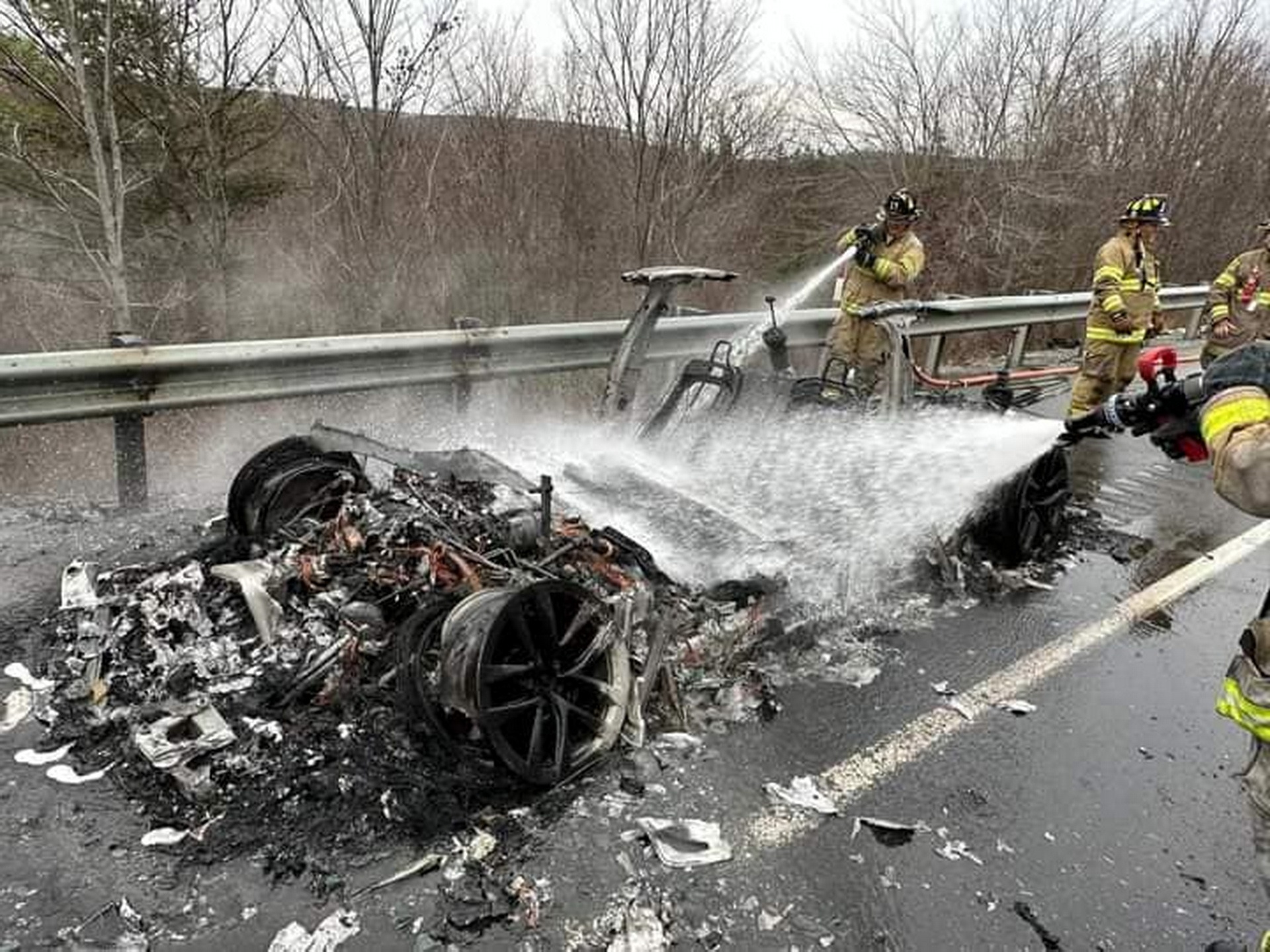
According to Lieutenant Henrique Barcellos, spokesman for the Military Fire Department of Minas Gerais (CBMMG), if an electric car fire reaches its battery, much more resources will be required to contain the fire compared to a combustion car. This is because the flames will last until the entire component is consumed. In this way, the volume of water needed to fight this type of flame is hundreds of times greater.
When the fire reaches the battery of an electric car, the fire will last until the entire component is consumed. (Photo: Morris Township Volunteer Fire Company | Reproduction)
As a result, the time needed to put out the fire will also be much longer, in addition to the fact that toxic smoke can be released in the place, which is extremely dangerous in closed places. Second, another complicating factor is that the water needs to penetrate satisfactorily into the battery cells, which due to their construction process and meeting safety principles, are well protected.
The high-voltage system of this type of car is also a differential. In the event of an accident, it needs to be turned off, through the process of removing the service plug and removing the fuses from the battery. After this procedure, you still have to wait about ten minutes for the high voltage to be deactivated.
Recharging electric cars can be a high fire risk situation
If you own an electric car, you need to be very careful where you recharge your vehicle. Although there is no national safety standard, it is essential that the installations of chargers, in homes or public places, are done correctly and supervised by a professional or the Fire Department to ensure their correct operation without any risk.
According to Lieutenant Henrique Barcellos of CBMMG, when the charging stations are in disagreement with technical standards or under improvised operation, they can generate the risks of overheating and fire, accompanied by toxic smoke.
The greatest risk of fire from electric cars comes from makeshift recharging or irregular charger installations.
Standards for installing electric car chargers are not yet universal, but they are important
Entities such as the Federal Council of Engineering and Agronomy (Confea) and theNational Council of General Commanders of Military Fire Brigades (CNCGBM | Ligabom) have their own published guidelines on the installation of chargers. Confea established the 2025 edition of the provisional technical note called “Guidelines for the installation of electric vehicle charging points in buildings”.
Despite being temporary, the document brings together updated recommendations and provides for the mandatory nature of fire detection systems, risk management plans, inspection protocols and periodic maintenance. All this taking into account standards from the Brazilian Association of Technical Standards (ABNT), among other rules established by institutions such as the National Institute of Metrology, Quality and Technology (Inmetro), the National Electric Energy Agency (Aneel), the Fire Department, among others.
Tadeu Azevedo, director of the Brazilian Association of Electric Vehicles (ABVE), says that in the case of installing chargers in condominiums, the easiest and safest way to have a charger is to create an electricity distribution network. It must be connected to the load-balanced common area network, managed and maintained by the contracted installation company. This company must have the technical responsibility for the system and make the individualization of consumption for each resident.
In general, current studies highlight the importance of avoiding the beginning of fire and reducing possible damage.
What to do if an electric car catches fire
First of all, there is a precaution that greatly reduces the chances of an electric car fire: following the manufacturer’s standards. In addition to installing various technologies to prevent flames, electrified vehicle manufacturers determine some rules, which are nothing out of this world, about the correct use of the car. You can find them in the owner’s manual.
But if even with all these precautions there is a fire in an electric car, it is necessary, first of all, to ensure one’s own protection. According to Lieutenant Barcellos, the most prudent action is to stay away from the risks associated with fires, such as possible small explosions.
If the fire started while the car was moving, it is essential:
Stop the vehicle as soon as possible;
If possible, try to park it in an isolated place so that there are no secondary risks, such as the spread of flames to other vehicles or buildings;
Immediately call the Fire Department for help;
If the fire is at an early stage, the use of fire extinguishers can be effective;
When using the extinguisher, keep a safe distance, signal the place to avoid new accidents.
If the electric car catches fire, but the flames do not come from or do not reach the batteries, the fight can be done in a more similar way to combustion car fires. Additional care will be taken by firefighters if the power source is involved.
As mentioned earlier, the electric car has a high-voltage system, which needs, in emergency situations, to be turned off. The CBMMG spokesperson points out that carrying out this task, however, will depend on the stage of the fire, because, if there are already flames, this type of procedure should only be carried out by the Fire Department, properly protected with their personal protective equipment (PPE).
Comments are the sole responsibility of their authors and do not represent the opinion of this site. Comments containing profanity or offensive language will not be published. If you identify anything that violates the terms of use, please report it.