Back to School: What Parents Should Inspect for School Van Safety
Official guide to school transport points out legal requirements, safety items and criteria for choosing the service that transports children and adolescents
A series of tips is made available by the Federal Government itself (Photo: Shutterstock)
By
Lucas Silvério Published on 2026-01-29 at 12:00 PM
Updated on 2026-02-02 at 07:05 PM
With the return to school, the demand for the service of school vans is also approaching, and with it, the concern of those responsible for putting their small means in traffic and out of their sight. To guide families and avoid risks on the way, the National Fund for the Development of Education (FNDE) in partnership with the Public Prosecutor’s Office has the School Transport Guide, which details the main criteria to be observed before hiring the service.
According to the document, school transport is an activity regulated by law, directly related to the constitutional right to education, and must follow strict standards of safety, inspection and responsibility.
In rural school transport, rules may vary, but student safety remains mandatory (Photo: Shutterstock)
The guide is clear in pointing out that school vans, buses and minibuses are suitable vehicles for transporting students, as long as they meet the standards of the Brazilian Traffic Code.
Before hiring a school van, parents or guardians should check:
general conditions of conservation of the vehicle;
regularity of documentation;
specific authorization for school transport issued by the DMV;
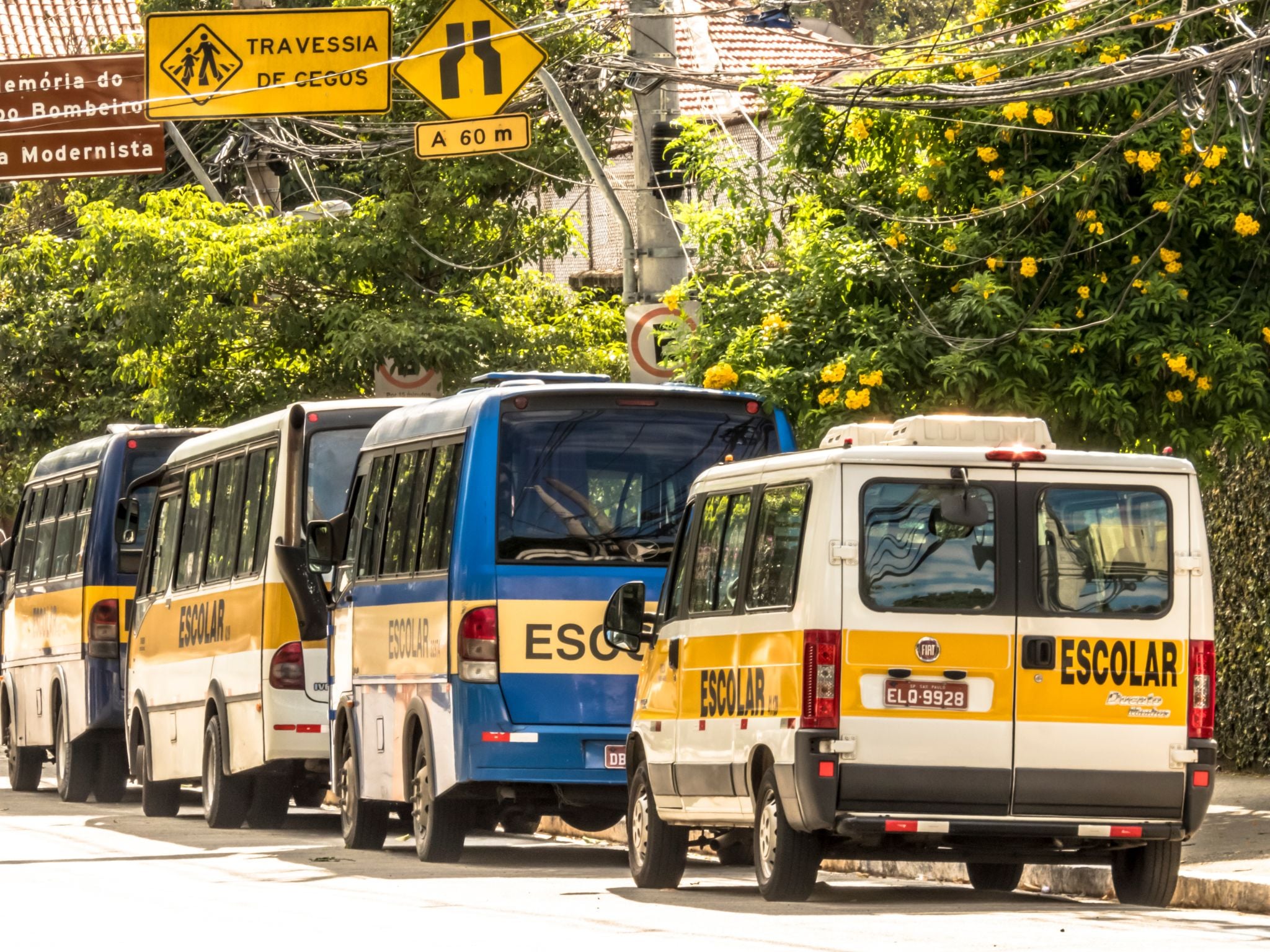
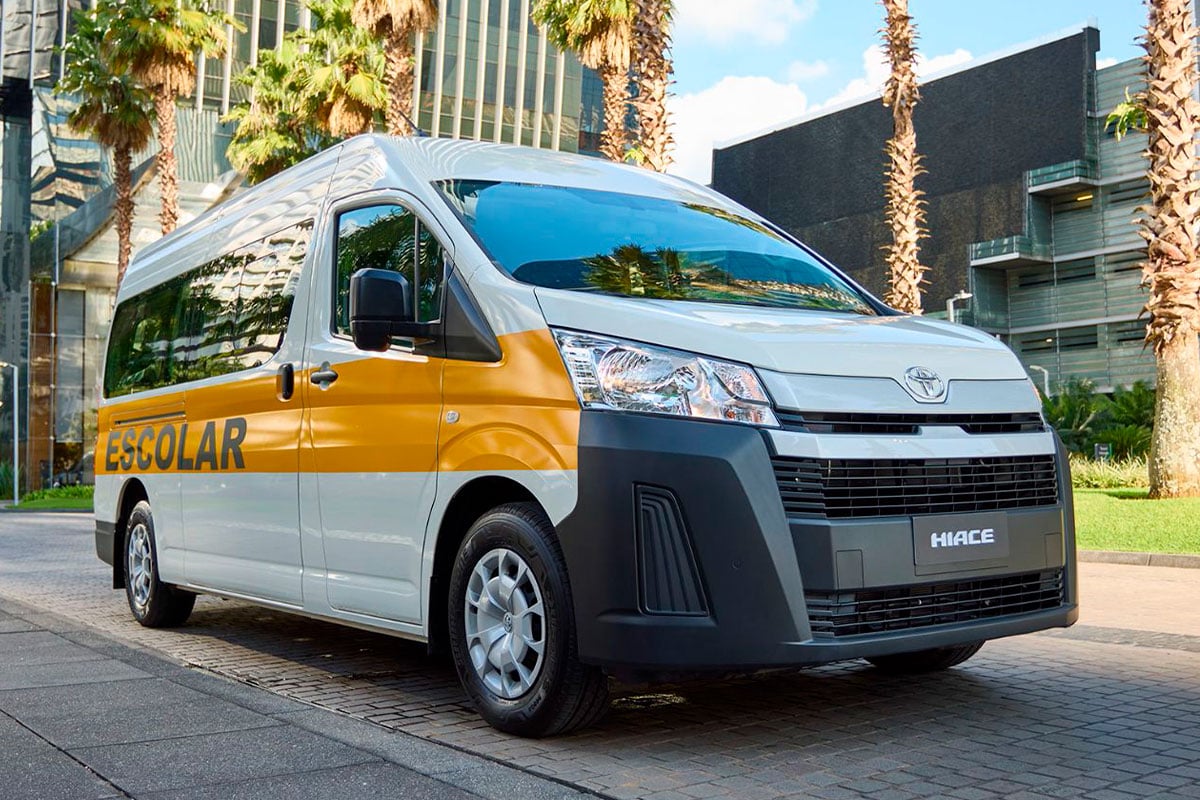
visual identification, with a yellow stripe and the word “Escolar” on the sides and back.
* In exceptional situations, adapted vehicles may be authorized by traffic agencies, but motorcycles, passenger cars, trucks and precarious boats are not recommended to transport students.
In riverside regions, school boats can be used exceptionally and with safety rules (Photo: Shutterstock)
Mandatory safety items in the school van
In addition to checking the documentation and general conditions of the vehicle, parents and students in the rhythm of back to school should also be aware of everything that may directly influence the safety of passengers. The Government document details that every school van must have:
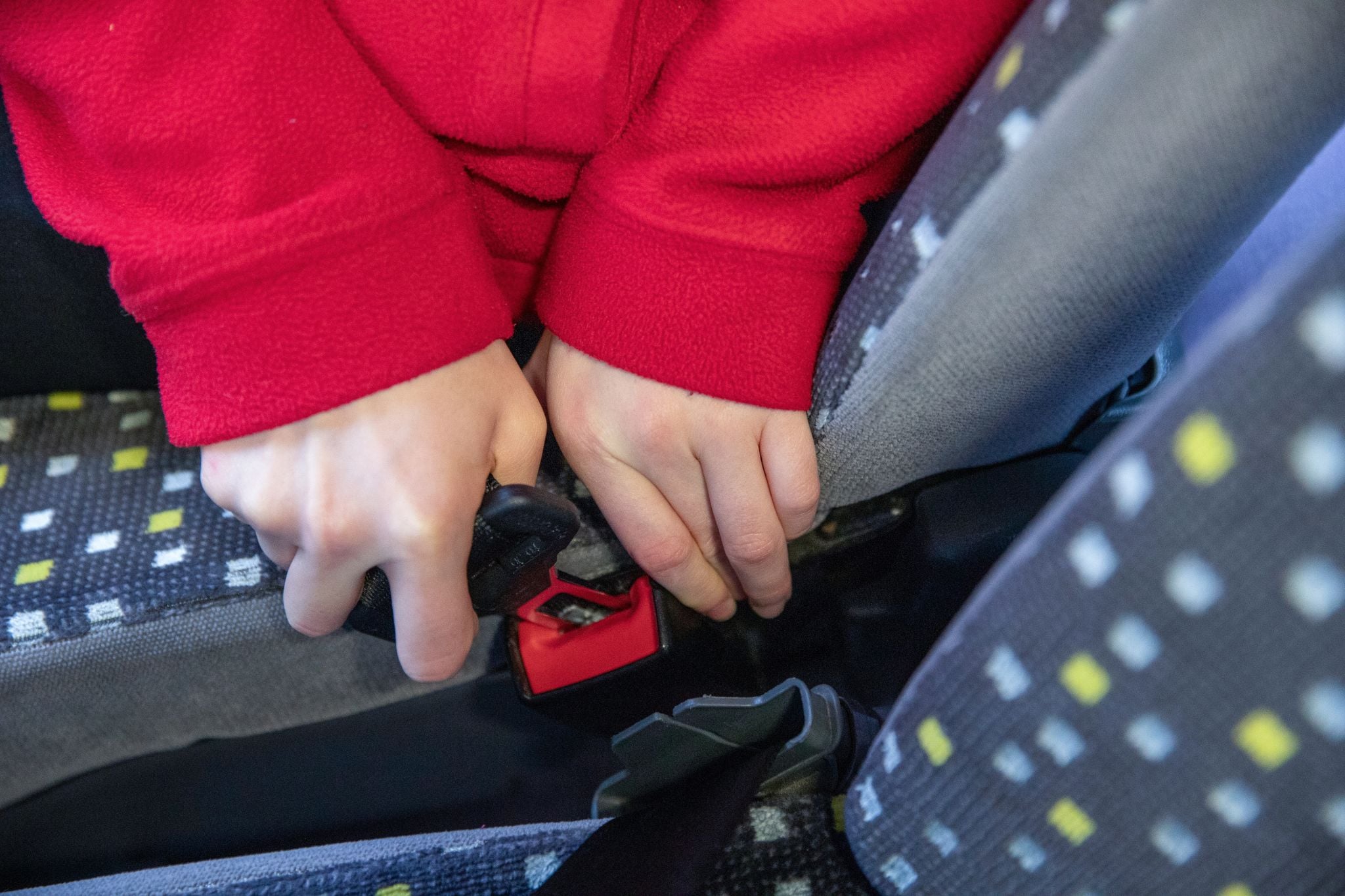
seat belts in good condition for all passengers;
separation grid between the engine compartment and the students;
accident insurance;
tachograph for recording speed and stops;
Mandatory periodic inspections, including two special inspections per year, usually in January and July.
The guide also recommends that fleet vehicles preferably have up to seven years of use, as a way to reduce mechanical risks and increase transport reliability.
The seat belt is mandatory in the school van and must be worn by all students during the journey (Photo: Shutterstock)
What to look out for in the school van driver
In addition to the vehicle, the driver of the school van is a key player in the safety of the students. The guide establishes a series of mandatory prerequisites for the exercise of the function, including:
minimum age of 21 years;
qualification in category D;
specific school transport course;
approval in a psychotechnical exam;
active registration with the DMV;
history without serious or very serious infractions in the last 12 months.
It is expressly recommended that parents or guardians seek references from the driver from schools, other guardians or unions in the category.
Take advantage of the back-to-school to check the school van’s transport routine
Another point of attention is the organization of the school van. It is recommended that transport works with defined routes, regular schedules and fixed points of boarding and disembarking, avoiding changes in the route and speeding that exposes students to traffic risks.
The entry and exit of students must take place safely, with extra attention to younger children, ensuring adequate accommodation and constant supervision during the journey.
Private or public: everyone must return to school safely
The School Transport Guide makes it clear that the recommendations follow Brazilian legislation, more specifically the Brazilian Traffic Code (Law No. 9,503/1997), several resolutions of the National Traffic Council (Contran) and the Guidelines and Bases of National Education (LDB – Law No. 9,394/1996). Thus, all transport, whether public or private, must follow the legal requirements.
Supervision and responsibility
The School Transport Guide also reinforces that the service is subject to inspection by traffic agencies, municipalities, states and the Public Prosecutor’s Office. Vehicles or drivers that do not meet the legal requirements may face penalties, including suspension of service.
For parents, the document leaves a clear warning: the choice of school van should not be based only on price or convenience, but mainly on compliance with the rules that ensure the integrity of their children.
Comments are the sole responsibility of their authors and do not represent the opinion of this site. Comments containing profanity or offensive language will not be published. If you identify anything that violates the terms of use, please report it.