Live broadcast served to deny edited videos about the SUV's performance and reinforce transparency of the Chinese brand
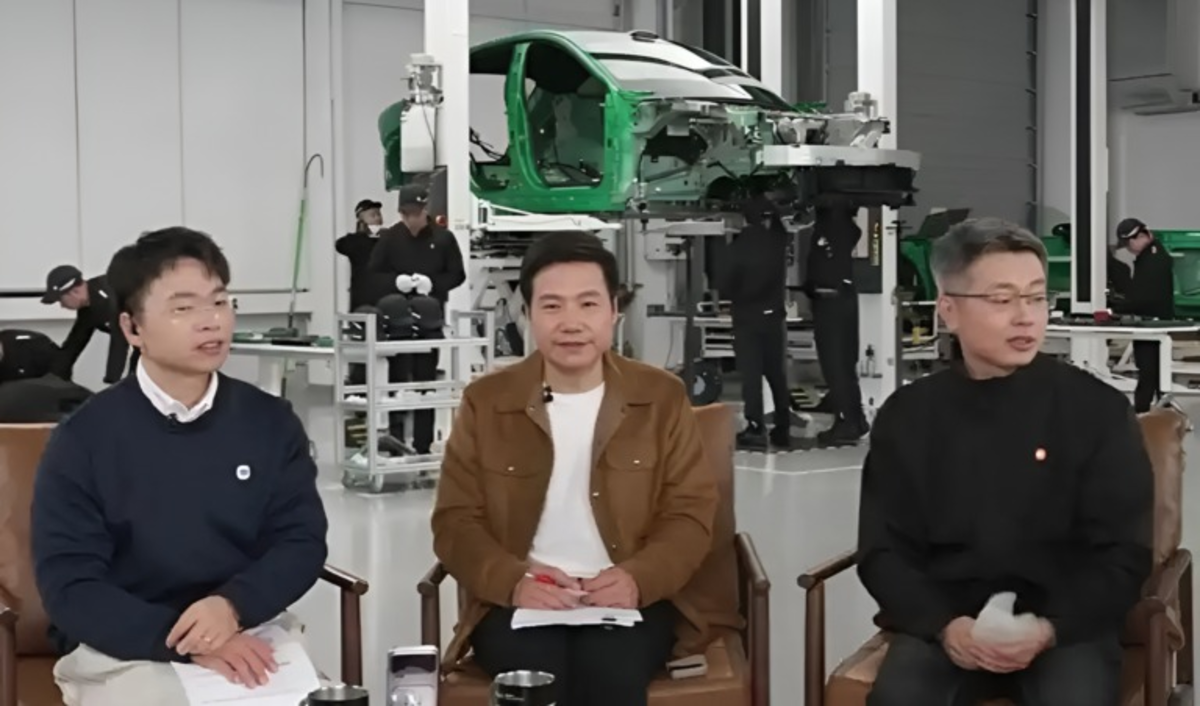
In an unusual strategy of crisis management and transparency, Xiaomi CEO Lei Jun held a five-hour live broadcast last Saturday (3). The goal was to disassemble, piece by piece, the new Xiaomi YU7 electric SUV. The action was a direct response to a series of manipulated videos and rumors circulating on Chinese social networks questioning the safety and structural integrity of the vehicle.
During the live, which attracted millions of viewers, the executive sought to translate complex engineering data to counter disinformation narratives. The dismantling served to expose the quality of the internal materials and clarify the operation of critical systems of the car.
SEE ALSO:

The highlight of the transmission was the technical response to images that showed the vehicle’s wheels coming off. Lei Jun explained that, in severe small overlap collisions (when the crash occurs on the corner of the car), detachment is a purposeful active safety feature. The structure is designed to eject the wheel outwards, preventing the component from being pushed against the cabin and crushing the legs of the occupants, dissipating the energy of the impact.
The executive also denied videos that claimed braking failure at 200 km/h. According to Jun, the images were maliciously edited from extreme laboratory tests carried out with the SU7 Ultra sports model, and do not reflect the SUV’s behavior on the streets. Another correction involved the autonomy: the 1,300 km data, cited in campaigns, refers to a long journey with an intermediate fast recharge, and not to a single battery charge.

The “autopsy” of the vehicle also served to reinforce the technology giant’s market positioning. Xiaomi confirmed that it sold 410 vehicles in 2025 and set an ambitious target of 550 units for 2026. According to the brand, the YU7 disassembled in the live will not be sold to the final consumer; It will be reassembled and used exclusively for new quality control tests.
For Lei Jun, in the digital age, consumer trust depends on the product being an “open book”. The full broadcast can be seen below:



