Andrew Tran sold his electric car in the US, but the vehicle reappeared in an app in Belarus with active functions; understand the risk
In an unusual case of connected car vulnerability, American Andrew Trana discovered that he still had full control of the remote functions of his old Tesla, months after he got rid of the vehicle. The car, now owned by a new owner, was located in Grodno, Belarus — about 9,700 kilometers away from the previous owner.
The persistence of the link between Tran’s account and the vehicle’s hardware allowed him to maintain access to the “Premium Connectivity” service. Even on the other side of the ocean, the American could view the exact location of the car in real time, lock doors, activate the horn, flash the headlights and even open the windows. The episode raises discussions about the responsibility of manufacturers and resellers in the digital “reset” of high-value IoT devices.
SEE ALSO:
The situation gained repercussions after Tran reported what happened on technology forums. He explained that his biggest concern was financial, since subscriptions to Tesla services were still linked to his credit card. The case also illustrates a common practice in the international automotive market: the export of cars that suffered “total loss” in the United States to Eastern Europe. The low cost of labor in countries like Belarus makes it feasible to rebuild salvage that would otherwise be discarded on the American market.
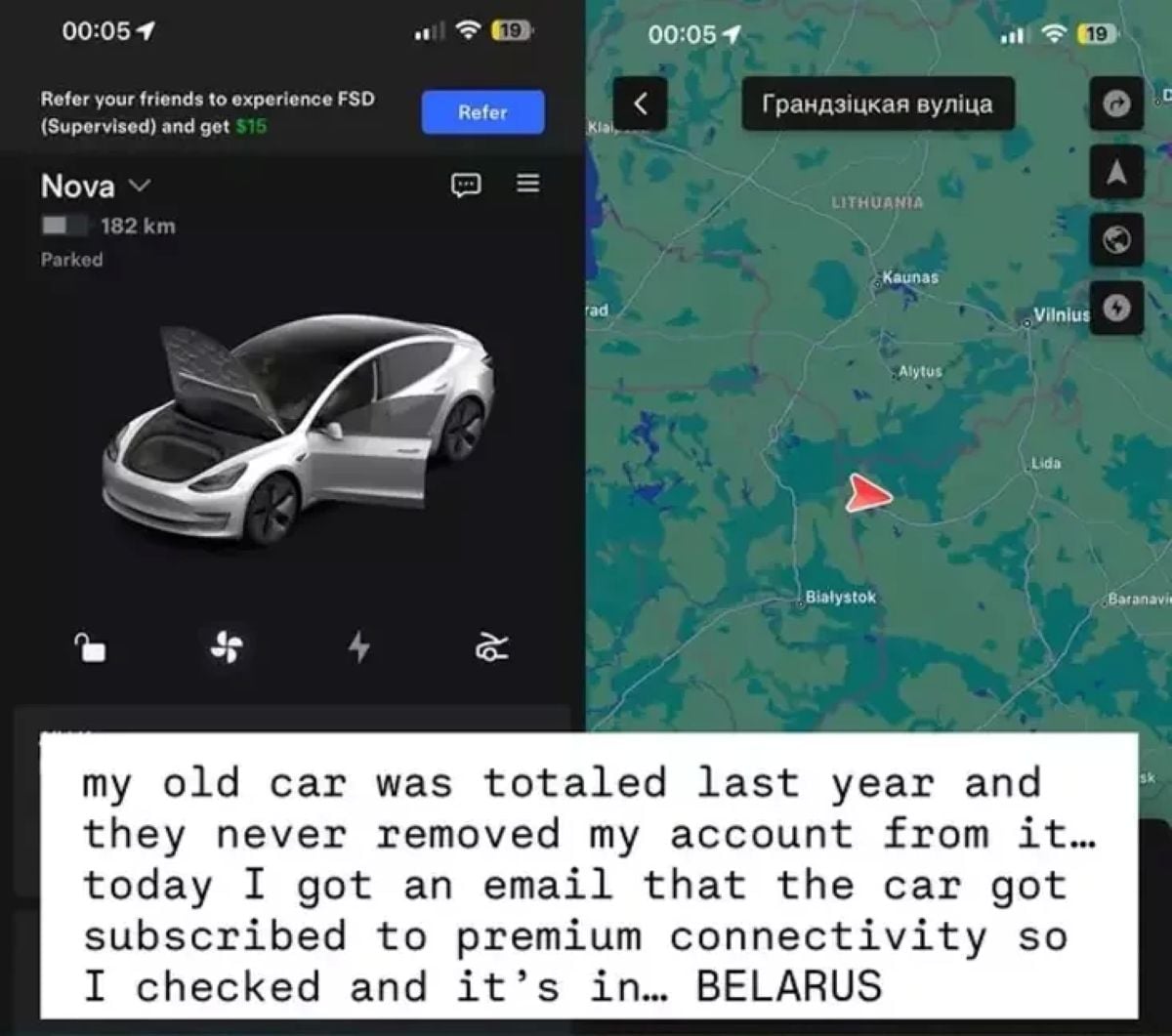
Experts warn that, when selling a connected vehicle, the owner must perform data cleaning and formal unlinking via application and central panel. After the backlash, Tran confirmed that he had removed the vehicle from his official account. He reiterated that he did not intend to interfere with the new owner’s routine, but used the case as a warning about the importance of privacy in an era where cars are essentially computers on wheels.



