Charging infrastructure grows 42% in one year, with emphasis on fast chargers; The country now has one point for every 19 rechargeable vehicles
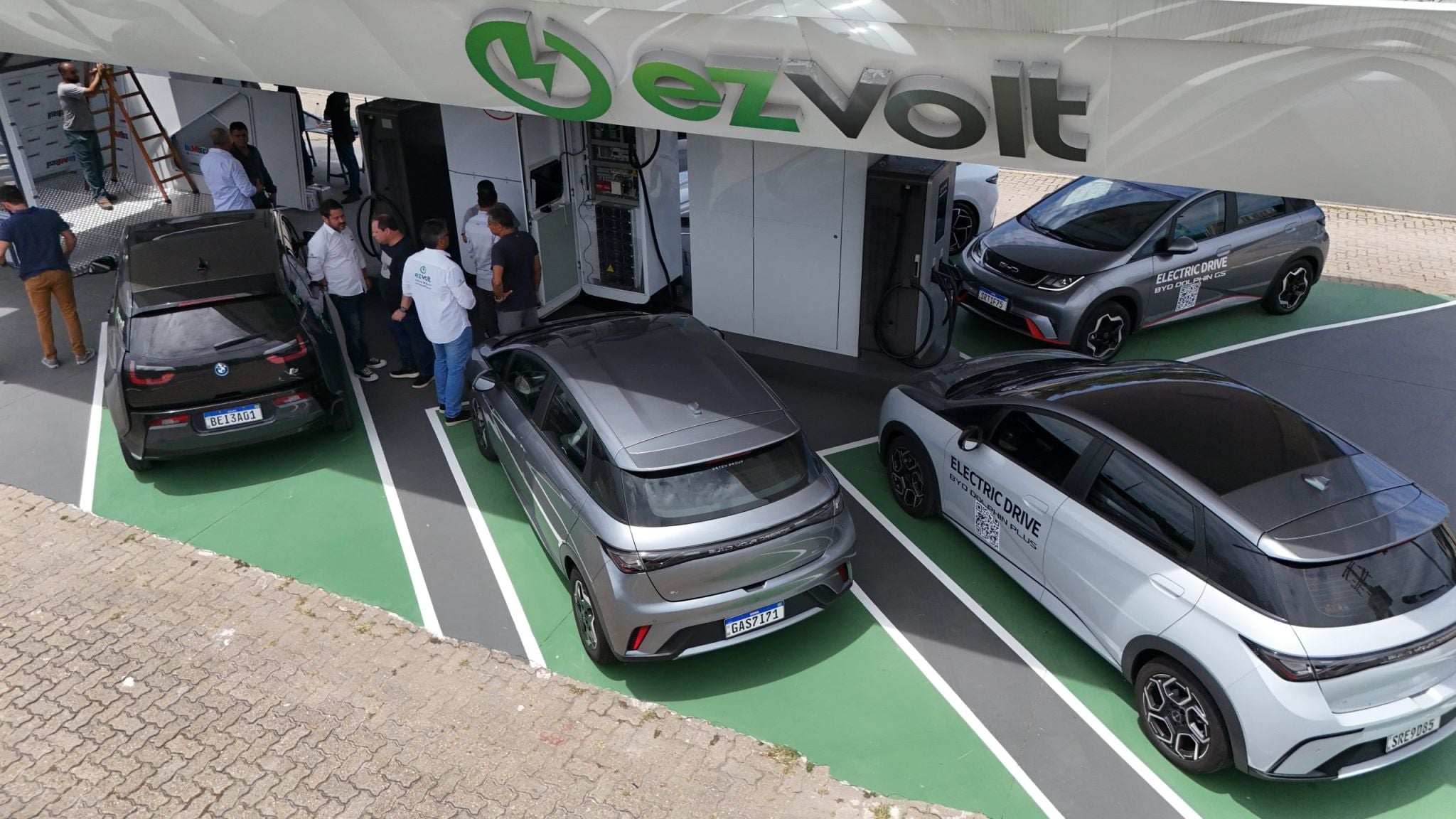
The charging infrastructure for electric vehicles in Brazil reached a new level in February 2026, surpassing the mark of 21,061 installed points. The most relevant data of the last year, however, is not only the total volume, but the change in the profile of the network: the number of fast and ultra-fast chargers (in direct current, DC) grew 167%, now representing 31% of all public or semi-public stations in the country.
This move signals a maturation of the national grid, which gradually replaces the focus on long-term slow recharges (in alternating current, AC) with high power, an essential requirement for the viability of long-distance travel. Currently, Brazil has 6,479 fast charging points, compared to 2,430 registered in the same period of 2025.
SEE ALSO:
Despite the advance, the infrastructure still pursues the pace of sales: with a circulating fleet of 411,869 electric and plug-in hybrid vehicles, the ratio is 19.6 cars for each public charger. The index is far from the 10 cars per point recommended by ABVE (Brazilian Electric Vehicle Association) for mature markets, which indicates the need to double the current network to balance the system.
The process of internalization also intensified, with the network reaching 1,649 municipalities, an increase of 21% in one year. Although the Southeast concentrates the largest volume, the North (+74.5%) and Northeast (+26.4%) regions showed the highest proportional growth in cities served. This decentralization is considered vital to reduce the autonomy anxiety of drivers outside large urban centers.
| Charger Type | Feb. 2025 | Feb. 2026 | Growth |
|---|---|---|---|
| DC (Fast/Ultra-Fast) | 2,430 | 6,479 | +167% |
| AC (Slow) | 12,397 | 14,582 | +17.6% |
| Total | 14,827 | 21,061 | +42% |



