After billionaire profit is "swallowed" by tariffs, the brand is studying a partnership with Volkswagen for production in the US and merger of models such as Panamera and Taycan.

Porsche faces one of the most challenging scenarios in its recent history after closing 2025 with an operating profit of €413 million (R$ 2.29 billion) — a drop of 93% compared to last year. The balance sheet was severely impacted by €700 million (R$ 3.88 billion) in import tariffs imposed by the United States, an amount that exceeded the company’s own net profit. The financial setback forced the Stuttgart-based automaker to challenge its traditional strategy of centralized production in Europe.
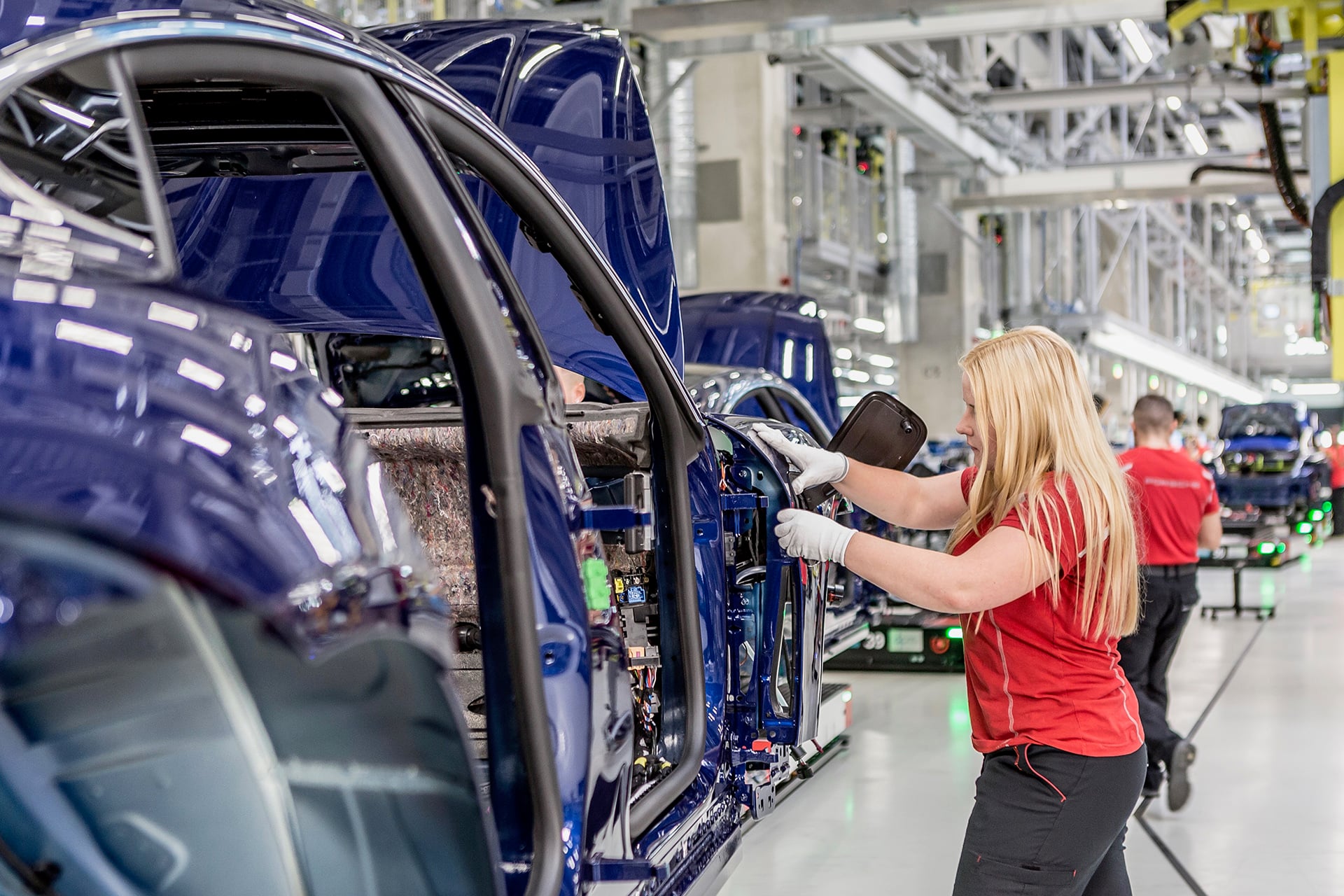
For the first time, the brand’s board admits that producing on North American soil has become an attractive alternative. CEO Oliver Blume signaled that maintaining the current model is risky in the face of geopolitical volatility. Although building its own plant requires billionaire investments in supply chains, Porsche is already evaluating using the Volkswagen Group’s existing infrastructure in the US to assemble high-volume models.
SEE ALSO:
The impact of the rates is already felt directly by the consumer. The iconic entry-level Porsche 911, which in March 2024 was priced at $114,400, jumped to $135,500 in early 2026. Even with resilient demand, the corrosion of profit margins requires a “downsizing” in the portfolio. The goal is to reduce internal complexity, eliminating the excess of variants and derivatives that make global logistics more expensive.
Behind the scenes in Stuttgart, the thesis of a merger between product lines is gaining strength. Rumors indicate that the Panamera and Taycan may be unified into a single platform in the future, seeking to gain scale and reduce operating costs. To regain financial momentum in 2026, Porsche is betting on the launch of new high-performance models, aimed at a niche audience less sensitive to price fluctuations.



