Promises of a multitude of launches, but with no prospect of more new cars in the Brazilian garage is the scenario for the year
The Brazilian automotive market is quite peculiar. It (like almost everything else in Brazilian lands) reacts to governmental and monetary moods. Taxes, plans, requirements, exemptions, rules, packages, interest and so on. Thus, each mark plays according to the constant changes on the board.
SEE ALSO:
15 years ago, the rule was to sell a lot with a low ticket and financing as far as the eye can see. The popular car was a hit: Celta, Palio, Ka, Clio, Gol in very poor versions, with zero down payment and 72 long months to pay. The result was a record of 3.6 million passenger cars and light commercial vehicles in 2012.
At that time, the industry lobby slowed down the advance of Chinese brands, especially JAC Motors, which sold Faustão’s J3 at popular naked prices. Protectionist measures led to the construction of a lot of factories, such as BMW, Jaguar Land Rover, Chery and many others. Those who did not enter the dance did badly.
But political and economic moods, as well as airbag and ABS requirements, have cooled the industry. At the time, manufacturers bet on PwD, with an eye on tax discounts for consumers entitled to the benefit. But it was not enough.
Thus, the Brazilian industry saw that it needed to change its focus. Building a car became more expensive, as it was more equipped. But equipped with items that do not add value, but cost.
Thus, the fever of compact SUVs came, the renewal of more sophisticated hatches. The idea was: “if we are going to sell less, let us sell more expensive!”
Infallible plan to make Cebolinha pull out his five strands of hair in envy. And it worked, the industry had less logistical and operational effort, as it raised the average ticket and kept the operation running.
Of course, investments were necessary in the development of new products, as well as the location of these sectors that were usually in the headquarters. It was a moment when the branch began to dictate its rules, as it knew its market.
And once again, those who didn’t fit, or didn’t have anything on the shelf, asked for the cap. One solution would be to import projects from other branches. At first it emerged as a brilliant idea, but there are many people choking on the crumbs of this palliative.
And if that wasn’t enough, we also had the effects of the Covid-19 pandemic, which simply threw the price of the car through the roof because of chips, rubber, steel, foam, freight and everything that was an argument.
And when the industry had already settled with its most qualified (and expensive) cars, a new tsunami came from China with modern models of high quality and much lower prices, even with the staggered increase in taxation for electrified models.
Even so, by leaps and bounds, sales progressed and stabilized just above 2 million units. For 2025, the expectation was to exceed 2.5 million (the Fenabrave bulletin will be released during the first week of January).
But it is a bittersweet number, as 2.5 million units sold show that the industry has not retracted and that the market is absorbing what is produced, even if the production capacity is much greater. But it has not evolved either, it has not revolutionized.
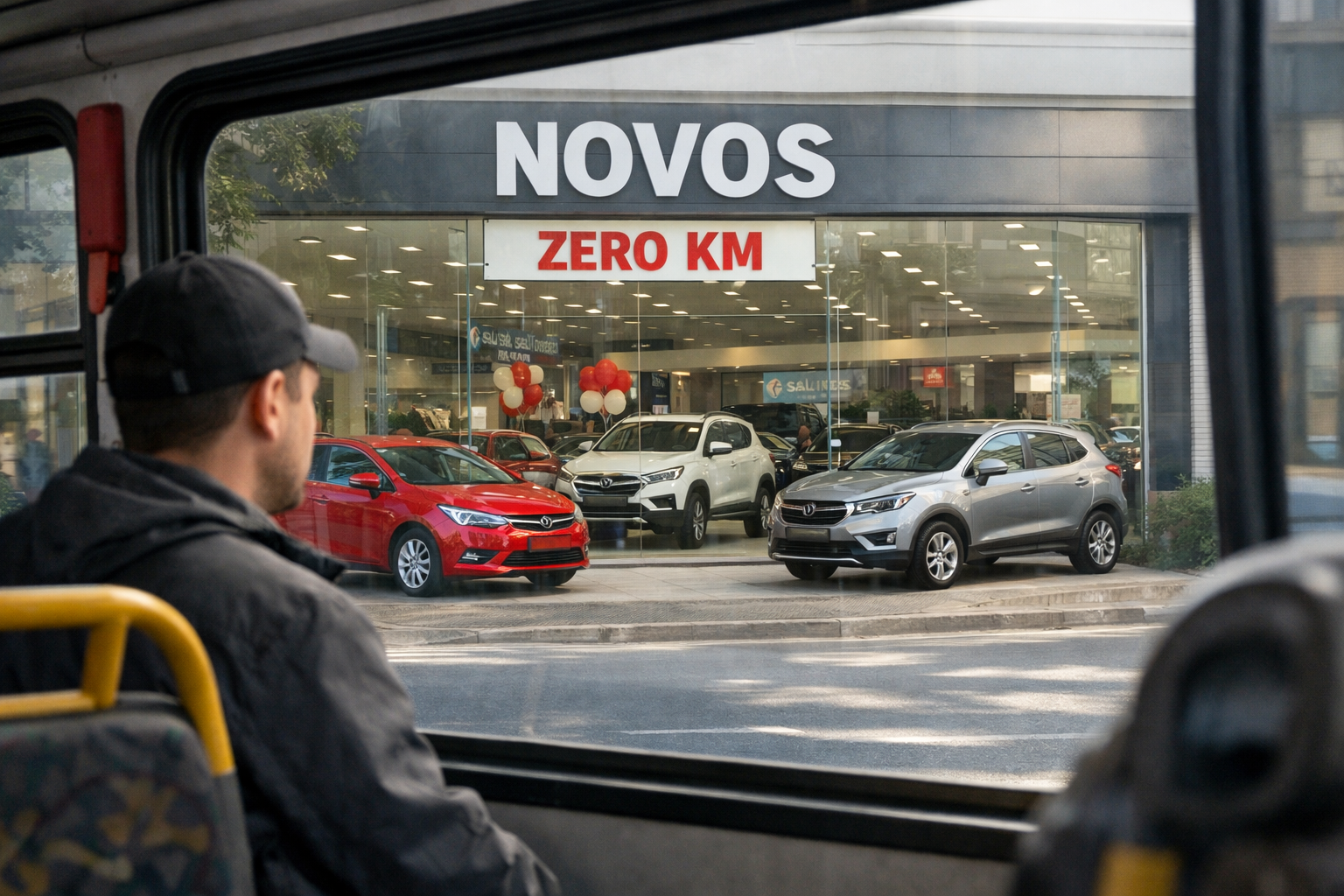
High interest rates to contain inflation took away the purchasing power of Brazilians, who had already been impacted by the exacerbated increase in car prices after Covid. And the numbers, observed coldly, indicate that just over 1% of Brazilians have the luxury of buying a new car.
That’s right, if we register 2.5 million, in a country of almost 220 million inhabitants, few people can afford to buy a brand new car. And the situation gets even worse, as direct sales correspond to almost half of this volume.
These are sales made to companies, many of them large fleet owners, rental companies, as well as government sales. To give you an idea, just one rental company rotates more than 600 thousand cars a year.
In other words, Brazilians do not buy new cars. But what about what does the industry do? It continues the current game, tries to curb imports with appeals to the government, bets on more expensive and sophisticated models to keep the wheel running until another twist is out there.
And the Brazilian? This one is driving, transporting by app or doing the math to buy a used one that was from the rental company.
But this year there is a World Cup. Everything is fine.



