Idle capacity, incentives for models that harm the production chain are some of Volkswagen's concerns in Brazil
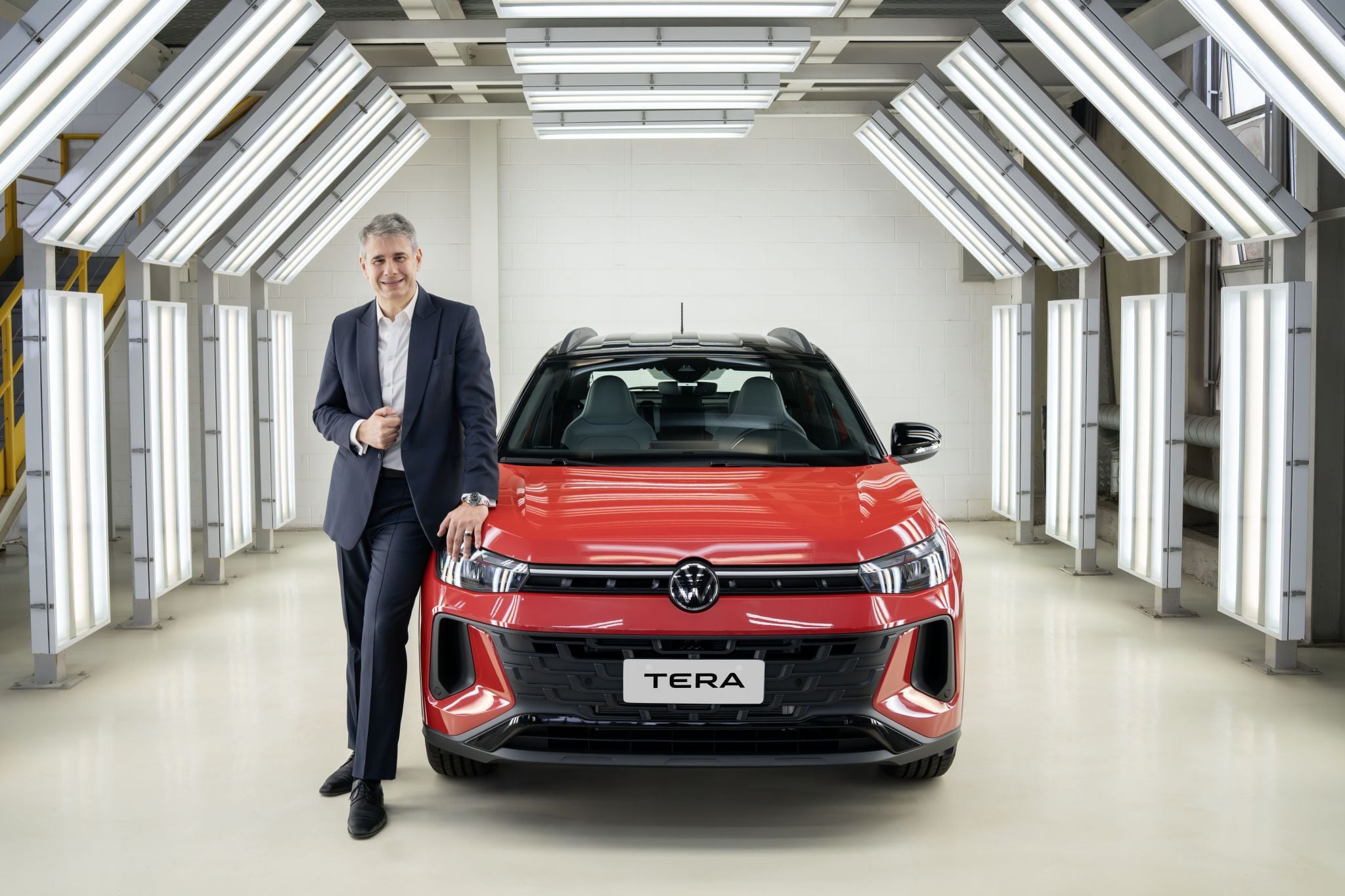
With more than a century of existence, the Brazilian automotive industry is facing another challenge: Chinese brands are looking for incentives to produce cars under the SKD and CKD regimes, with a very low nationalization rate. This affects, in turn, suppliers and job creation.
The Brazilian automotive sector ended 2025 with 2.55 million registrations of passenger vehicles and light commercial vehicles and production of 2.49 million units, compared to an estimated installed capacity of 4.5 million. The data shows a scenario of relevant structural idleness, at the same time that the market lives with the presence of more than 65 brands and the advance of imports.
SEE ALSO:
According to data presented by Volkswagen, based on information from Anfavea, the sector accounts for about 20% of the industrial GDP and maintains 109 thousand direct jobs. In this context, the debate on industrial policies, incentives for electrified vehicles via CKD and SKD, and balance of trade gains centrality. The company’s assessment is that the expansion of dismantled imports reduces the density of the local production chain, especially in strategic inputs such as steel.
It is not only Volkswagen that is investing in the national production of electrified models. In 2024, all manufacturers installed in Brazil announced billionaire investments and confirmed production of hybrid and electric models. There will be R$ 30 billion from Stellantis, R$ 11 billion from Toyota, R$ 7 billion from GM, R$ 5.5 billion from Hyundai, R$ 4.2 billion from Honda and R$ 4 billion from Mitsubishi.
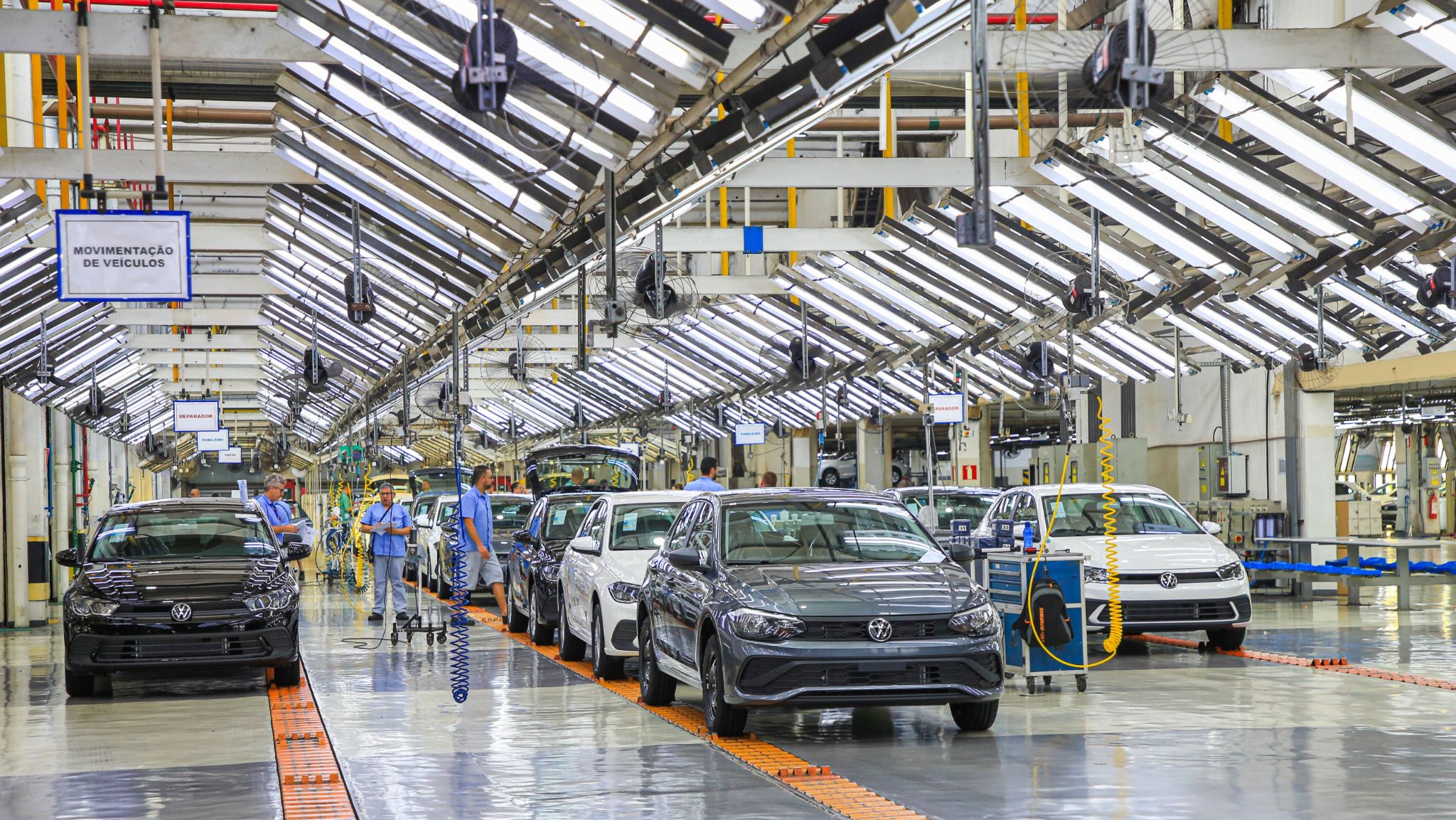
Volkswagen’s strategy in Brazil is anchored in the expansion of local content. In the Total Flex portfolio, the nationalization rate has already reached 85%, and the company plans to increase its purchases (parts and general) by 7% in 2026, totaling almost R$ 35 billion. Of the 750 current suppliers, 80% operate in Brazil.
An example cited is steel, which represents about 70% of the composition of a vehicle. The company moves approximately 26 thousand tons of the input per month, which sustains a chain that involves printing plants, systemists and logistics. In the CKD/SKD model, part of this multiplier effect no longer occurs, once components arrive ready in the country.
Volkswagen does not name names, but makes it clear that the recent incentives given to Chinese brands, such as BYD, in Bahia, are seen as unequal and predatory for the Brazilian industrial chain. This is because these manufacturing models do not promote local suppliers, since the kits arrive ready from their headquarters and are only spliced in Brazil.
The automaker announced investments of R$ 16 billion in Brazil until 2028, within a regional package of R$ 20 billion in South America. The offensive foresees 17 new vehicles in the Brazilian market by the end of the cycle, of which eight have already been launched, including Tera, New T-Cross, New Nivus and Golf GTI.
In 2025 alone, R$ 3 billion were allocated to machinery, production modernization and research and development. Previous projects from Up! to Tera, consumed more than R$ 3 billion in equipment and updating of industrial processes.
The four plants operated in two shifts throughout 2025, raising production by 17% to 538,657 units, compared to 460,841 in the previous year. Domestic sales grew 9%, reaching 436,336 units, while exports advanced 29%, totaling 116,495 vehicles.
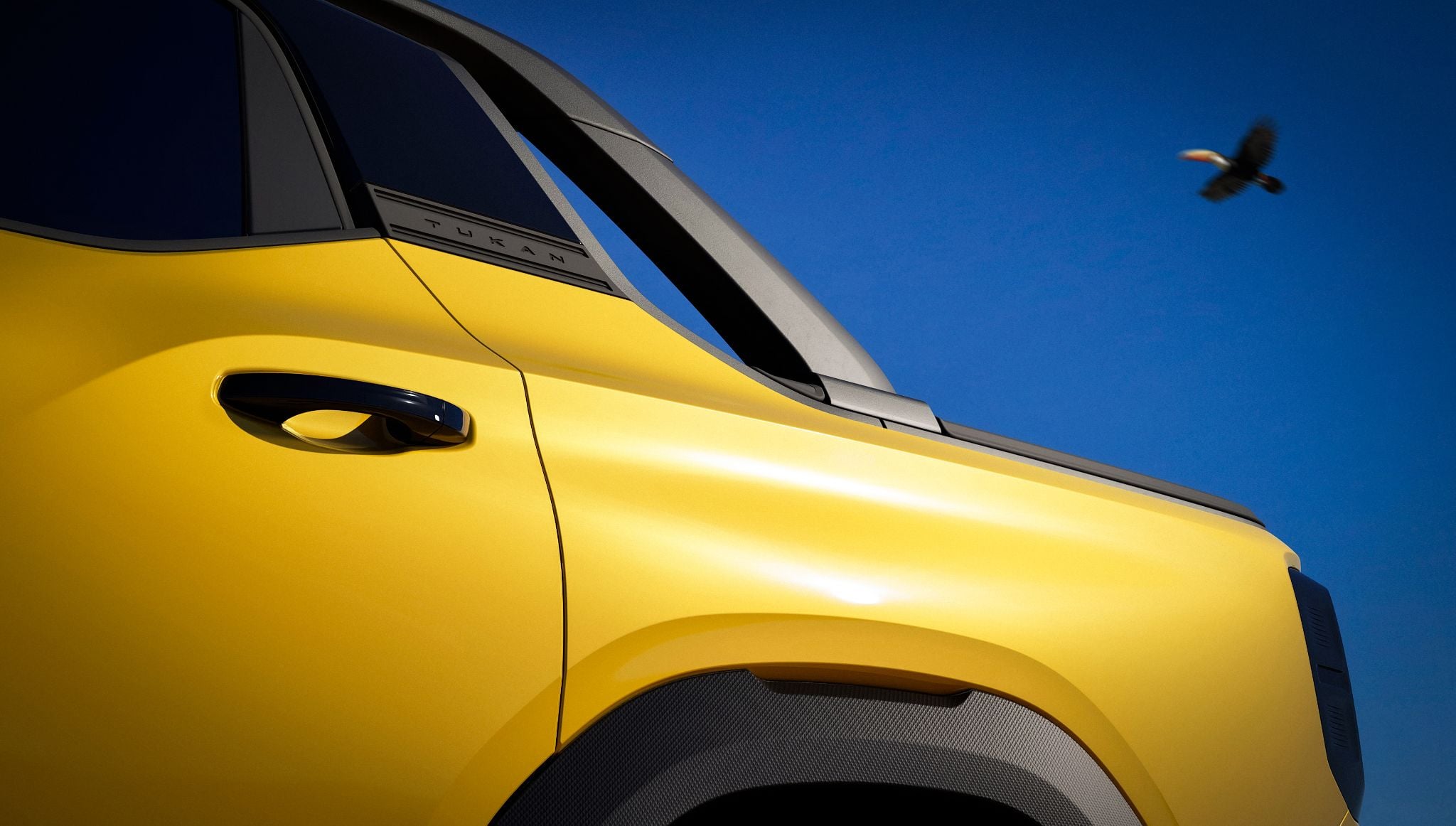
From 2026, every new model developed and produced in the region will have an electrified version. The Tukan pickup inaugurates this cycle as the first electrified Volkswagen in Brazil, with 76% of national parts and full development in the country. The model also marks the company’s entry into an unprecedented segment within the local strategy.
“The Tukan pick-up will mark the beginning of a new era for Volkswagen do Brasil. Our first electrified model, 100% developed and produced here, is already born with 76% of national parts, strengthening the national industry and generating wealth throughout the chain. This is the Brazil we believe in: a country that designs, develops and produces locally.
Volkswagen do Brasil has already been the sales leader in the two main market segments – SUVs and hatches – in addition to passenger cars for three consecutive years. Now we will expand our offensive with pick-ups, such as Tukan. And we remain firm in a non-negotiable commitment: to develop and produce in Brazil, including electrified, with a high rate of nationalization, sustaining jobs, promoting income and sustainable mobility”, says Ciro Possobom, president and CEO of Volkswagen do Brasil.
The movement takes place in an environment of technological transition and competitive pressure, with growth in the supply of imported electrified vehicles. The company argues that electrification with a high rate of nationalization is a condition to preserve jobs, local engineering and installed industrial capacity.
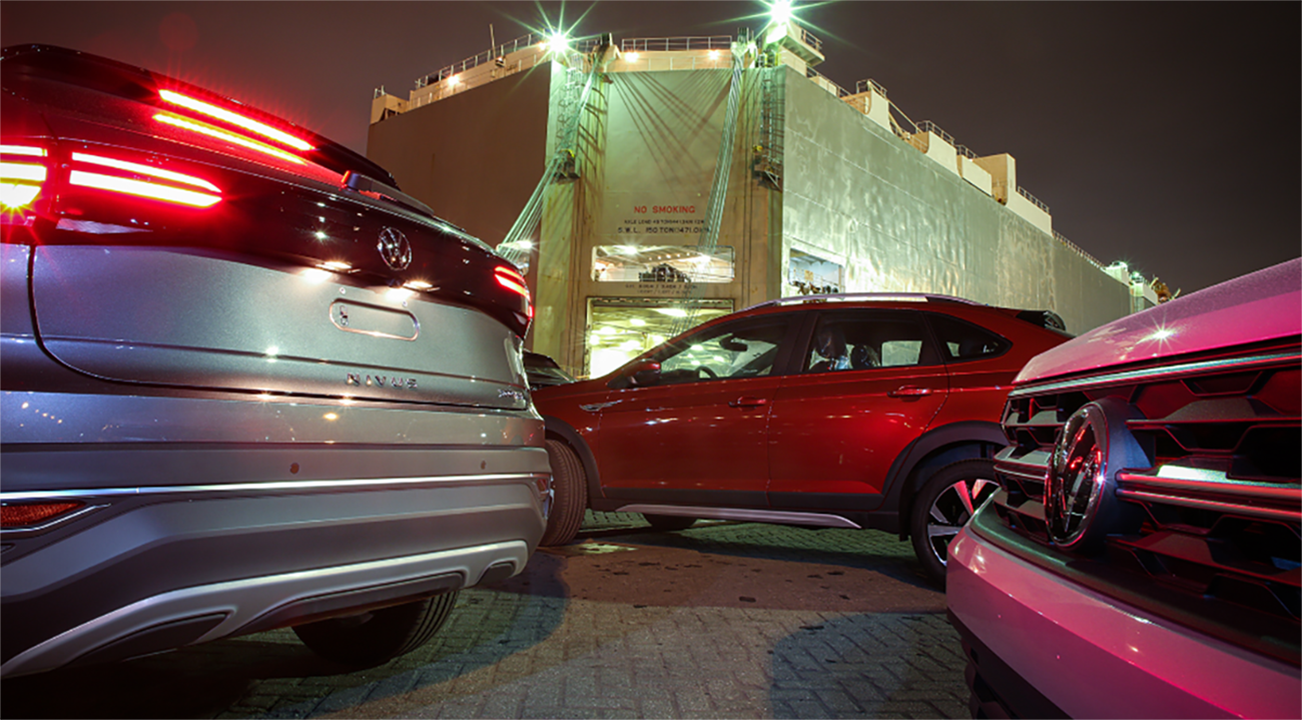
The logistics operation moves 16 ships and 770 containers per month, in addition to 17,500 trucks that circulate monthly between factories and suppliers. There are 1,440 delivery routes in the country and 6,000 km per day traveled internally in the industrial units to supply lines.
With 13,220 direct employees and more than 16 thousand service providers, the company has 1,300 professionals in engineering alone, distributed in 20 laboratories. In 2025, there were 587 hires for production, about 50% of whom were women.



