The famous "Glass Factory" inaugurated in 2002 has become a white elephant and has become a Technology and Research Center
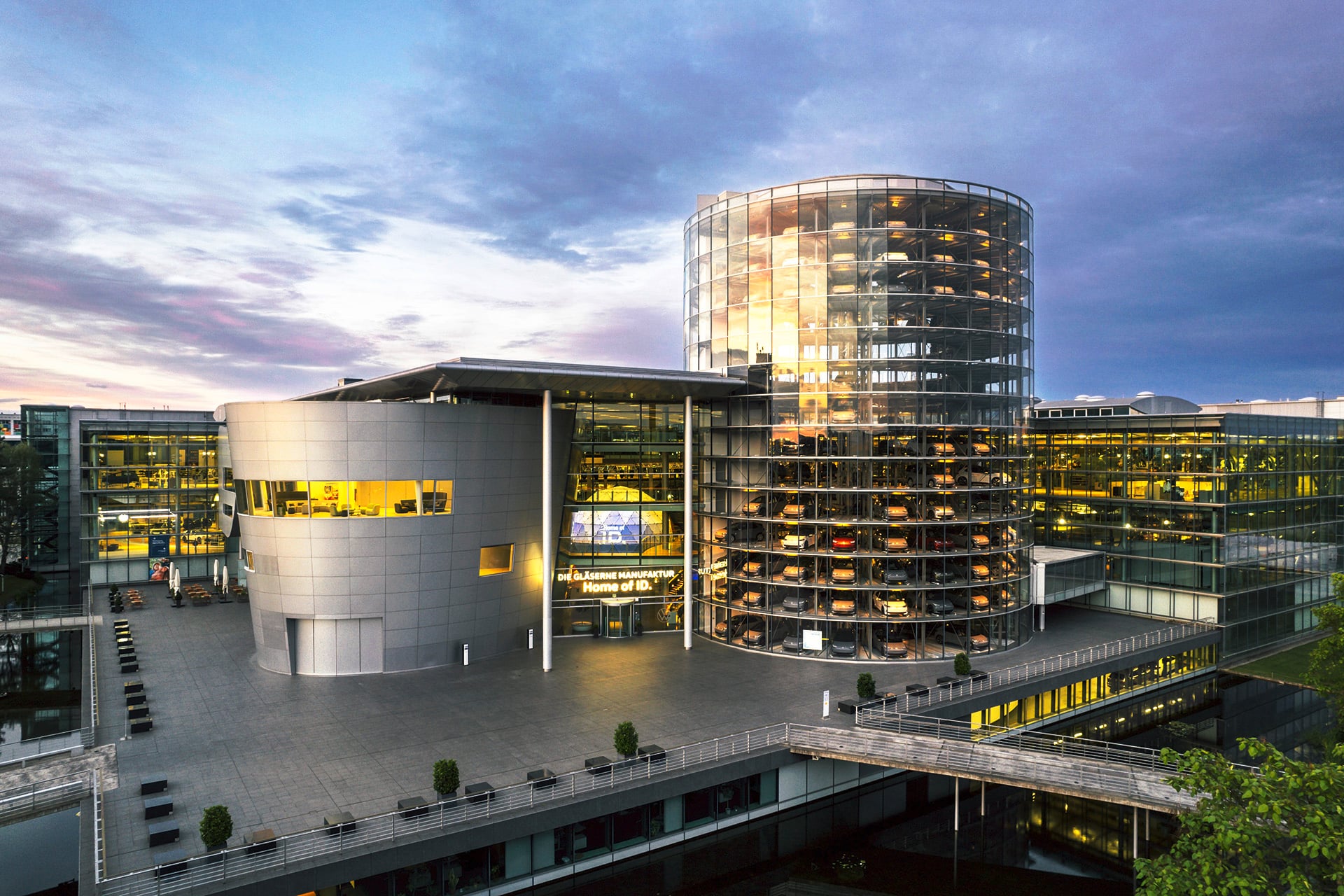
In Brazil, it is said that an unlucky place where nothing goes right is because there is a donkey skull planted. In Germany, that place is not under good stars (steht unter keinem guten Stern)
The VW plant in Dresden, Germany, was inaugurated in 2002 with all the pomp and circumstance. It was a brand new project and called Gläserne Werk – Glass Factory, in German or Transparent Factory.
SEE ALSO:
The first model produced was an equally bold project: the Phaeton, a large, luxurious car, with V6, V8 and W12 engines, on the Bentley platform and with advanced technology (it even had air suspension) to compete hand in hand with the top of the line from Mercedes, BMW and even with Audi’s A8, of the VW group.
But what VW’s “marketers” didn’t realize was that the market wouldn’t accept paying for a car with the VW logo on the grille the same as for a Mercedes. The Phaeton did not sell even half of the 20,000 annual units planned and was discontinued in 2016, with annual production of only 6,000 cars.
In the meantime, the unlucky factory still suffered the consequences of a flood of the Elbe River that affected several of its suppliers in the region

After the first failure of Dresden, the company decided to produce another novelty there, the e-Golf. Which should be the brand’s triumphant entry into the electric market. It was the first mass-produced by the brand, launched in 2014 and manufactured in Wolfsburg until 2017, when it moved to the Dresden assembly line, but discontinued three years later, in 2020, with more than 50 thousand units produced. The company realized that the electric Golf was not able to compete with new battery entrants in all markets around the world.
Volkswagen’s engineering handled the ball and designed a new platform for its electric vehicles, called MEB. In German: Modularer E-Antriebs Baukasten, or modular platform for electric vehicles. It could receive different body types (compact, sedan, SUV) of various sizes. The “transparent factory” was then adapted to produce the ID.3 and ID.4, ID Buzz (Kombi) and others.
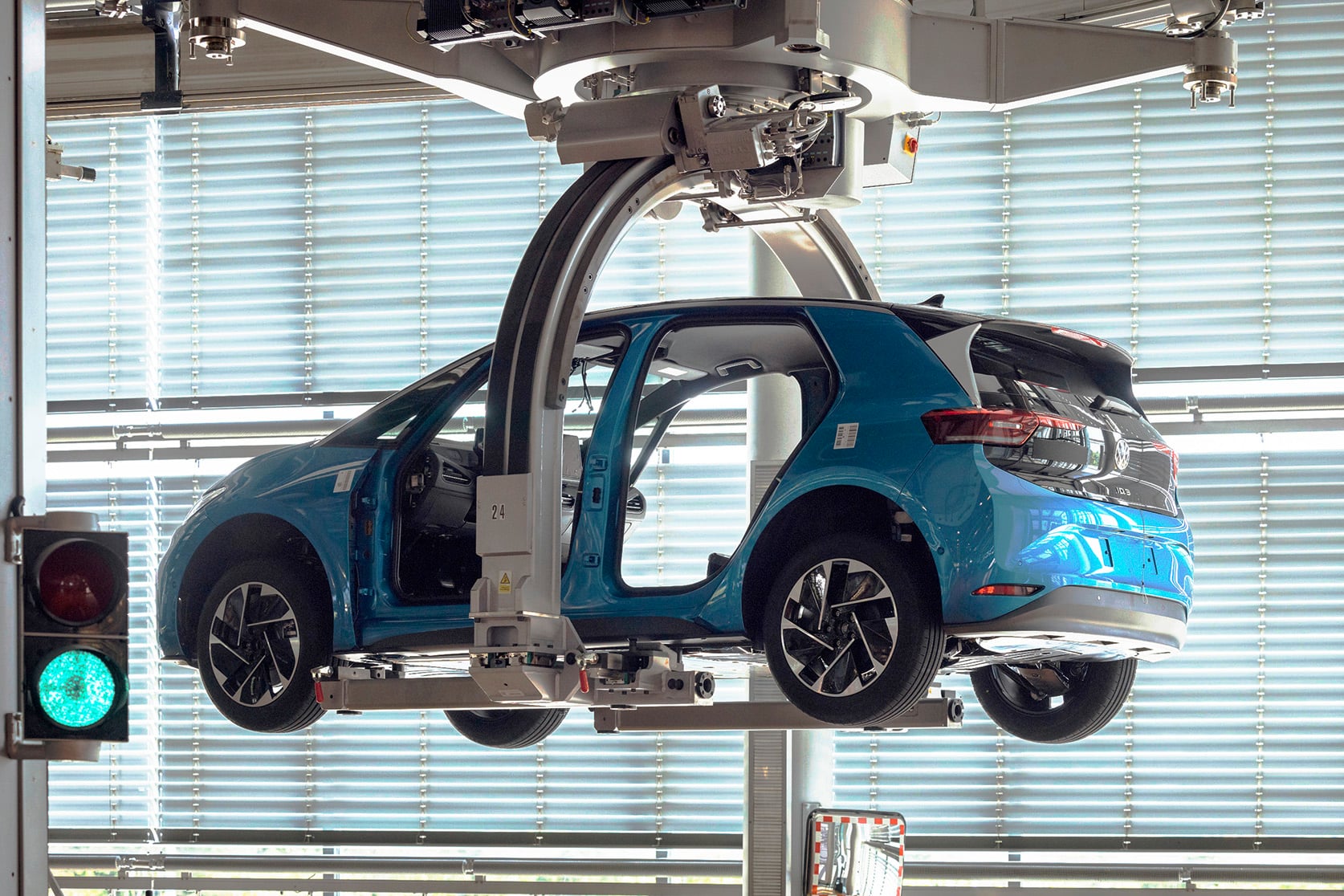
But the MEB project also did not work, as it burdened production costs and its cars were unable to compete with new Tesla and Chinese models, more technological and cheaper. Volkswagen lost revenue with the drops in sales of its electric vehicles in China, Europe and the US with the “tariff” decreed by Trump. The Dresden factory even had its production interrupted a few times, as its yards were full of trams rejected by the market.
As a misfortune is not silly, the brand’s plans for its battery cars had to be revised, as the main brands in the world began to reconsider the deadline for combustion engines. In Europe, for example, the ban on the sale of these models from 2035 has fallen apart and a new date has not even been set for the end of combustion cars (ICE – Internal Combustion Engine).
It was the death knell for the “Glass Factory” that became a white elephant and Volkswagen, for the first time in its 88 years of existence, decided to permanently close a plant, within a strict cost reduction plan. The solution was to transform it into a technology center in partnership with the University of Dresden, dedicated to research in AI, robotization and electronic components. It will keep part of the building as a delivery point for brand new cars, a museum of technology and industrial evolution.
Unhappy ending after 23 years and only 200 thousand units produced. The song “Ciranda Cirandinha” already said: “it was glass and it broke…”



