Launched in 2000 and produced until 2015, compact was GM's gateway to Brazil and is an affordable used car option
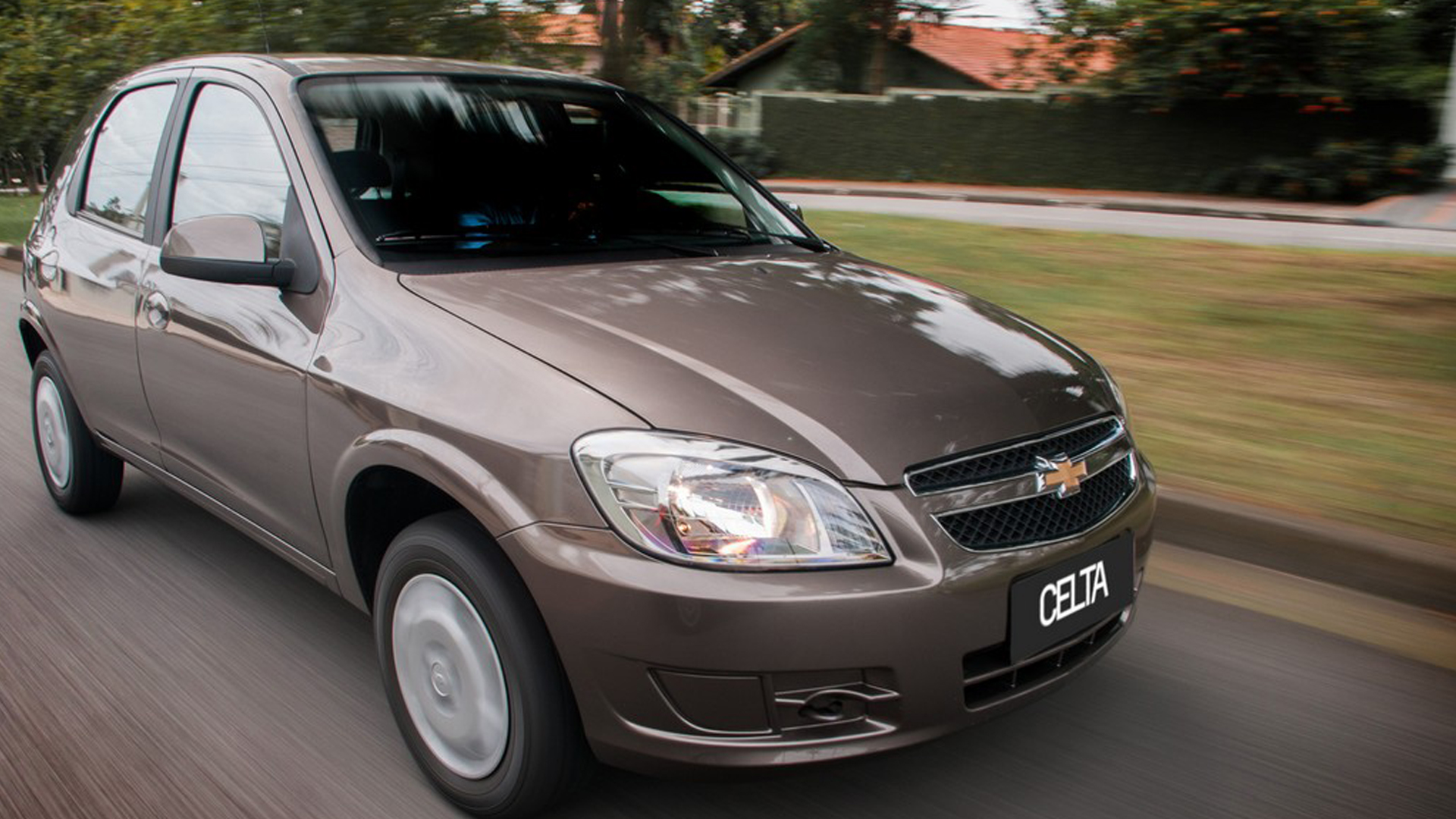
Entry car in Brazil has always had that function of attracting the consumer of the first vehicle and also making volume in the market. The Chevrolet Celta was created precisely for this. The model was launched at the turn of the century with the function of being the most affordable General Motors model. In addition to justifying a brand new factory in the south of the country.
Today, the Chevrolet Celta maintains one of its functions in the used car segment. It is a good option for economical compact and good for the city, in addition to being cheap.
SEE ALSO:
See now 10 facts about the Chevrolet Celta.
In the 1990s, General Motors had shaken up the compact segment with the Corsa line. It was the car that “popularized” electronic injection and brought a modern European platform.
But rivals had models that still fought on a shelf below. Such as Fiat Uno Mille and Volkswagen Gol 1000.
From the need to operate in this entry market, the Hyacinth Macaw project was born. Thus, the Chevrolet Celta emerged, a compact hatch to inaugurate the then new plant in Gravataí (RS) and to be positioned below the Corsa.
To make things cheaper, the new hatch took advantage of the architecture of the first Corsa – whose second generation was already being developed by GM. In this way, the Chevrolet Celta was launched in September 2000.
Over 15 years, it has established itself as one of the cheapest cars in the country and one of the best sellers. It had different versions, updated engines, underwent two restylings and stopped being manufactured in 2015 with more than 1.5 million units licensed.
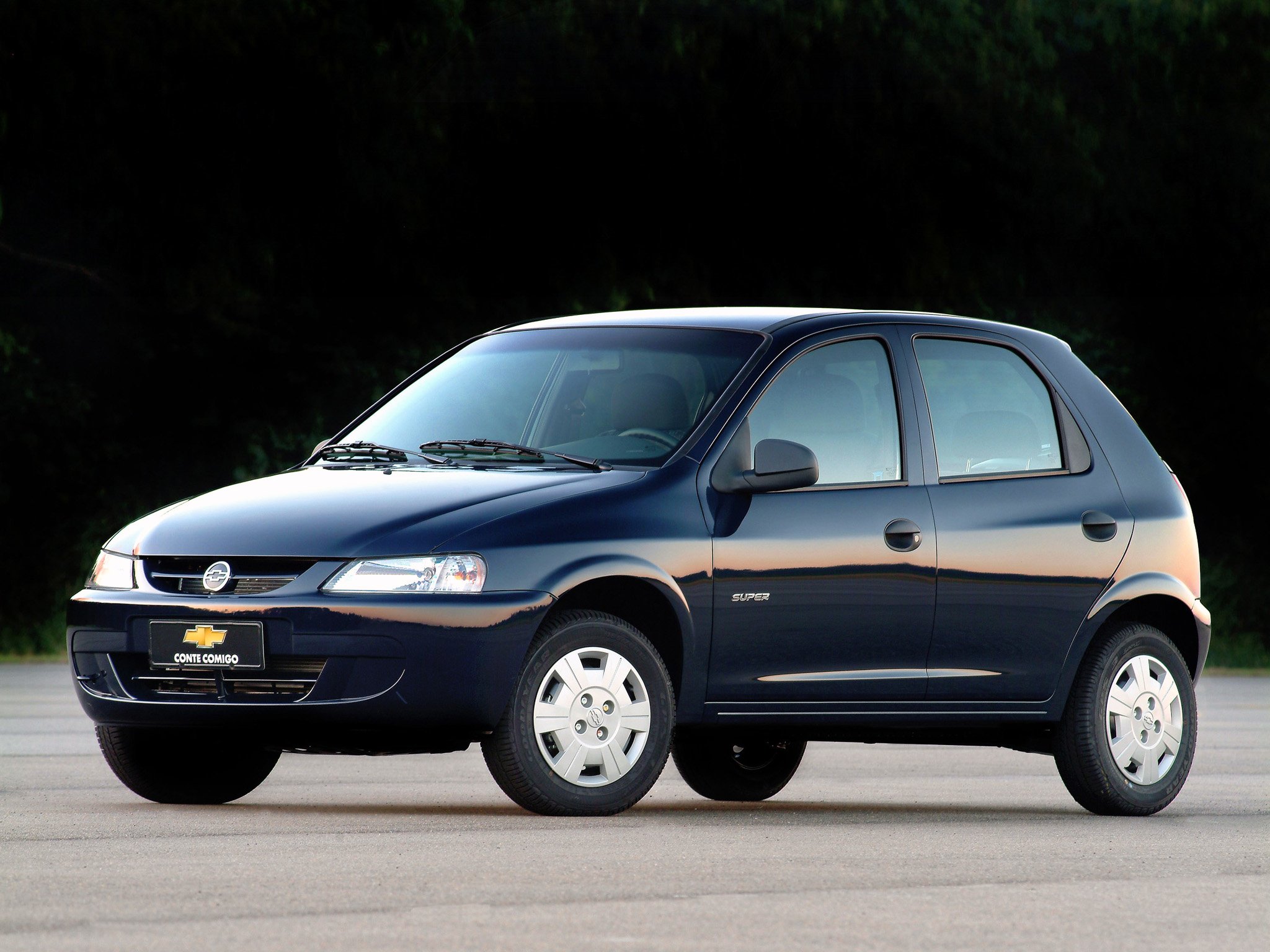
To get an idea of how the Chevrolet Celta started its low-cost strategy, the hatch started sales only in the two-door configuration and with a 1.0 engine.
The initial options of the compact line did not even have a tachometer or painted bumpers. Air conditioning? Nor as an option, something only available from 2001 onwards.
The weather was good with the Chevrolet Celta. In the years following the launch, the 1.0 engine gained an extra breath of power and the family grew with the arrival of the 1.4 option of 85 hp, which lasted a short time, from 2003 to 2007.

The big turning point came in 2006: the Celta underwent a restyling and an upgrade in the finishing materials. That year the hatch also gave rise to the Prisma sedan.
In 2011, Celtinha showed that it still had gas, receiving new makeup for the 2012 line. And in 2013, the compact adapted to the new rules, incorporating ABS brakes and dual front airbags, as the law required.
A detail is that the Chevrolet Celta lived side by side with other heavyweight compacts from GM such as the Corsa 2, the Agile and even its successor, the Onix.
The Internet had been born in Brazil a few years earlier, but what we know today as e-commerce was still weeds in 2000. It was in this jungle that the Chevrolet Celta became one of the first cars sold over the internet in our country.
In the online sale, the price of the entry-level model of the compact had a discount of 5.6%. In figures, it cost R$ 13,300.
But the customer didn’t even need to have internet at home. Most Chevrolet dealerships had points, tables or even kiosks with a computer so that the customer could make the digital purchase right there in the store.
The 1.0 Family I engine was the protagonist of the Chevrolet Celta line. Initially, the set delivered 60 hp.
However, in 2002, it received an important update: the compression ratio was raised, earning the codename VHC (Very High Compression), which raised its power to 70 hp.
Three years later, the engine became flex, maintaining the same power levels, regardless of fuel. The most significant improvement, however, occurred in 2009.
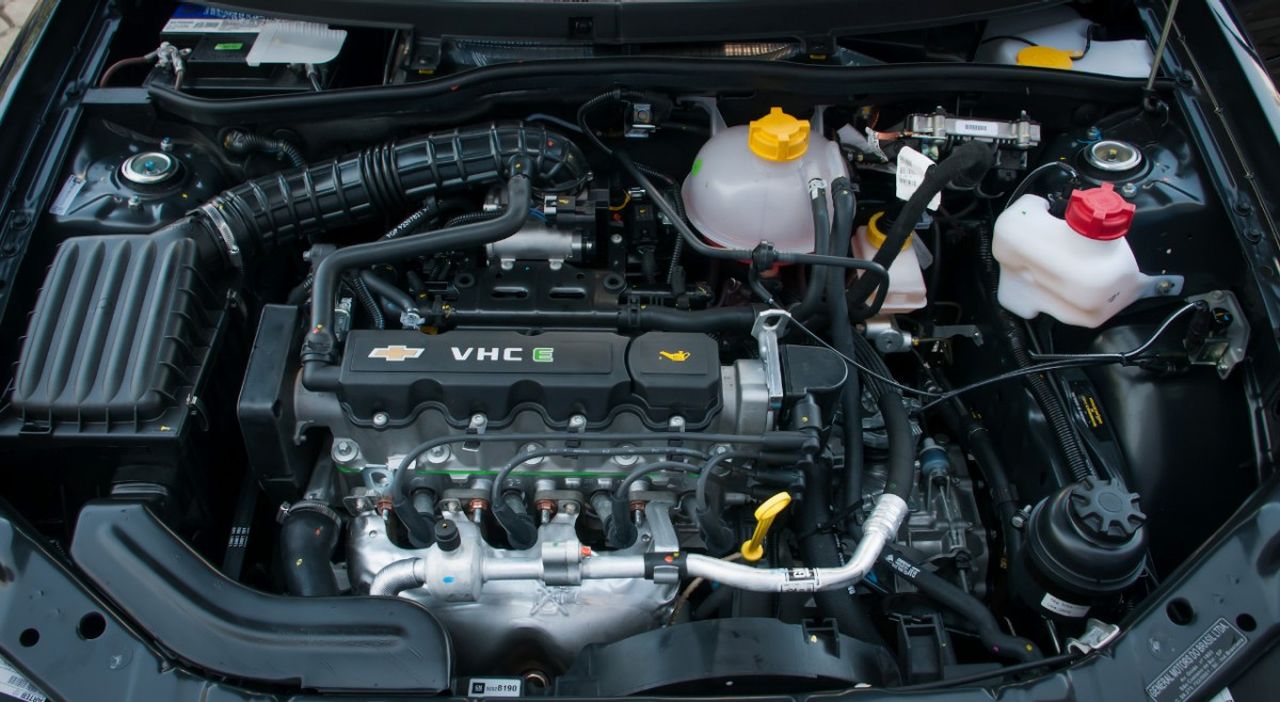
The 1.0 engine was optimized and the Celta gained the electronic throttle feature. This change resulted in the launch of the VHCE engine (the “E”, for Economy), which brought a new increase in performance:
GM did a darn marketing on top of the efficiency of the Celtinha at that time.
To give you an idea, according to the manufacturer, the Celta’s road cycle with gasoline was 17.8 km/l. As GM had increased the hatch’s tank to 54 liters, the model promised a range of about 1,000 km.
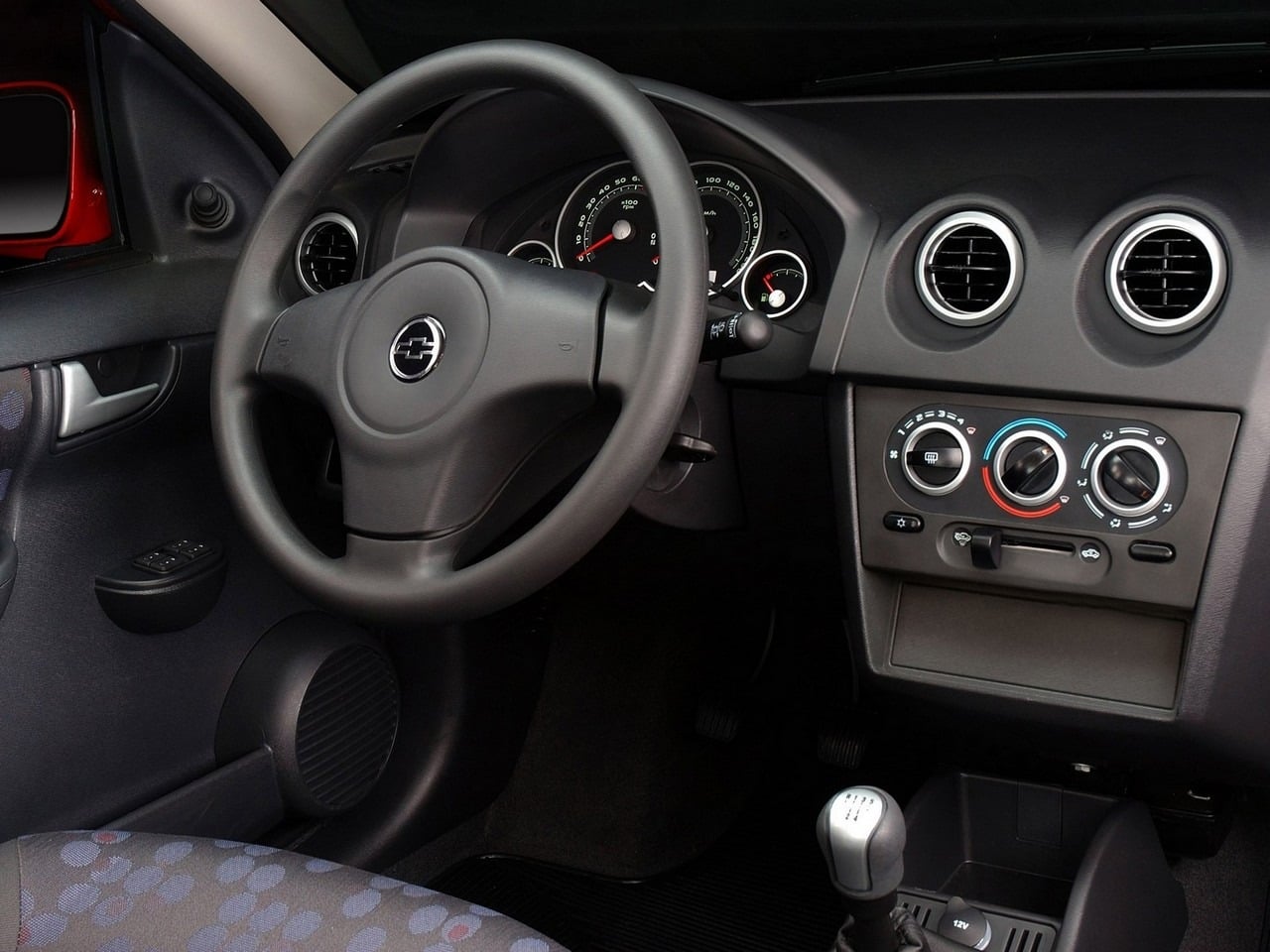
The car’s proposal has always been to be cheap and the finish reflects that, with a lot of simple-looking hard plastic.
As for space, it is common to a compact from the 2000s. They go tight for legs and knees, that kind of crooked driving position, but satisfactory ergonomics.
The trunk follows logic and takes 260 liters. Enough for two medium suitcases.

We suggest the Chevrolet Celta LT 2014, which already incorporates the brakes with ABS and the double front airbag required by law. Otherwise, only the basics in equipment.
Folding rear seat, rear window wiper, defroster and washer, tachometer, green windows and three-spoke steering wheel (new in the 2014 line). Air conditioning and power steering are easily found options.
In the 2014 line, some details incorporated into the range. A storage compartment with cup holders between the front seats, chrome trim on the front grille and decorative black sticker on the center column in the four-door versions.
At KBB Brasil, the Chevrolet Celta LT 2014 has an average dealer price of R$ 36.645 (calculated in the second half of December 2025).
The Chevrolet Celta has a reputation for simple and cheap maintenance, as it has to be. Other than that, the Familia I engine is an old acquaintance of the repair sector.
See the prices of some components of the Chevrolet Celta 1.0.
On the Chevrolet Celta owners forums and on Reclame Aqui, it is common to find reports about different types of leaks, including:
In addition to leaks, the VHCE engine deserves special attention. During the launch period, this engine had failures due to an incompatibility between the design of the pistons and the aluminum of the assembly, which resulted in some breakages.
Other sources of headache for Chevrolet Celta owners include the stabilizer bar tensioner, water seepage into the cabin, and ignition coil failures.
Celtinha also starred in an unusual recall. In April 2011, GM issued a recall due to Takata’s infamous airbags – the largest recall in the history of the auto industry.
The notable point is that Chevrolet not only called Celta owners (produced between 2012 and 2016) for the exchange, but also offered gifts as an incentive to customers.
The Chevrolet Celta caused a certain frisson on websites and social networks. That’s because it was reported that the compact would be sold again in 2025.
What sparked the fake news was the presentation, in Mexico, of the new generation of the Aveo, which is made in China by Saic, GM’s long-time partner there.
But if you miss Celtinha, it will have to be used – forget about any new Celta 2025 here.



