Some manufacturers, before offering and being recognized for their luxury, were already working in the fields, going from clay to luxury
The origins of the major car manufacturers are much more diverse than the public imagines. Many brands that are now synonymous with status and speed started producing items that had nothing to do with asphalt, or followed parallel paths in agribusiness. In this column, we explore five prestigious manufacturers that have made their mark on tractor history.
SEE ALSO:
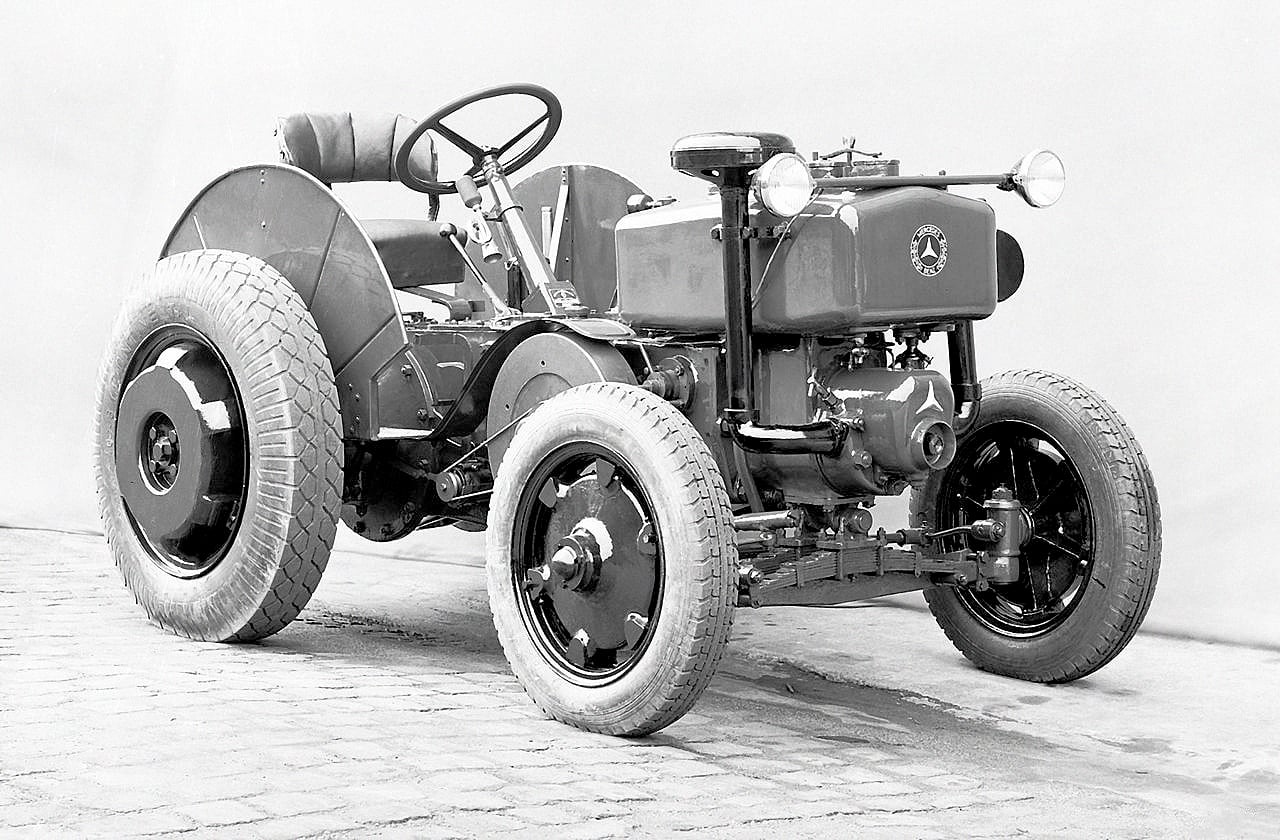
For a brief context: of the companies that came together to found Daimler-Benz, Benz & Cie. already had experience in building tractors, especially with motorized plows known as Benz-Sendling. This success meant that, after the foundation of Daimler-Benz, the line was maintained and received investments for the development of new models.
In 1928, the OE model was launched, a monocoque tractor whose acronym stood for Oelmotor Einzylinder (single-cylinder oil engine). Equipped with a horizontal single-cylinder diesel engine with pre-chamber, it delivered about 24 horsepower, mated to a three-speed gearbox.
Interestingly, the model was very robust and could work with low-quality fuels and even heavy oil. It had an evaporative cooling system and, the most peculiar detail: the start was made by means of a cartridge and crank. Although resistant, its production was completed in 1935, with 380 units produced in seven years. The closure occurred due to the world economic crisis, which reduced purchasing power, but Mercedes-Benz would not abandon the sector.
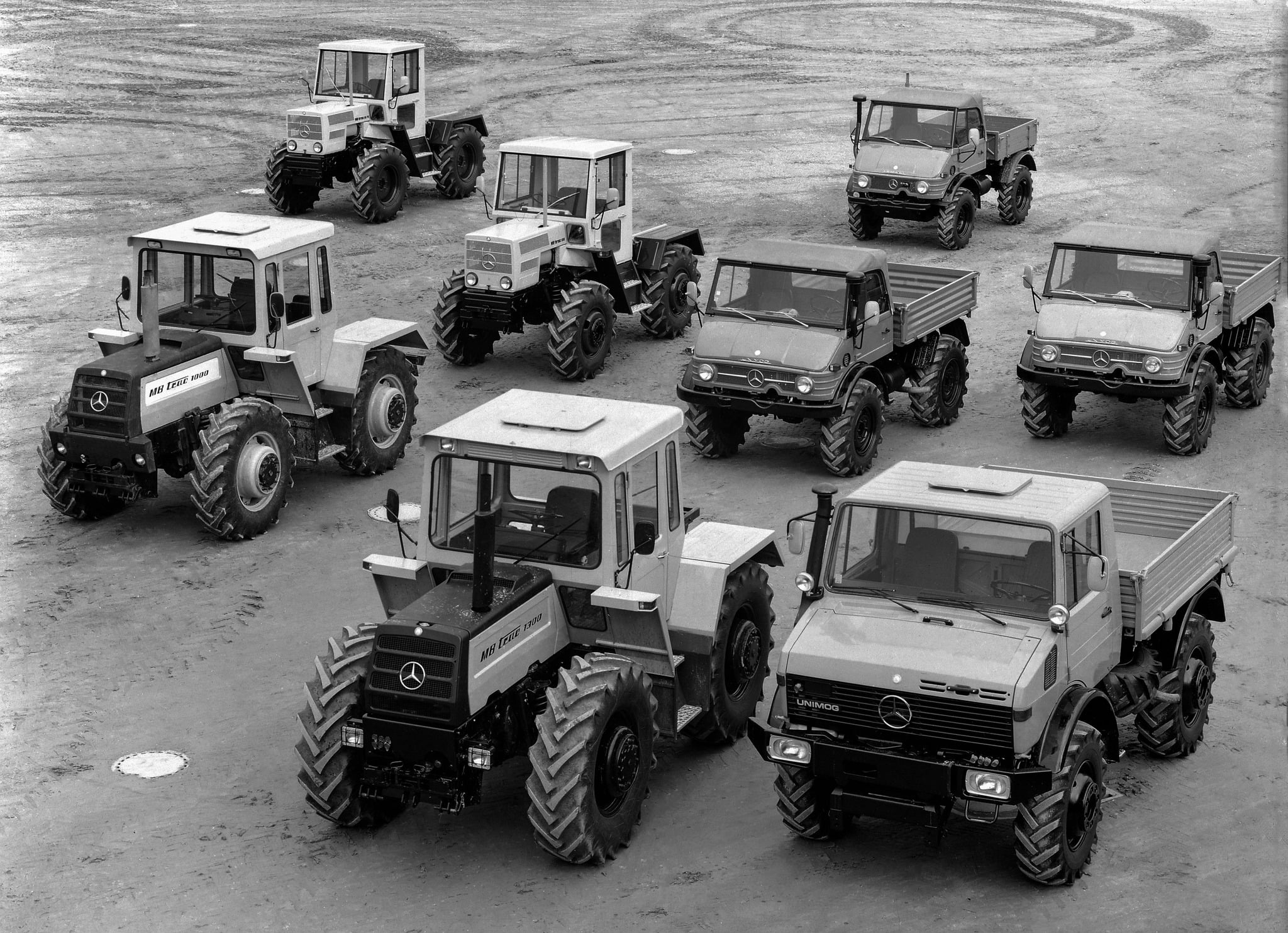
In the 1970s, Mercedes-Benz returned to the field. The new models were based on the Unimog, as many farmers found the conventional Unimog too fast and inappropriate for heavy duty. In June 1972, at the DLG agricultural fair in Hannover, the automaker presented the prototype of the 65/70 model, considered “light”.
Serial production began in 1973. Soon the 900 and 1000 models (medium) and the heavy series (1300 and 1500) appeared. In the 80s, the 1800 was launched, equipped with an intercooler. Despite the technological innovation, the MB-Trac faced an obstacle: the high price, which did not always justify the investment. In 1991, the activities were terminated, but the technology was sold to the company Werner Forst- und Industrietechnik, which continued production with a focus on forestry use. Between 1972 and 1991, about 41 thousand tractors were produced.
Hyundai has a curious history. In the USA, for example, it is common to find Hyundai Translead road implements, but our focus today is on heavy machinery.
Hyundai Heavy Industries was founded in 1972 by Chung Ju-yung. Legend has it that, in order to get the initial loan from an English bank, he showed a 500 won note with the drawing of a Korean “Turtle Ship” from the sixteenth century, proving that Korea already knew how to build ships long before the British. The boldness worked.
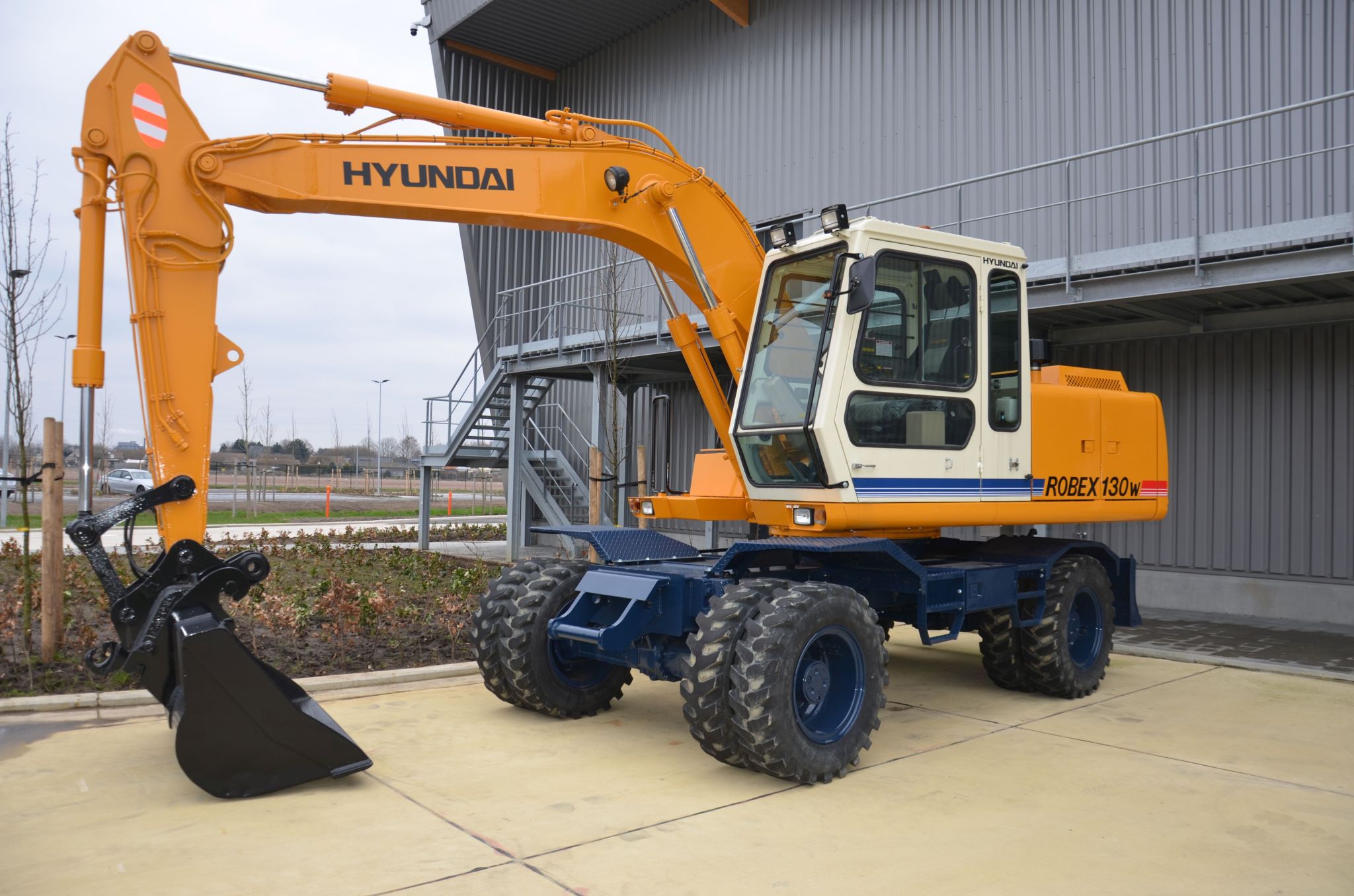
The company became a giant in the construction of roads and ships. Initially, they used equipment from other brands, but Hyundai, dissatisfied with the performance, decided to manufacture its own. In 1987, it presented its first excavators, intended for the Korean domestic market, which was experiencing an infrastructure boom.
In the early 90s, the Robex series helped in international consolidation. In the 2000s, they entered the agricultural segment in partnership with TYM (Tong Yang Moolsan). In 2021, Hyundai bought its main competitor, Doosan, changing its name to HD Hyundai Construction Equipment.
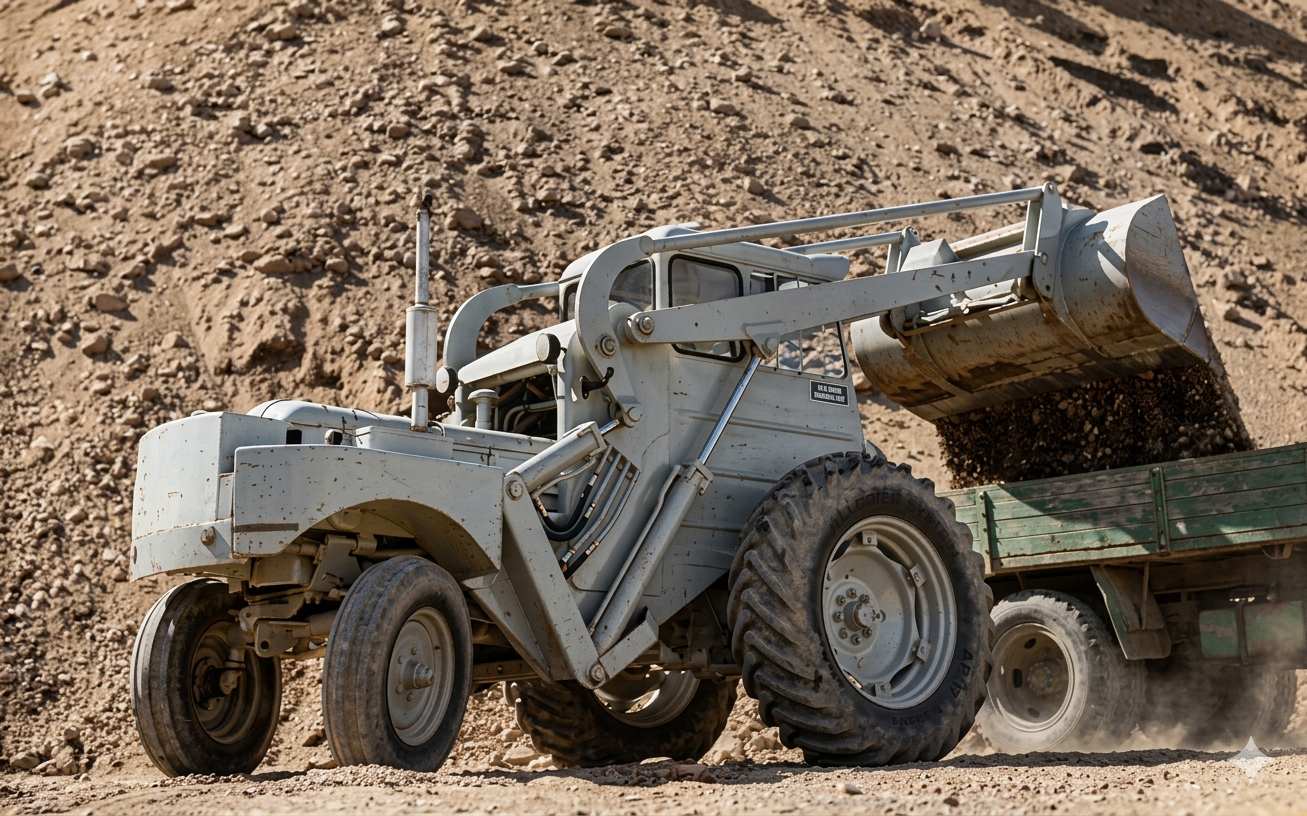
Similar to Mercedes, Volvo CE’s story started early. In 1832, Johan Theofron Munktell founded a workshop. In 1853, he built Sweden’s first locomotive, and in 1913, he launched the first Swedish tractor, the ME 30-35.
At the same time, in 1832 (the same year as Munktell), the Bolinder brothers founded a company focused on marine engines. Later, the companies merged, creating Bolinder-Munktell (BM). In the 50s, Volvo — which already manufactured cars and trucks — acquired BM to enter the construction segment, creating Volvo BM.
In 1954, they introduced the H10, the world’s first wheel loader with parallel lifting arms. In 1985, Volvo joined forces with Clark Michigan, expanding its portfolio. In 1998, it bought Samsung’s equipment division in South Korea.
Today, Volvo CE is a leader in innovation, producing articulated trucks (the “Gecko Trucks”) and developing 100% electric excavators.
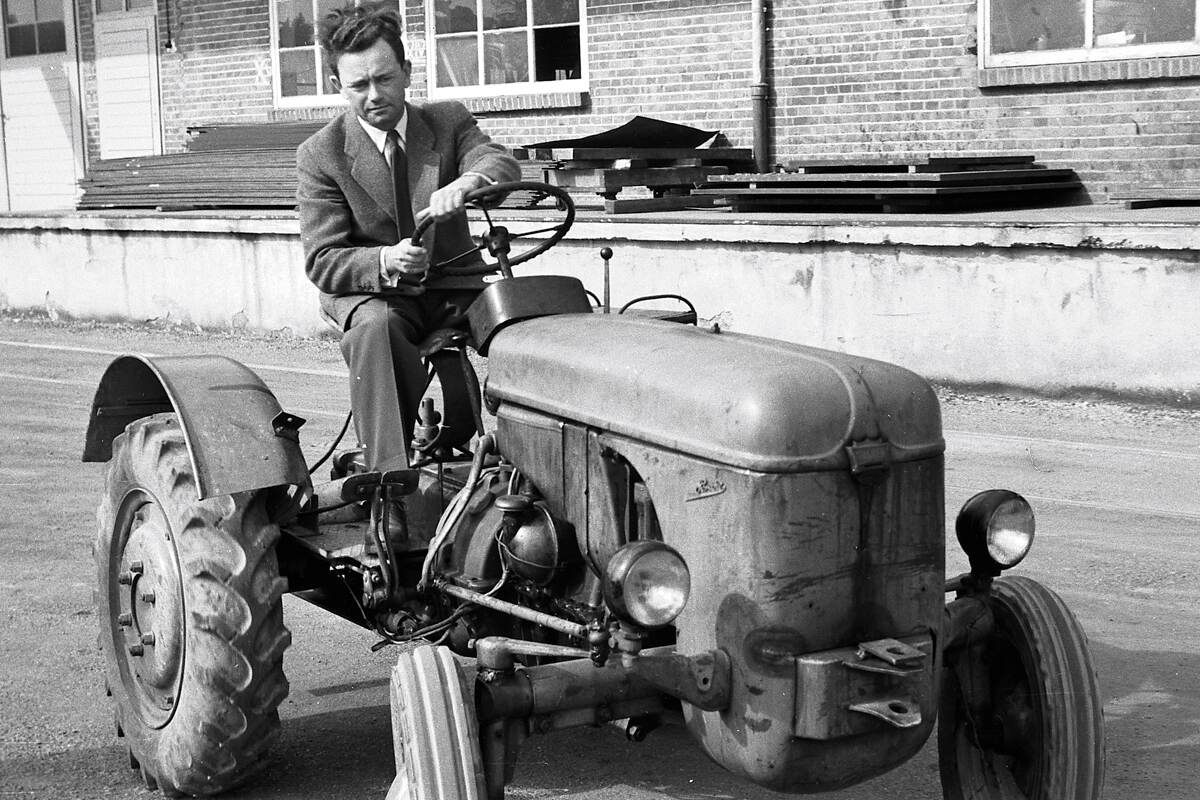
Ferdinand Porsche didn’t just design the Beetle; he was also given the mission to create the Volksschlepper (People’s Tractor). The goal was a simple, cheap and modular machine for small producers.
The prototype appeared in 1938, with an air-cooled two-cylinder engine and an innovative concept of hydraulic coupling (fluid clutch), allowing smooth gear changes. With World War II, the project was paralyzed. In the post-war period, without its own factory, Porsche licensed the project to Allgaier. Thus was born the AP 17, sold as Allgaier System Porsche.
It was such a success that Mannesmann bought the division and created Porsche-Diesel Motorenbau GmbH. The tractors were divided into four categories: Junior (1 cylinder), Standard (2 cylinders), Super (3 cylinders) and Master (4 cylinders and 50 hp). In 1963, with the market saturated, Porsche decided to focus its engineering resources on the development of its most iconic sports car: the 911.
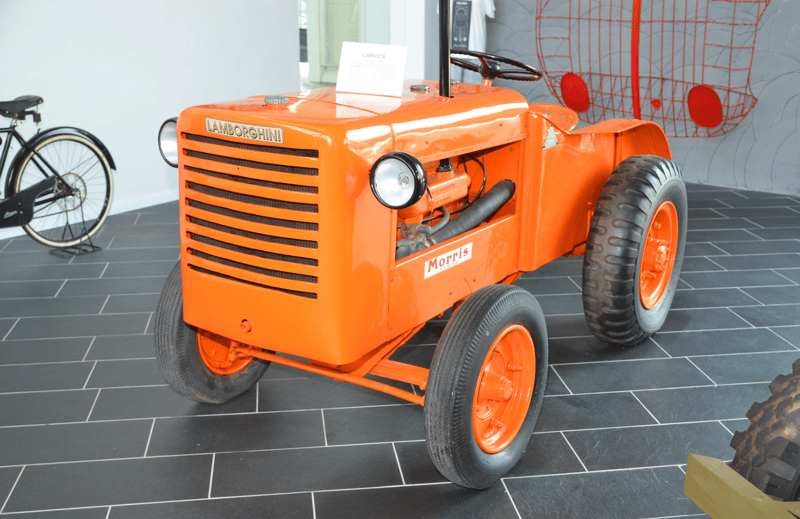
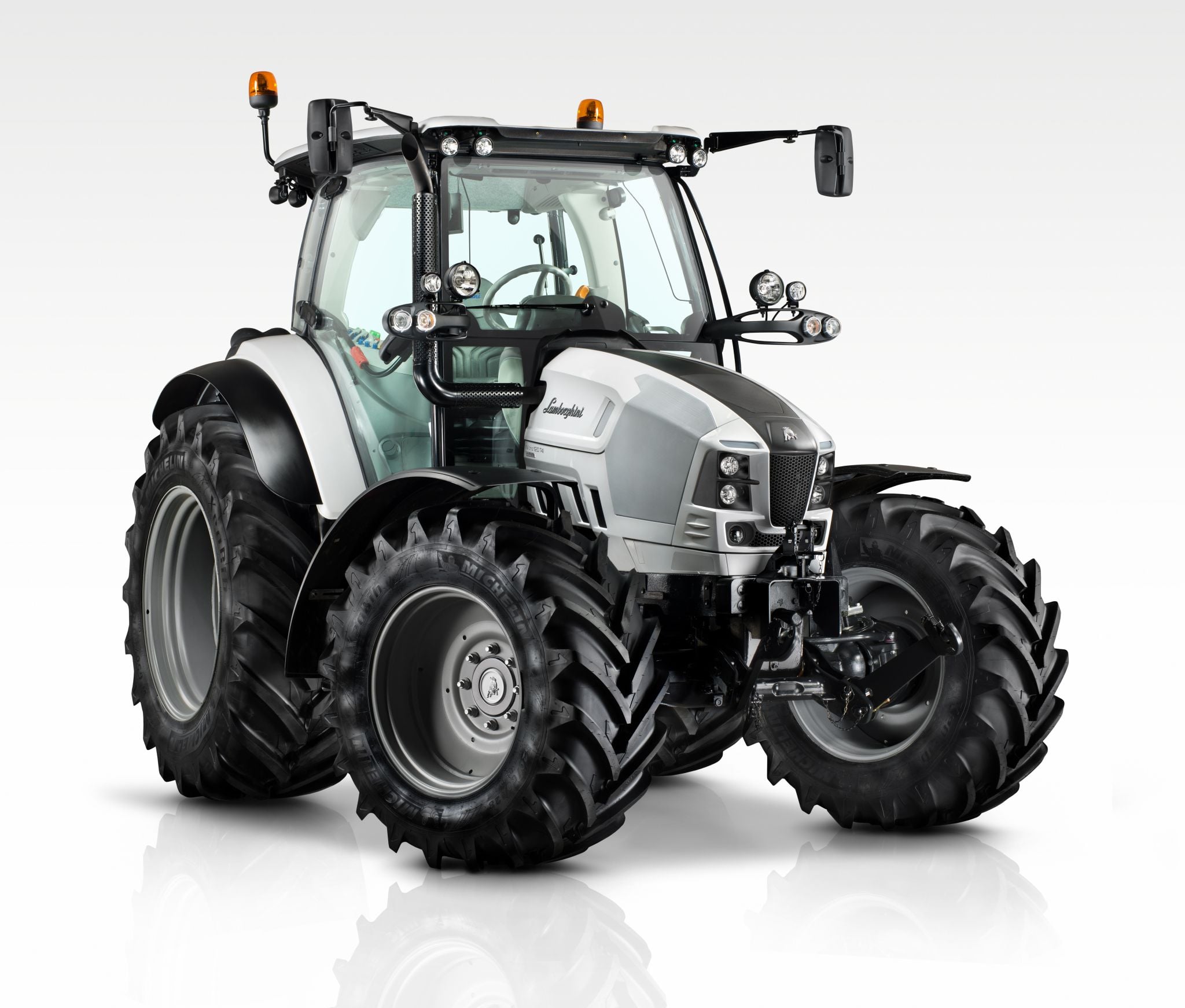
The most famous story is that of Ferruccio Lamborghini, who, after being treated with contempt by Enzo Ferrari, decided to create a car that surpassed the prancing horse mark. But its origin in tractors is just as fascinating.
A mechanic in the Italian air force in World War II, Ferruccio noticed when he returned home that farmers needed machinery but could not afford new equipment. In 1948, he created the Carioca, a tractor built with remnants of military vehicles (tanks and trucks) from the war.
The differential was a fuel vaporizer invented by Ferruccio, which allowed the engine to start with gasoline and then run on diesel (cheaper). The success was immediate. In 1951, the L 33 appeared, the first all-Lamborghini tractor. In the 60s, the brand was already manufacturing its own engines and was the first in Italy to offer synchronized gearbox as standard.
After economic crises and orders canceled due to coups d’état in Bolivia and problems in South Africa, Ferruccio sold the tractor division in 1973 to SAME (now the SDF group). Lamborghini Trattori remains active to this day, maintaining the legacy of luxury and efficiency in the field.



