How did an unpretentious agenda of curiosity become a discussion in various corridors of the automobile industry?

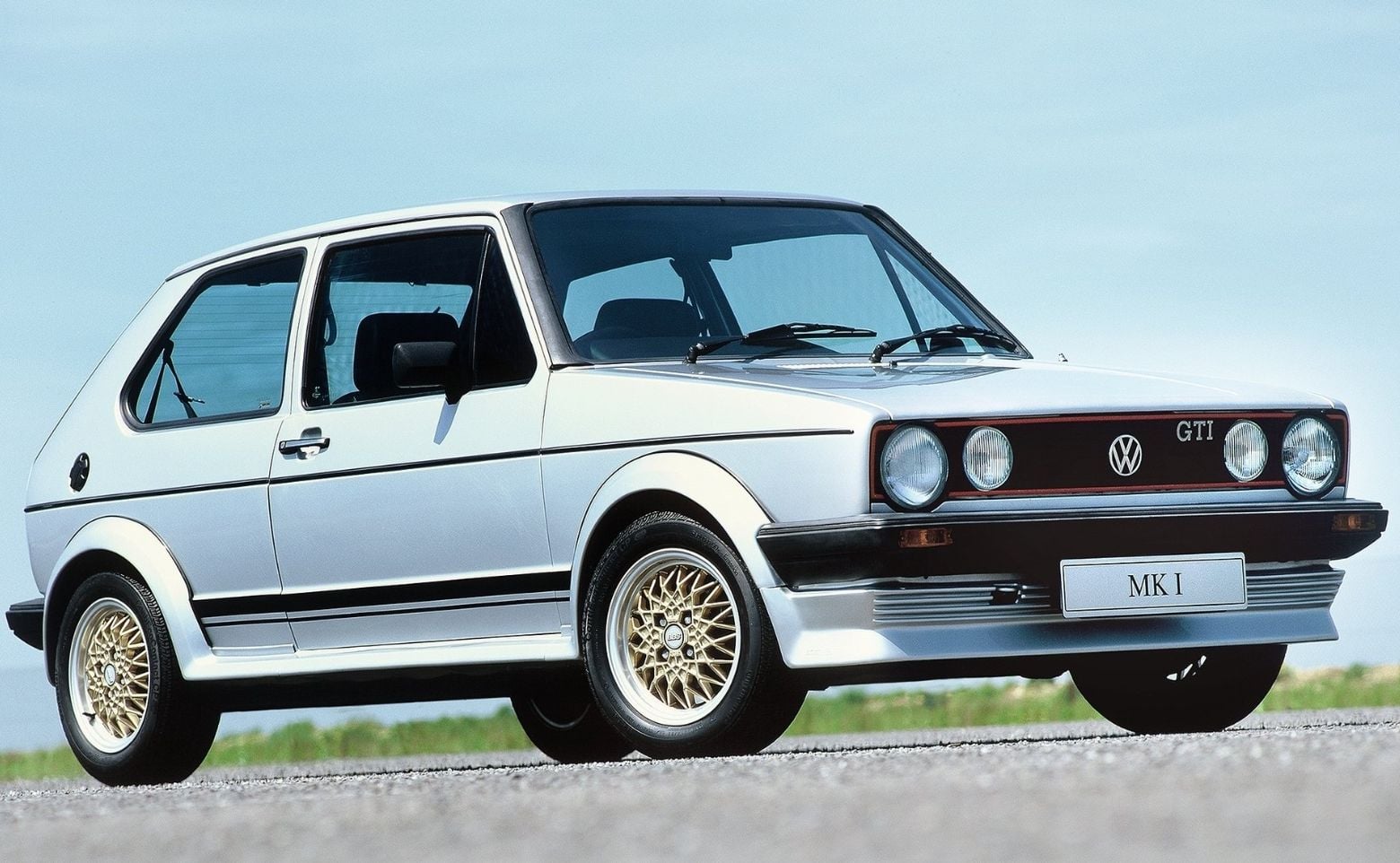
The Volkswagen Golf GTI has just won a 50th anniversary edition in Europe. Beautiful, with a limited run, a car show. And the news reminded me of a curious fact that occurred a few months ago.
SEE ALSO:
In a conversation with friends about the origin of the GTI, which was an unofficial project (Skunk Works) of a team of Volkswagen engineers, but which became one of the great icons of the brand. Hence, a question arose: would it be possible for local brands to use the “ingredients” they have at hand to manufacture spicy versions of their cars in line, as was the case with the GTI?
With the story in mind, I sent emails to 10 manufacturers installed in Brazil for a story about cars that could be sold in Brazil, using the available engineering resources and with the emotional appeal of sports models of the past. It didn’t take long for the advisors to start responding.
They wanted to understand the agenda, the reason and our intentions. Gee, I didn’t have any ulterior motives, it was just an exercise in creativity, something curious to activate the affective memory of readers. No one was saying that the XYZ brand was going to release an ABC Turbo GT Plus RS Carbon Purple Black.
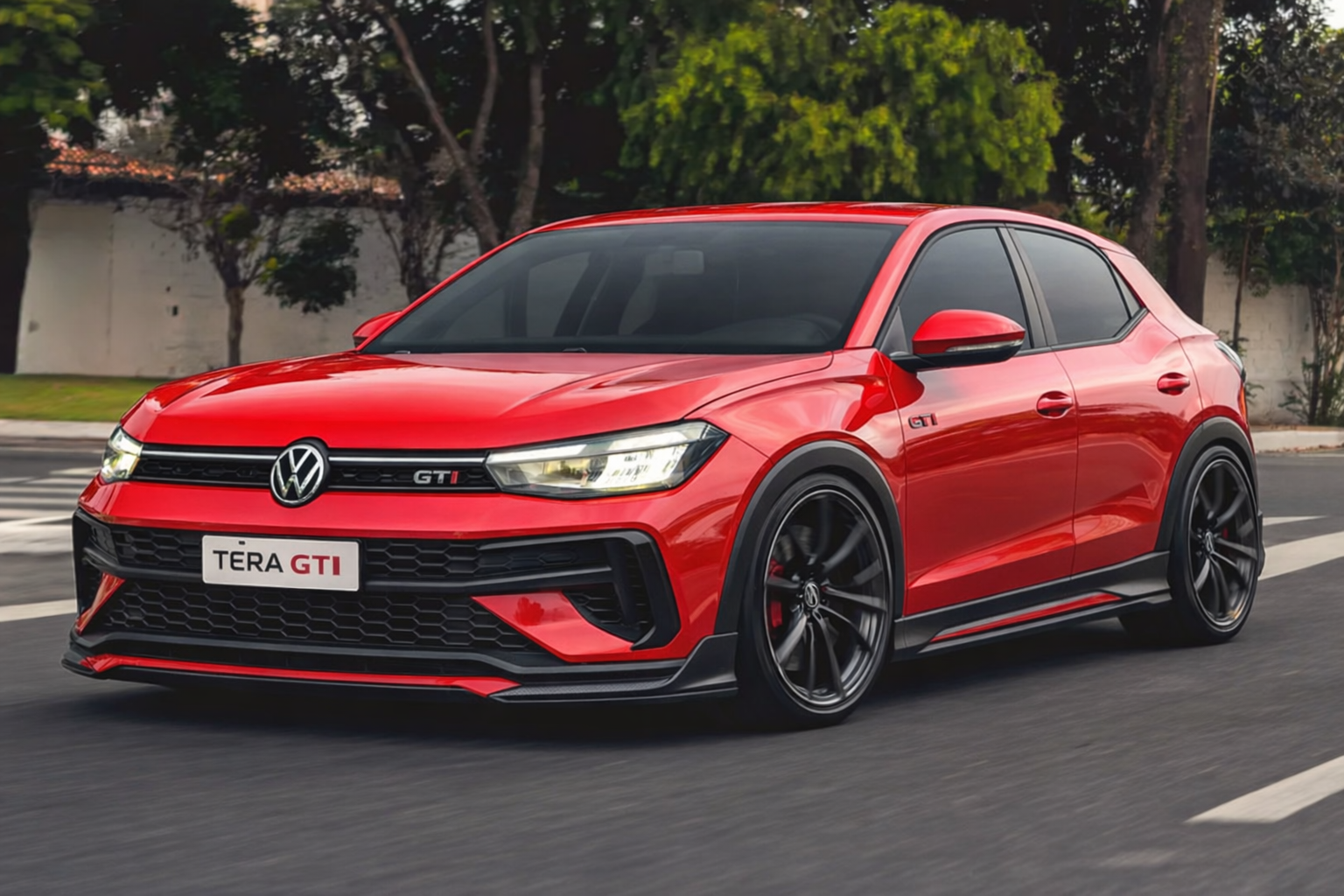
We just wanted to play with nostalgia. Imagine an Onix SS or GSI? Or an Argo Turbo? Maybe a 208 GTI (which was unveiled in Europe) or a Kardian RS. How about a Tera GTI, or a City Type R? Cars that, in theory, could receive more powerful engines and resort to famous acronyms. But the little stick turned into a corporate stir.
Many colleagues on the other side of the counter started calling me. One of them said that marketing executives were afraid to respond, as it would depend on a product development and legal endorsement, as it could look like it would be a new product and they would need to be sure that it could be done or not.
In other words, they did not understand that it was just a free exercise of imagination and not a declaration of commitment. “They are not understanding why you want to do this story. They are Cartesian, so we will decline,” said an aide.
Another long-time colleague called me full of fingers to move me from the agenda. He said that the class loved the idea, but that they were also afraid of creating an incorrect expectation in the public and even discrediting the online models. “As we are friends, they asked me to talk to you so as not to be upset about not responding,” commented the old friend.
In fact, manufacturers did not want to document that they had the technical resources to develop a new product, but that for marketing reasons it would not make sense to do so. After all, the question could arise: “if you can do it, why not do it?”
The answer is simple: cost. To develop a high-performance car, it is necessary to predict the cost, volume, target audience. That is, it is necessary to put on paper how much it will cost and how long it will take to amortize the entire cost. An example, in 2019, Fiat launched the Cronos HGT, with the same mechanical set as the Precision version: 1.8 hp engine, six-speed automatic transmission and the same suspension adjustment.

In front of the car, I asked Fiat’s technical advisor Ricardo Dilser (who is now at VW) if the sedan didn’t deserve a spicier package, with recalibrated suspension, new exhaust and manual transmission. He explained that if all this were applied, the sales volume would be minimal and the car would not pay for itself. “The consumer wants to take home that look, but does not want to give up comfort. You don’t want a noisy car that shakes,” he explained while sipping a cup of coffee.
And it’s a fact, the Renault Sandero R.S, which was the coolest car of the French brand in Brazil, sold just over 4.6 thousand units in the six years it was in line. Despite being a spectacular car, it had very firm suspension, higher consumption than the Sandero 1.0 or 1.6, not to mention that it was much more expensive.
Thus, many special editions end up being only in decoration, as it does not change the manufacturing process, will not have development and approval costs and also does not compromise pricing. But we didn’t want a pocket muscle car, we just wanted to imagine what it would be like.
Of all the brands questioned, the one that really took it upon itself to answer was General Motors. We asked GM if the Onix (which has the RS version) could have an SS version, an acronym that goes beyond aesthetics and has superior performance.
GM replied that yes, it could use the resources and develop the car. “Technically, the Onix could indeed offer additional performance – through more sophisticated technologies or the 1.2 turbo engine, available for its platform – but this would require new investments and reposition the car in a higher range of cost and taxation. In any case, Chevrolet remains attentive to market opportunities and listening to its consumers to evaluate alternatives that make sense for the business and add value to the brand. But, as it is a very well tuned dynamically car, light and stylish, there is no doubt that an Onix SS would be quite fun to drive”, explained GM through its advisory.
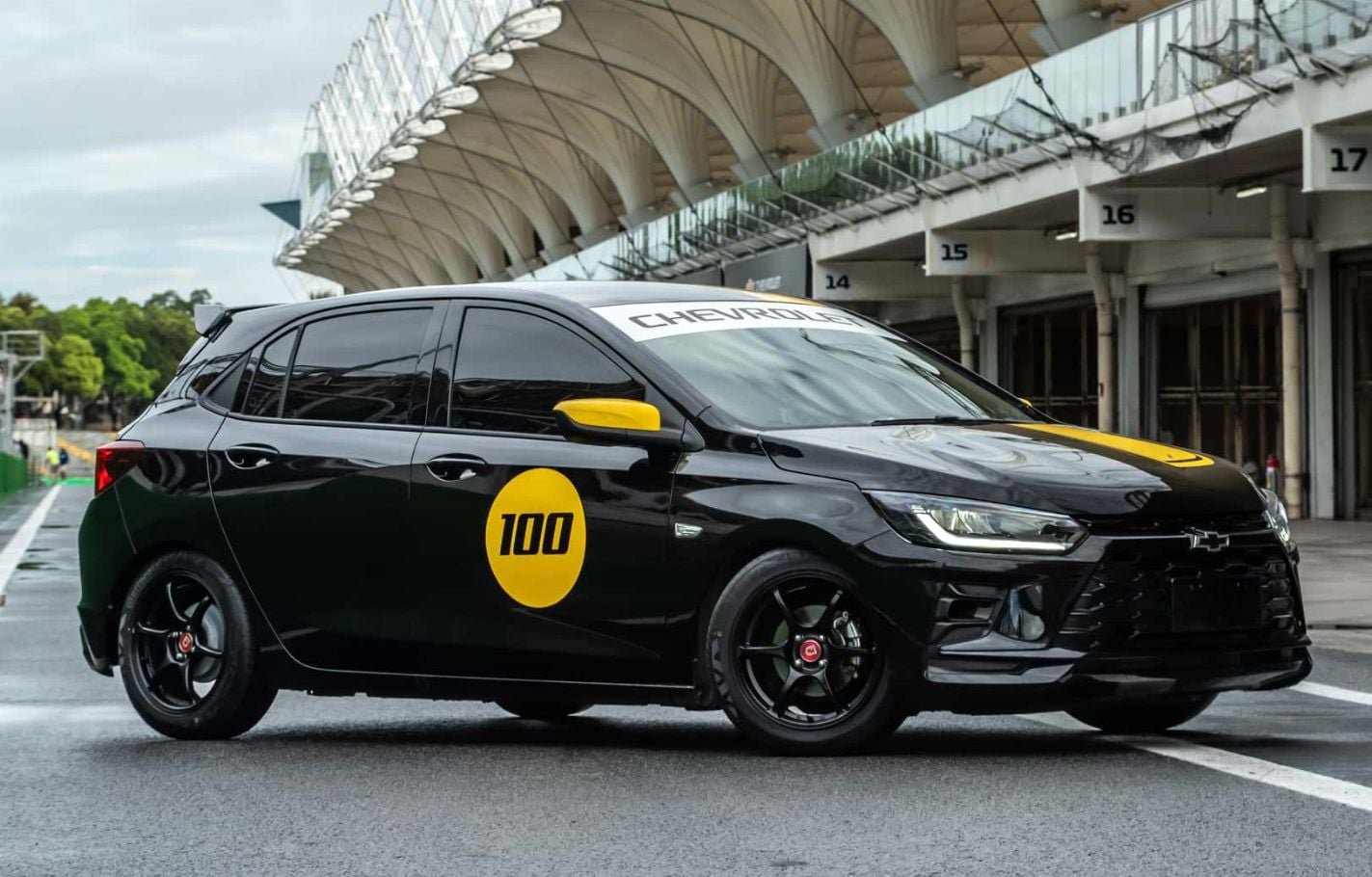
And proof of this is that GM built an Onix 1.2 turbo (in the 2024 specification, with about 130 hp), called Track Day, which was presented in January. The block was combined with a six-speed manual transmission, which is used in the entry-level version of the Montana.
It has competition seats, five-point belts and had all interior finishing reduced to lighten weight (150 kg lighter). This is a show car that is part of the brand’s centennial celebration, but it made it clear why GM did not object to returning us – the car was already being prepared when we contacted us.
Today, all manufacturers must follow strict compliance rules that require that each and every penny must be justified. In the past, things ran wilder, many industry veterans told about colorful ideas inside the warehouses: “what if we put a V12 in this compact?”
Conversations like this often left the coffee counter and ended up in an engineering warehouse with a car ready. But now everything must be justified, you can’t just take an engine from a car and put it in another just to see if it looks cool.
Boris Feldman even owned one of these experiments, which was a Fiat Brava equipped with a 2.4-liter five-cylinder engine, which was used in the Marea. The journalist says that in an informal conversation with executives, more than 20 years ago, he questioned why not put the engine of the Marea, which was very modern, in the Brava and which would be a spectacular sports car.
At the time, the executives said it would not be possible and the matter died there. However, three months later they called the journalist calling him to go to the Betim factory to try out a car. It was the Brava with a five-cylinder block, recalibrated suspension and even the pedals had been changed. “Imagine a car with 200 kg less and 60 hp more? It was a delight,” Feldman recalled in a podcast on AutoPapo’s YouTube channel.
He says that two units had been set up, one for him and the other at the request of the late Roberto Nasser, who learned about Boris’s Brava. A third unit was made for the engineering team, but the car ended up crashing. The car was bought with a value that accounted for the cost of the engine: “nothing exaggerated”, says Feldman.
That is, in the past a chat could end in an experimental car, today a simple curiosity agenda becomes a kind of crisis management that can escalate to the manufacturers’ headquarters. Things of modern industry.



