Edu remembers the cars and motorcycles he enjoyed the most in his life, such as a furious Sete Galo Hollywood and how a 639 hp family SUV is the devil on the asphalt
I think it was Josias Silveira, founder of Duas Rodas magazine and one of the most important journalists in the history of the automobile (and motorcycling) industry in the country, who told me the following phrase: “after you have the first 4-cylinder motorcycle, you will never want to have another one”.
SEE ALSO:
I had a CBX750F in the 90s. It was an 87 model, the so-called “Hollywood”, by virtue of having a paint that resembled the characteristic colors of the cigarette brand. Then I had a Yamaha XJ600 Diversion, also with 4 cylinders.
Josias, for a change, was right. I had several other motorcycles after these two, 2 or 3 cylinders. Nothing, I repeat, nothing equals the power delivery of a 4-cylinder motorcycle, other than providing a rumble that is absolutely visceral. And riding motorcycles is something that absurdly sharpens all your sensory senses, especially hearing. The integration of the rider with the machine is a stunning sensation: the simple act of turning the right hand exponentially increases the horniness of the driver. And a lot of that is due to what you (guess what?) are listening to.
Once, in an interview, and I think I’ve already told you here, I heard from Commander Rolim, founder of TAM, the following phrase: “those who only like cars are afraid of motorcycles and have never had the chance to fly an airplane”. I tend to agree.
There are motorcycles today that exceed 200 hp and provide power-to-weight ratios of 1 kg/hp. It is a bestiality. As they have anti-wheeling systems and traction control, you no longer run the risk of it stalling and turning backwards. But the accelerations are brutal. I no longer have ambition to accelerate such stupid machines (in a good way, of course), but I still really appreciate a good 4-cylinder engine rumbling between my legs – that last sentence was weird, but it’s a fact.
We arrived at the exact account of my passion. First because I’m 56 years old and I confess that superbikes already leave me a little injured after long distances. It hurts everything. Back, arms, it’s 100 km accelerating and about 15 min stopped at the station to crack the joints of the body. It’s no longer pleasant for uncle here, patience. So I really like the nakeds or the classics. And motorcycles have this additive: it is a market that allows vintage, which ennobles retro design, unlike cars. Let’s talk, then, about this Kawasaki classic.
It’s one of those bikes that doesn’t ask for attention — they just conquer. Inspired by the legendary Z1, the RS rescues the classic trait of 1970s nakeds, but delivers an experience fully aligned with current standards of performance and technology. The look is a spectacle in itself: drop-shaped tank, short tail, alloy wheels with a retro design and the iconic round LED headlight. Every detail was designed to balance nostalgia and sophistication, without falling into caricature. It is a motorcycle that talks to the past, but accelerates hard in the present.
The 948 cm³ in-line 4-cylinder delivers linear and engaging power, with generous torque at mid-revs — perfect for those who value riding pleasure more than cold spec numbers. There are 116 hp and almost 10 kgfm of torque. I guarantee: it’s more than enough for that majestic stretch, beyond 200 km/h (on a track, okay?), with the belly beating on the chest and the 4-cil spinning at more than 9 thousand rpm. This bike is a-pai-xo-nan-te.
I’ve always been enthralled by new performance-oriented technologies. When I sat my ass for the first time in this car, in 1993, I remember as if it were today the feeling of seeing the rev counter point more than 8,000 rpm… and in a version sold on the street, without any intention of use on the track. This VTEC technology is unforgettable. The DOHC 16-valve cylinder head had a system that varied the elevation and permanence of valve opening.
At low and medium revs, the command used smaller lobes. The valves opened little and for less time, providing torque. When it reached 5,600 rpm, more or less, the system changed the control for another with larger bumps, leaving the intake and exhaust valves open for longer. There came power. So much so that the small 1.6-liter engine yielded 160 hp up there.
It was sensational to drive this car. I confess that every time I met a customer (only on the tracks) of APzinho turbo, fun was guaranteed. He beat them one by one. As it was a compact, extremely dynamic and balanced hatch, the VTi was a lot of fun to drive on the streets. I miss this car! If there were still any whole, original, I would have it in my garage.
Driving pleasure is directly related, I believe, to how much a car is also capable of impressing you. I once sat in a Porsche Taycan Turbo GT, one of those that accelerate from 0 to 100 km/h in just over 2 seconds, and started the car. I was already expecting the “kick”. It is a car with a super sporty proposal and, although it has a 4-door body, you already know that something colossal of performance will come. The feeling, however, of having taken the first start with the Macan Turbo was much more impactful. For starters, you’re in a 4.78 m long by 1.62 m high family utility vehicle – the Taycan is 1.38 m. Do you see the difference? The brain already assimilates that, in such a low car, the performance will be there in the god-forbid. But not in the Macan. It’s an SUV like so many other 150-200 hp that you drive on a daily basis – in my case, by the way, because my wife has one.
That’s six hundred and thirty-nine horsepower and more than one hundred and fifteen kilogram-force per meter. I wrote it in full for you to savor number by number. In practice, the average Porsche SUV takes just over 3 seconds to reach 100 km/h. It’s hard to glue your back to the seat, OK, but until your brain assimilates that a supposed “family car” can be so fast, you’re already reaching 200 km/h…
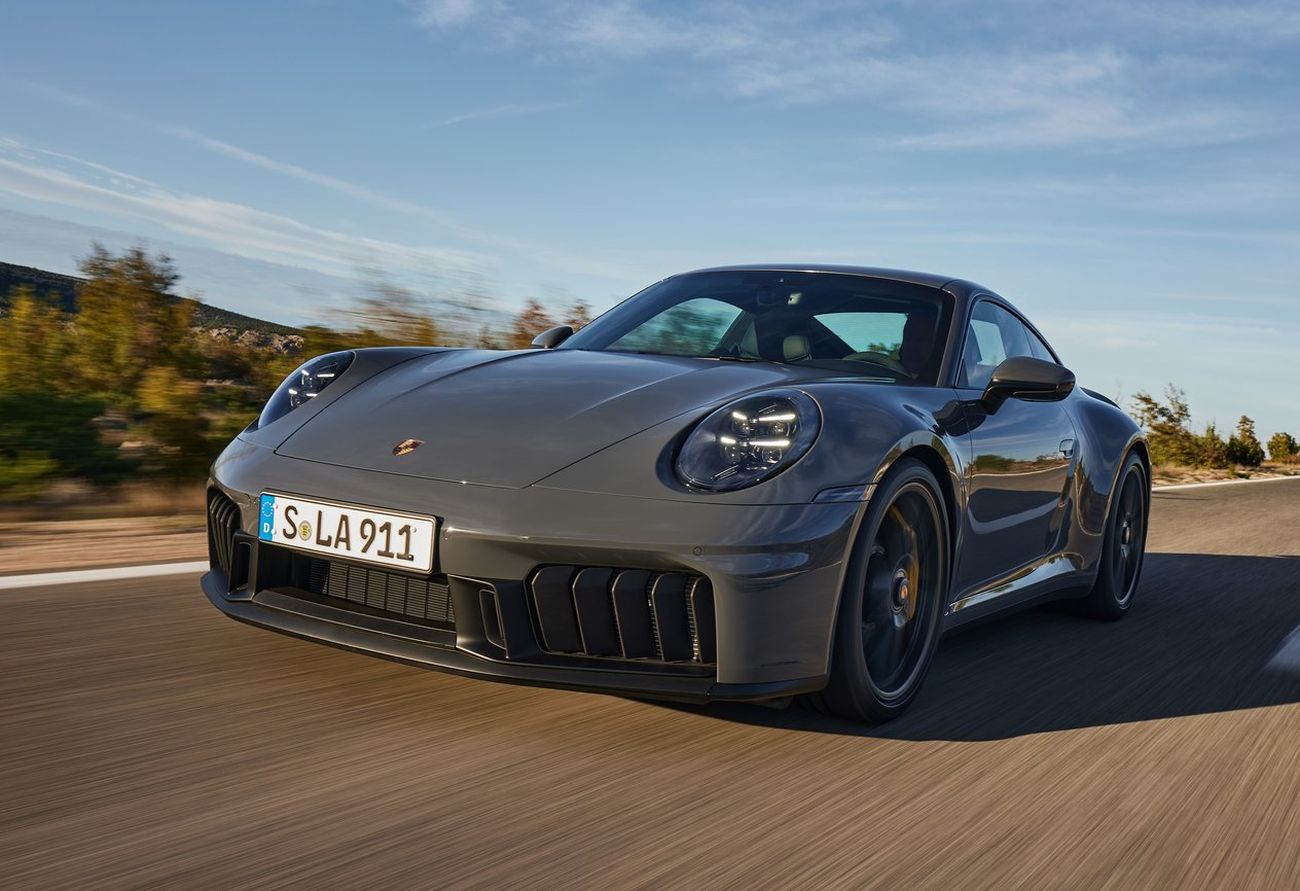
I have never driven a car as passionate as it. Need I say more? Oops, if necessary. It is my dream consolidated in a single car and in the fervent perspective that Mega Sena will still come out. The 911 GTS of this new generation mixes the surgical precision provided by the pinnacle of German engineering with the excitement generated by the insistent attempt to find its limits. You point faster and faster – and he just obeys. It’s not just about speed. It’s about connection. The car challenges you. And if you’re not a stupid one, he’s always going to win. The dynamic limits of the “product” are far above any level of responsibility, that is, you only escape… if you make a very gross error of judgment.
I drove the said whose at the Autodromo Velocittá. The new T-Hybrid set combines the classic six-cylinder boxer with electric assistance. There are two “little helps”, in fact, being an electric motor inside the gearbox and an electric drive turbo. There is no hesitation under the right foot. You ask and he delivers.
The Velocittá straight is about 1,000 meters. You enter this straight after a low turn. And he even imagines that he will not arrive so fast at the braking of the 1. The 911 reaches (well) more than 200 km/h. It was not the first time I had to brake a car at that speed on a racetrack. But it was certainly the first AND ONLY one that I felt such a balanced car when I stepped on the brake pedal. Nothing is so neutral to go fast, a feeling that is repeated in the low corners, when you, even knowing the rear-wheel drive, give the engine at once… and he just goes around. Surreal.
At the end of the many fast laps, what remains is not only the memory of the high speeds and the precision of the brake and suspension sets. It’s the realization that the 911 GTS T-Hybrid was built rigorously for me. The German from Stuttgart got the exact recipe right. Telepathically, I think. He investigated me. “Ich werde ein Auto bauen, dass alles enthält, was Edu in einem Fahrzeug am liebsten mag”, or “I’m going to make a car with everything Edu likes best”. Congratulations, German.



