A project developed in the 1970s would drastically reduce fuel consumption, but manufacturers ignored it, as did the market
In the 1930s, the automotive industry had already proven viable and new demands began to be necessary to raise the performance of vehicles. And the big fashion was aerodynamics, as they started to get faster and reducing air resistance was a tacit challenge. It was in this context that vehicles with designs emerged that today make us wish we had lived in that era. Chrysler Airflow, Buick Century and even the Douglas DC-3 plane are good examples.
SEE ALSO:
Over the years, this trend has ceased to be just aesthetic and has a clear function, especially in reducing fuel consumption. On the other hand, trucks continued to have extremely square shapes. Luckily, or fate, engineer Edwin J. Saltzman, who was also a cyclist, noticed that when a truck drove past him, it generated a lot of turbulence, something that was sometimes quite dangerous. In the early 1970s, he decided to start an in-depth study of the aerodynamics of trucks. As I worked at the National Aeronautics and Space Administration, NASA, the studies were really deep.
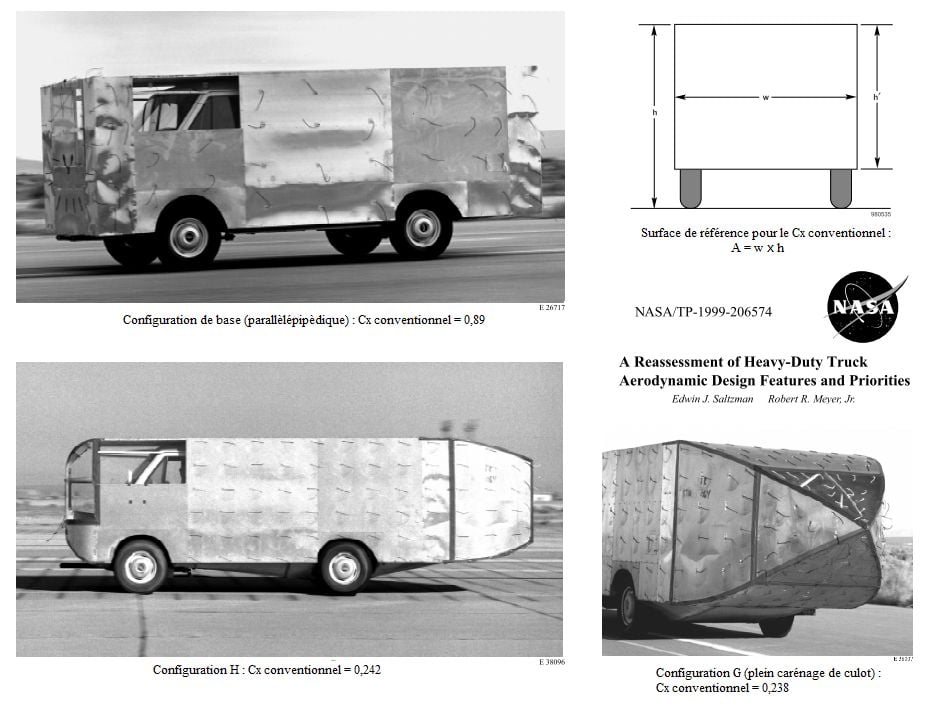
At the time, the research began with a Ford van, which received aluminum panels to take on a more square shape, similar to that of trucks at the time. From there, the first tests began. Gradually, the corners were softened and, with small changes, the results began to appear, and to surprise. In the end, aerodynamic drag was reduced by 52%, while fuel consumption dropped by up to 25%.
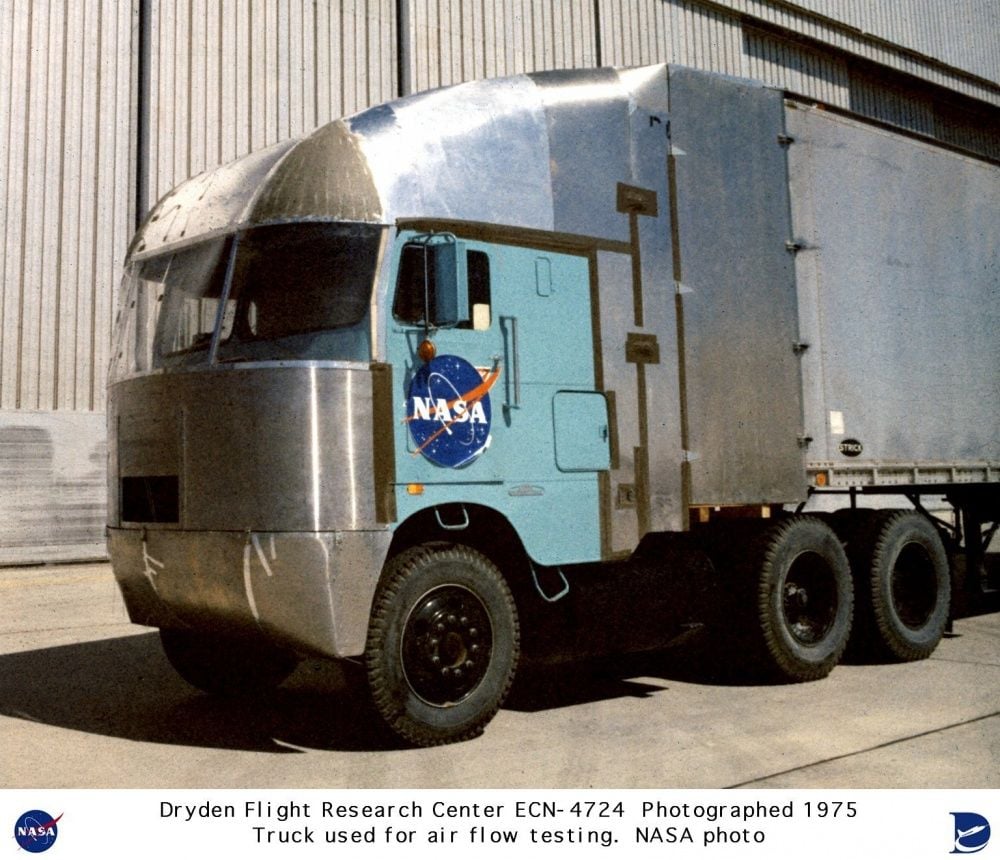
With the positive results, it was time to scale up the tests. To do this, NASA acquired a truck, in the photos, possibly a Freightliner, and developed new aluminum panels to further improve its aerodynamics.
The results were also impressive: traveling at an average speed of 55 miles per hour (88 km/h), the truck showed a reduction in fuel consumption of between 20% and 25% and a decrease in aerodynamic drag of up to 54%. It is worth remembering that, in addition to the tractor, the implement also received improvements. In more practical numbers, over the course of a year, a truck with NASA’s modifications could save about 25,850 liters of diesel.
The results were impressive, and even NASA was excited, continuing the tests. After all, the agency was about to revolutionize the transport of cargo by land. However, the automakers did not seem so impressed, or perhaps did not see as much practical applicability in what had been developed.
But the fact was that the changes would translate into a fortune in investments to sell their optimized trucks for the same amount. That is, the market would not pay the bill, so it was something for future projects.
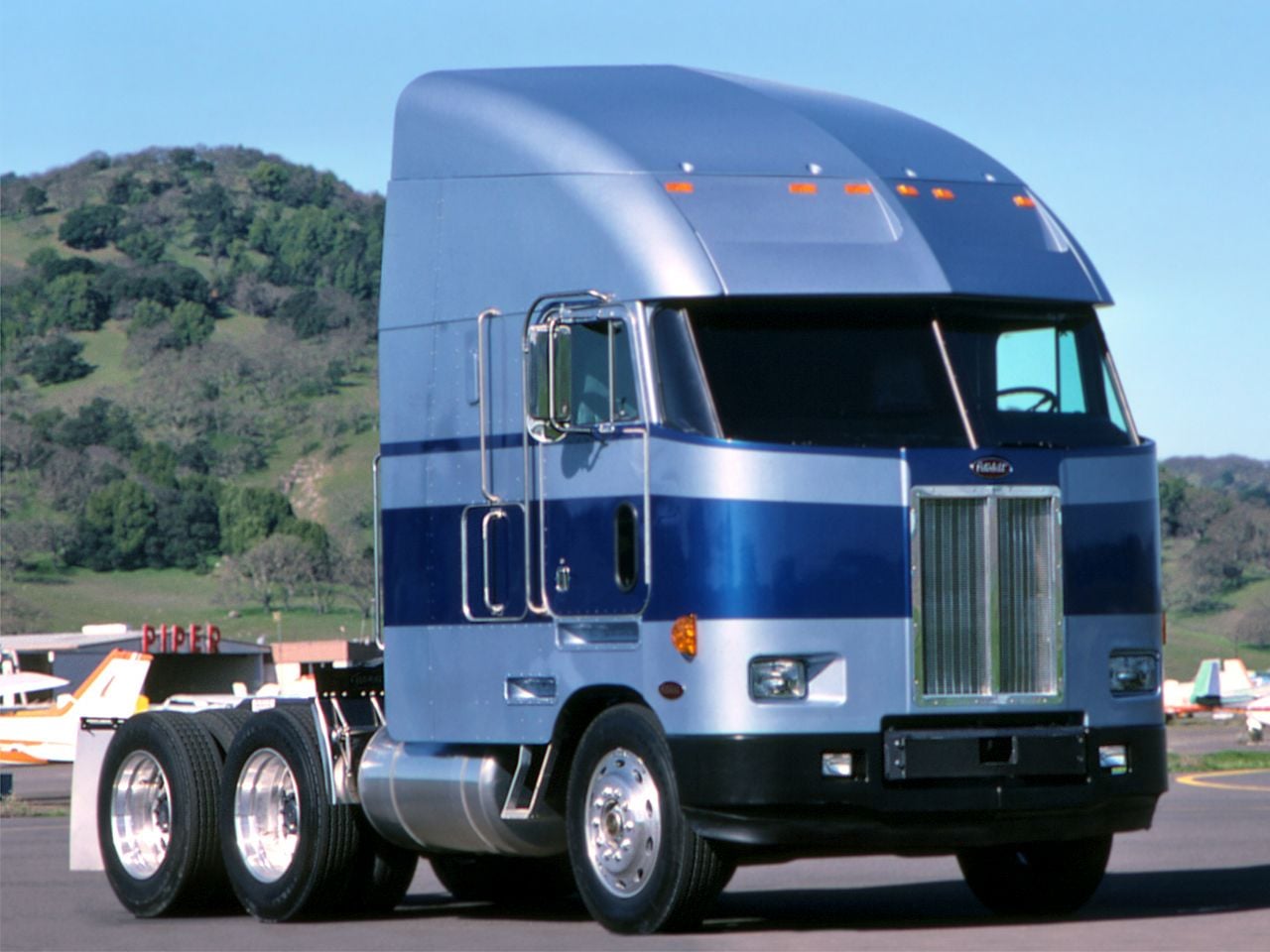
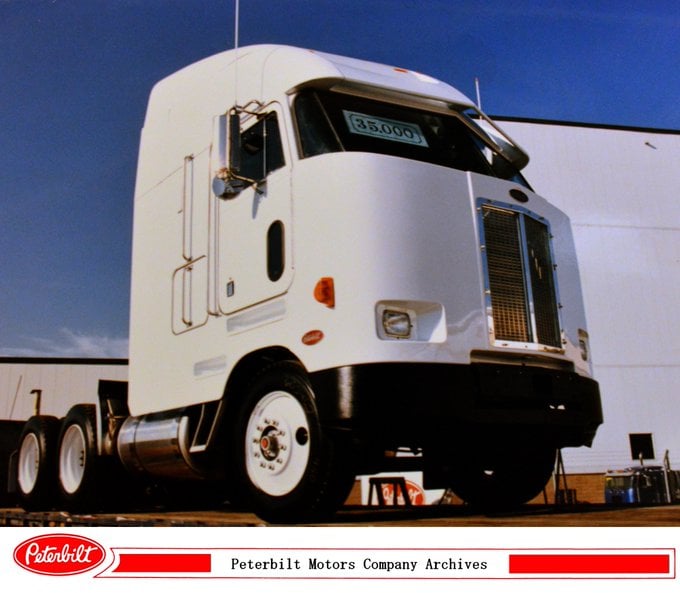
In 1988, more than a decade after NASA’s tests, Peterbilt introduced the Model 372, a fully aerodynamic truck, even though it was a flat-faced one.
At that time, the North American market still absorbed many flat-face trucks, or COE (Cab Over Engine). To give you an idea, about 65% of Peterbilt’s sales were of this type of model.
Although there is no officially confirmed direct link, 372 had lines that were very reminiscent of NASA projects and may have been inspired by them. In any case, the 372 was a revolutionary model for its time.
The 372 was, in practice, an evolution of the 362 model, using the same powertrain but with a profoundly redesigned cabin. The front was more rounded and aerodynamic, as well as the windshield, which became more curved and sloped, improving airflow. In addition, the entire front opened, facilitating access to the engine components during maintenance.
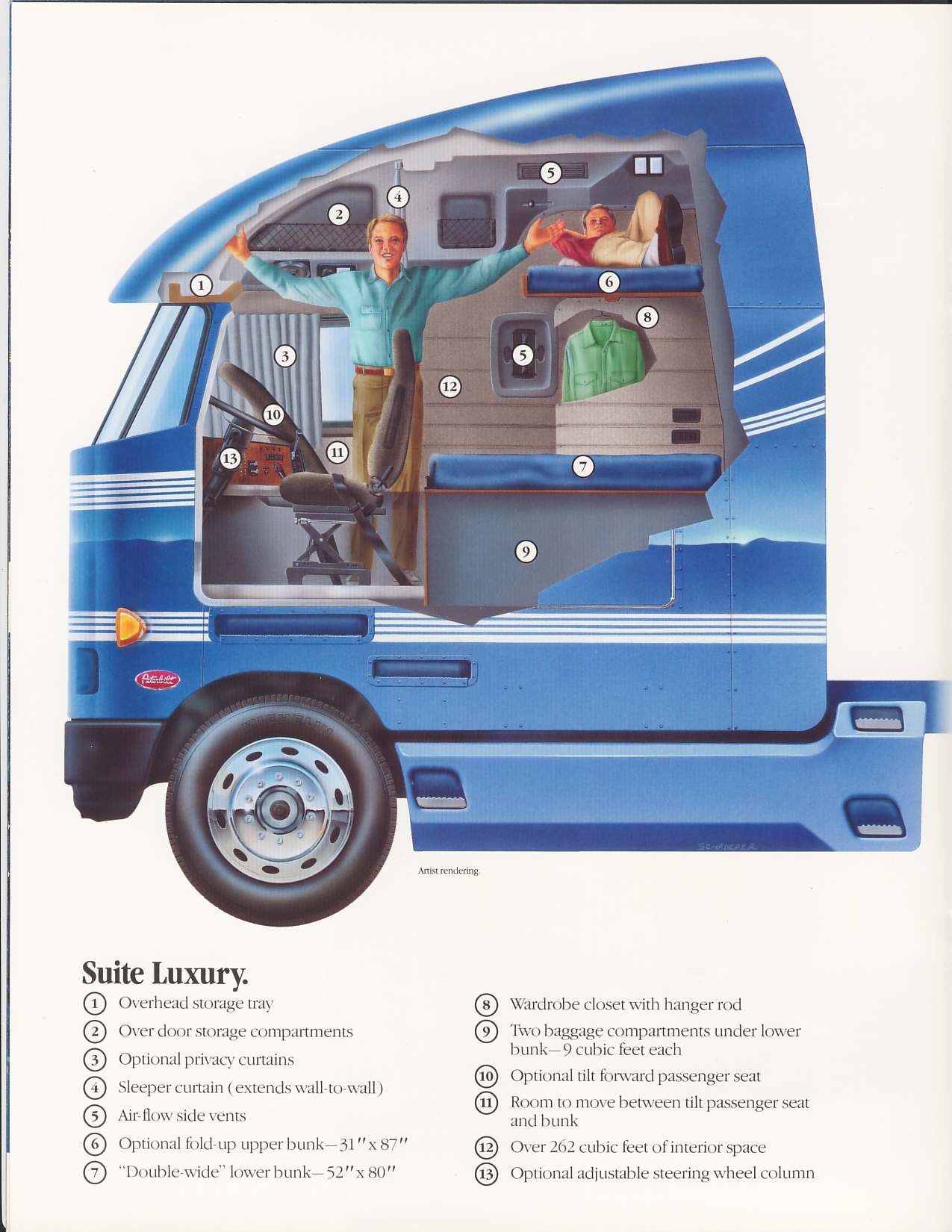
The new shapes did not compromise internal comfort. The model kept a spacious bed, closet options, and wardrobes — everything the 362 already offered. In fuel consumption, the numbers were attractive: thanks to an aerodynamic with 50% less drag compared to the 362, the 372 reached between 10 and 11 MPG (miles per gallon), or about 3.89 km/l, something quite impressive for the time.
Despite the expressive numbers, advanced design and superior efficiency, the Peterbilt 372 did not take off in the market. Between 1988 and 1993, just over 700 units were sold, which makes the model a rarity today.
Some say it didn’t sit well with more traditional buyers. Others point out that his bold look quickly earned him nicknames, such as “Darth Vader”, in reference to the character from the Star Wars saga. Be that as it may, the fact is that the 372 was far ahead of its time, something that is confirmed today, as automakers invest more and more in aerodynamic solutions.
In the end, NASA’s studies could have changed the history of road transport. But, it seems, the market was not ready. If, even ten years later, Peterbilt’s attempt was unsuccessful, perhaps it was simply not the right time.
In 2009, the United States Department of Energy (DOE) began to encourage truck manufacturers and suppliers to innovate and develop new technologies with a focus on energy efficiency, cost reduction, and lower environmental impact. Thus was born the SuperTruck program, which in addition to encouraging, also finances the projects.
The first results were not long in coming. Volvo presented the SuperTruck 1, whose studies were partially applied to the VNL. SuperTruck 2, presented in 2023, served as the basis for the new VNL launched in 2024. Peterbilt, Kenworth, Freightliner and International are also participating in the program, and several innovations have already made their way into the trucks in production.
Kenworth was one of the last to present its SuperTruck, which can be seen in the video
Currently, the SuperTruck is in its third phase, which started in 2023 and is expected to end in 2027. The main novelty is the inclusion of trucks from classes 4 to 6, in addition to heavy trucks from classes 7 and 8. The central objectives are:
Daimler, Ford and General Motors are developing medium and heavy-duty fuel cell trucks, while PACCAR and Volvo are working on battery-electric heavy-duty trucks.
The automakers participating in SuperTruck 3 are: Ford; General Motors (GM); Daimler Truck (Freightliner and Western Star); PACCAR (Kenworth and Peterbilt) and Volvo.



