Analysis of the performance of brands in 2025 shows that old segment leaders secure their dominance, but there are new players in the circle
While competition for buyer preferences remains fierce, there were no major changes in the ranking of best-selling models last year. Among all the segments, only two underwent changes. Compass overtook Corolla Cross, in part because Toyota had its engine plant paralyzed half-destroyed by a windstorm. As for the always very tight race between BMW and Porsche, the X5/X6 this time surpassed the Cayenne by a paltry 38 units.
SEE ALSO:
Another result that drew attention was the balance between medium pickup trucks with a load capacity of up to 1,000 kg and a Diesel engine. Toro maintained the lead, but its sales outpaced the Hilux by a difference of just one percentage point. This is a highly disputed category with no less than 14 conventional models and includes two electric cars with a symbolic presence (Riddara RD6, 81 units registered and Tesla Cybertruck, only 23, both by direct import). In total, 231,305 units were sold last year
The column’s ranking presents its own and technical criteria with classification by silhouettes in 14 categories, plus two that include only hybrids and electrics. The main reference is wheelbase, in addition to other parameters. Top sedans (low volume) and minivans (few options) are left out. The research base is the National Registry of Motor Vehicles (Renavam). Only the most representative models within the segments are mentioned. Compilation by Paulo Garbossa, from the ADK consultancy.
For Anfavea, the forecast for the advance of the domestic market for light and heavy vehicles in 2026 is practically in line with that of Fenabrave. It will be another lukewarm year with sales up 2.7% over 2025 (total of 2.772 million units). There may be quarterly revisions to estimates and some challenges. One of them is the even more moderate progress in exports: only 1.3%. Production will also have weak numbers: 3.7% growth.
A positive sign is the end, now on January 31, of import quotas for semi-disassembled vehicles (SKD) exempt from import tax. Brazilian auto parts producers would be left out with losses to generate jobs in the country. Anfavea did not mention now which company would be trying to extend the deadlines to keep imports of cars practically ready (SKD), without any tax. This is an acceptable production process only for low volumes and market probe, according to the entity.
However, it is BYD that defends the extension of this initial privilege, although it has made two “inaugurations” of its factory in Camaçari (BA). The Chinese company does not need more stimuli than it has already received (and still receives) with a competitive and well-accepted product line. From next May or June, it promises to start effective production, although without presses on site. In 2025, it imported and stocked thousands of vehicles with much lower current taxes, especially electric ones, something that no other brand was able to keep up with. This is often called dumping or predatory trade practice.
The free trade agreement between Mercosur and the European Union (EU), signed now after 26 years and with the participation of several previous Brazilian governments, may open new perspectives for the automobile industry. It will make it possible to plan a productive integration with European brands, which have always had a strong industrial presence in Brazil. The process, however, will be slow (15 years), although welcome. However, it still faces resistance in the EU.
An even greater challenge is the so-called selective tax, created by the recent tax reform, which will affect car sales. The tax burden, historically very high, is well above international standards. According to Igor Calvet, president of Anfavea, “there is only one year left for the start of the collection of this new tax, which makes it difficult for manufacturers to plan”.
In 2025, this was the distribution of sales: gasoline, 4.5%; electric, 3.1% (2.5%, in 2024); hybrid, 4.3%; plug-in hybrid, 3.7%; diesel, 10%; flex, 74.4%.
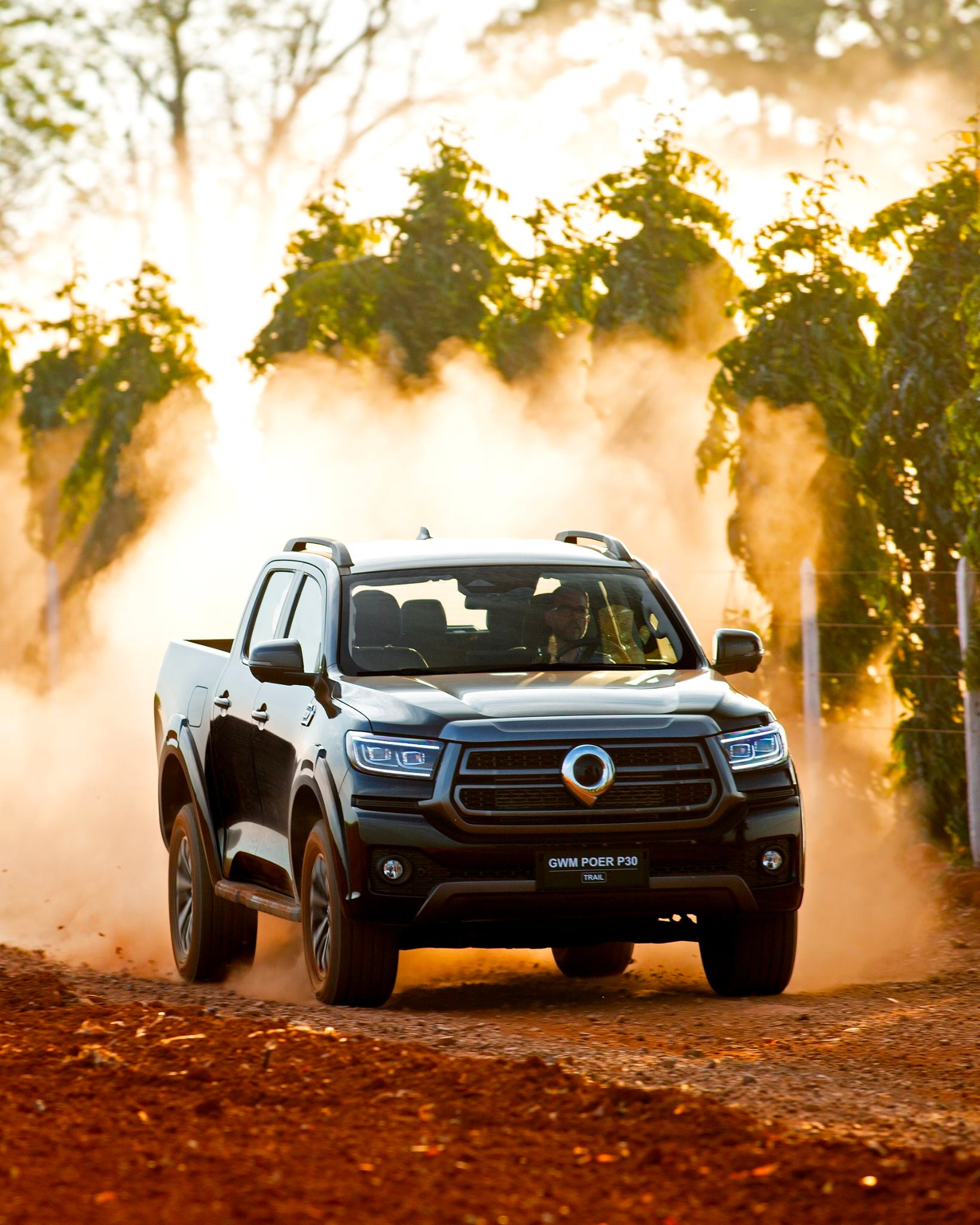
Among the five Chinese medium pickup trucks for sale in Brazil, the GWM model is in a good position. It is too early to know if it will withstand the day-to-day impact of the most difficult terrain conditions, where already established models with stringer chassis, such as the Hilux, have already proven efficiency and durability. Not to mention the Toro, of monocoque construction, which leads the segment with only 1 p.p. of advantage.
Style is very pleasing and, in size, small superiority over the Japanese (mm): length, 5.416; wheelbase, 3,230; width, 1,947; bucket, 1,248 L (25% higher than the Hilux); tank, 78 L. Its mass is also 25% larger: 2,223 kg. 2.4 L Diesel Engine, 184 hp and 48.9 kgf·m. 4×4 traction with reduced. Nine-speed automatic transmission better than the rival’s (three gears less). Inmetro standard consumption of 9.5 km/L (urban) and 10.6 km/L (highway).
Inside, good quality materials, steering wheel with easy-to-use spoke controls, large 14.6-inch multimedia screen. and wireless connection for Android Auto and Apple CarPlay, as well as an induction cell phone charger. The two front seats have electric controls and the seat is tilting in the rear seat, which offers very good leg, head and shoulder room with the natural limitations for the middle passenger. Highlight for the electromechanical parking brake with self-immobilization at stops.
Both on asphalt and off-road without so many potholes, the Poer pleases in drivability and relative silence on board thanks to the nine-speed gearbox. However, throttle responses are lower than most competitors above 200 hp. To face uneven floors and speed bumps, it still lacks a little adaptation, but without compromising daily use.
Price: R$ 240.000.



