An amendment added to the bill added tests for cars that are still under warranty and gives no explanation of the purpose

Bill 3507/25 approved by the Traffic and Transport Commission of the Chamber of Deputies has generated concern among drivers. The original text suggests a check of the mandatory equipment, legibility of the license plate and documentation, as in the case of transfers. But on January 7, an amendment by Deputy Cezinha de Madureira (PSD-SP) was approved that included an emissions test in this vehicle inspection.
Another amendment was that this inspection should be done on cars over five years old. According to the deputy, this is to “avoid overloading the owners of new and used vehicles, respects the principles of reasonableness and proportionality and makes this requirement compatible with the economic and operational reality of the Brazilian fleet”.
SEE ALSO:
However, this raised a question: is it reasonable to perform emissions tests on a five-year-old car? Wouldn’t it be too early for modern models that may still be within the factory warranty?
The director of Emissions and Consumption of Light Vehicles of the Brazilian Association of Automotive Engineering (AEA), Raquel Mizoe, was adamant: “Proconve L8 requires a durability of Emissions of 160 milkm”
As a result, the driver would have to drive 32 thousand km per year for there to be changes in emissions in the worst case to get a bomb in the vehicle inspection. As the average annual mileage of Brazilians is between 10 thousand and 12 thousand km, it would be necessary to drive for at least 13 years.
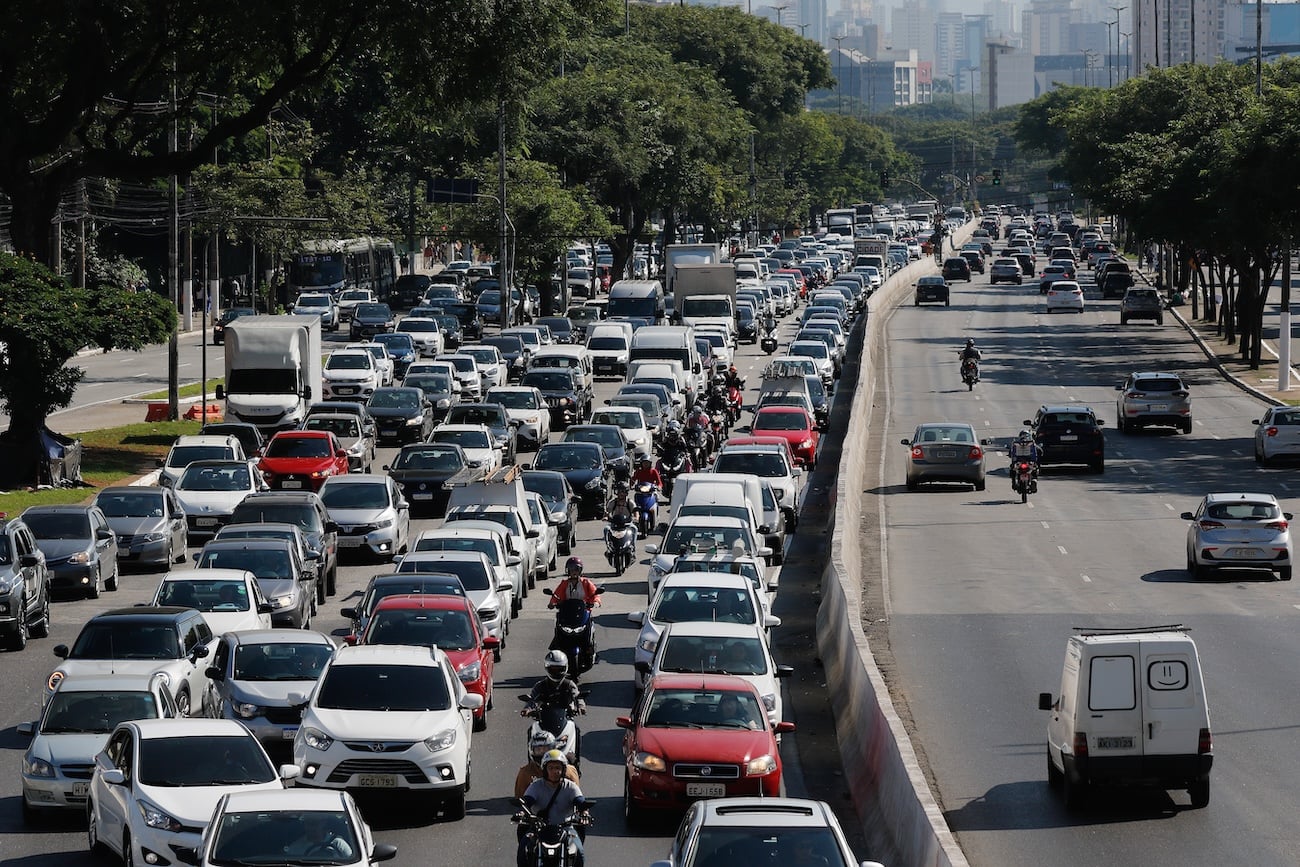
The most recent study on the average age of the vehicle fleet in Brazil was carried out in 2024. The cars that run on our streets and highways were, on average, 10 years and 10 months old, 2 years older than in the previous decade. The data are from Sindirepa, the union of repairers.
In other words, even with the growth in new car sales in the last two years, newer vehicles are still in the minority. Not to mention that the evolutions of cars have helped make them more reliable.
Models produced in the 2000s and 2010s require preventive maintenance at longer intervals, use more efficient cooling systems and have smarter electronic injection than models from the last century. This helps with longevity.
The legal requirement for the new car to maintain the level of emissions for 160 thousand km can be abbreviated. According to Ludovico Ballesteros, an experienced mechanic and owner of Pitucha Centro Automotivo, cars less than five years old may have problems with the emission control system. He has already received vehicles in his workshop with problems that cause this.
I’ve already taken cars with five years of use with problems with the catalytic converter, the lambda sensor and the spark plug, which increase emissions”
The specialist warns of these defects, in addition to bad fuel and neglecting to change air and fuel filters, for example, can increase pollutant emissions even in new cars. These factors also accelerate the wear of the catalytic converter.
According to the Federal Highway Police (PRF), on federal highways, last year, there were 4,393 accidents caused by mechanical problems in vehicles. The most common causes were:
Mechanical failures, which can be caused by lack of proper maintenance, are the main causes of accidents caused by car problems. The vehicle inspection can reduce this type of occurrence.

The mandatory vehicle inspection carried out in São Paulo (SP), between 2008 and 2014, was a terror for owners of old cars. At the time, they needed to adjust the carburetor and ignition timing to be able to pass, as the acceptable limits only considered more modern models.
The proposal for mandatory inspection throughout Brazil was received with great concern by the old car owners. The text of the law is still vague about the tolerated limits, only citing the following:
The second Amendment adds as an item of the inspection the verification of the levels of emission of pollutants and noise, according to Contran and Conama regulations.”
For Gustavo Brasil, an old businessman, it is necessary to analyze the project to understand what its premises are. The catalytic converter, for example, only became standard in national cars in the mid-90s.
He comments that cars and motorcycles with two-stroke engines, such as the DKW and Saab, would not pass a test of this type. They work with lubricating oil mixed with gasoline, which causes bluish smoke emission in normal operation.
If they take the pollutant levels of 1970, great. Still, we run the risk of cars from the 40s and 30s being excluded”
Diesel models had even fewer concerns about emissions in the past.
Old cars, especially collector’s cars, run little and are rarely used on a daily basis. Therefore, even emitting more, they have less impact on pollution levels in cities.
In 2017, the National Traffic Council (Contran) approved a resolution implementing the Vehicle Technical Inspection Program (ITV). His proposal was to attest to the safety and conditions of the Brazilian fleet.
The ITV was already included in the Brazilian Traffic Code (CTB) since its creation in 1997. The article states that vehicles must have pollutant and noise emissions measured in order to be registered.
This inspection was a condition for issuing the car’s licensing. However, it was overturned before coming into force, in 2018.
PL 3507/25 remains in a conclusive manner and has already passed through committees related to the subject in the Chamber of Deputies. The next step is to be approved by this house before being analyzed by the Senate. To become law, the final step is to be sanctioned by the President of the Republic.
People can express their opinion about the Bill in an open poll on the website of the Chamber of Deputies. At the time of closing this article, 96% of the votes are against.



