Check out the new rules for obtaining a driver's license, what are the requirements for cars and whether or not there are changes in the document
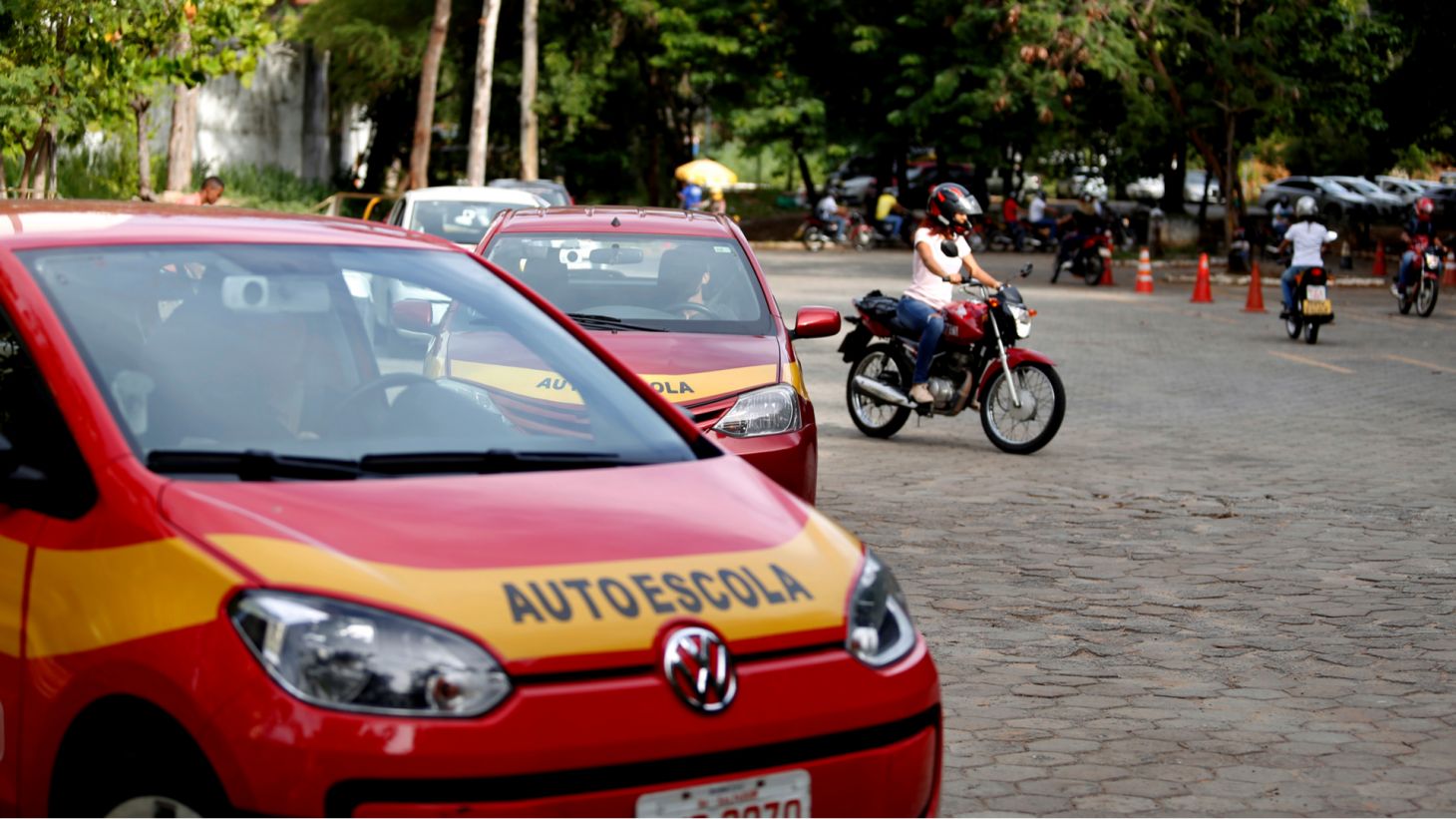
The CNH do Brasil project, along with its new rules, is already a reality in most states. The updated dynamics of obtaining the National Driver’s License (CNH) has a new application to get the license and carry the document, changes in the Detran test and the possibility of taking classes and exams in an automatic car.
This new dynamic was officially published by the National Traffic Council (Contran) in Resolution No. 1,020, of December 1, 2025. The text provides for the free and online theoretical course, the regularization of autonomous instructors, the end of the mandatory driving schools, a new list of criteria for the vehicle driving test, among other changes.
SEE ALSO:
One of the changes in the legislation that drew the most attention was the new set of requirements in relation to the vehicle, or rather, the removal of some of them. But how so?
Before, the vehicle used in driving classes and in the Detran test was mandatorily manual, adapted with double control (brake and clutch pedals on the passenger side) and provided by a Driver Training Center (CFC). However, the rules currently in force allow the candidate to use a car with a private automatic transmission or belonging to a driving school, without double control.
This means that you can, for example, use the automatic car of a family member or acquaintance to take the practical course and the driving test.
When the new ones came into force, the question arose: will those who get the CNH in an automatic car have the same document as those who obtained the license in a manual vehicle?
The answer is yes, the document will be the same and without any additional observation independent of the transmission of the car used in classes and tests. This fact has generated discussions and questions about safety, since those who have learned to drive only in an automatic car will certainly have difficulties driving a manual model.
Many candidates celebrated the new permission and the facilitation of the process that came with it, but forgot that there are still some requirements that have not changed. The fact is that, despite being released, private cars need specific signage and cannot be too old, as is the case with driving school vehicles.
This is because the new rules do not change article 154 of the CTB (Brazilian Traffic Code):
Art. 154 – Vehicles intended for the training of drivers shall be identified by a yellow stripe, twenty centimeters wide, painted along the bodywork, at mid-height, with the inscription AUTO-ESCOLA in black.
1º In the vehicle eventually used for learning, when authorized to serve this purpose, a removable white strip, twenty centimeters wide, with the inscription DRIVING SCHOOL in black, must be affixed along its bodywork, at mid-height.
2º The maximum ages of vehicles intended for the training of drivers in the qualification categories referred to in article 143, not counting the year of manufacture, shall be:
I – 8 (eight) years, for category A;
II – 12 (twelve) years of age, for category B;
III – 20 (twenty) years, for categories C, D and E.”
Thus, the private car must be a maximum of 12 years old and have a removable white strip 20 cm wide with the inscription “AUTO-ESCOLA” in black. The identification can be adhesive or magnetic.
If the vehicle is not characterized, the person responsible may be committing a serious infraction provided for in article 162, which results in a fine of R$ 195.23 and temporary retention of the vehicle.
The new standards, by allowing the use of vehicles with automatic transmission, end up also encompassing electric and hybrid models, which must follow the same determinations mentioned in this article.



