When driving was more survival than pleasure: unwistful memories of the cars that turned the steering wheel into punishment
I spoke insistently in the previous weeks about driving pleasure, listing cars and motorcycles that exceeded my function of evaluating them as a journalist specialized in vehicles. They were horny to drive. You finished the dynamic tests and just wanted to keep accelerating. I’ve already told you here that I once ground the tank of a BMW M3 in a day and a half. I left running aimlessly. I went anywhere, because it didn’t matter where, but only how.
SEE ALSO:
But the reverse is also true. There are some sections fought in my past that, aff…, were absolutely monotonous, boring, made for those who have no sympathy for that machine called “automobile”. Or even bad. They were the precise definition of the device that takes you from point A to B.
The 1990s, when I started this work, were a period of almost traumatic transition for the Brazilian automotive industry. We left a closed, plastered market, protected for decades, and we plunged headlong into opening up to imports, with a consumer who began to compare — and demand. In the midst of this turmoil, great cars emerged.
It is important to contextualize. It was a decade marked by technological limitations and high local development costs. Automatic transmissions were rare and inefficient. Suspensions were designed primarily to resist bumpy streets, not to provide pleasure in curves. It was the “you know, you trust”.
In addition, Brazilian automotive culture was still in its infancy in terms of dynamic demands. Consumption, robustness and resale value spoke louder. Driving pleasure was a niche luxury—reserved for specific sports versions or more expensive imported models.
Even considering the limitations of the time, some cars simply did not deliver harmony. There was a lack of balance between engine, gearbox, steering and suspension. They were projects that prioritized cost, not emotion. If today we complain about anesthetized electric steering and excessively linear CVT transmissions, back then the complaint was different: physical effort at the wheel, noisy engines, constant vibrations and unrefined dynamic behavior. It was a time when directing required more arm than sensitivity.
Still, it was in this scenario that the market matured. International competition raised the technical standard. Specialized critics started to demand chassis adjustment, ergonomics, stability. The consumer began to realize that cars didn’t just have to be tough—they could be enjoyable.
I am sincerely proud to have been part of it.
Perhaps the greatest merit of that decade was precisely this: preparing the ground for a more demanding, more technical and more passionate next generation. Because, in the end, driving was never just about commuting. It’s sensation, it’s control, it’s connection. And in the ’90s, that connection was still learning to exist.
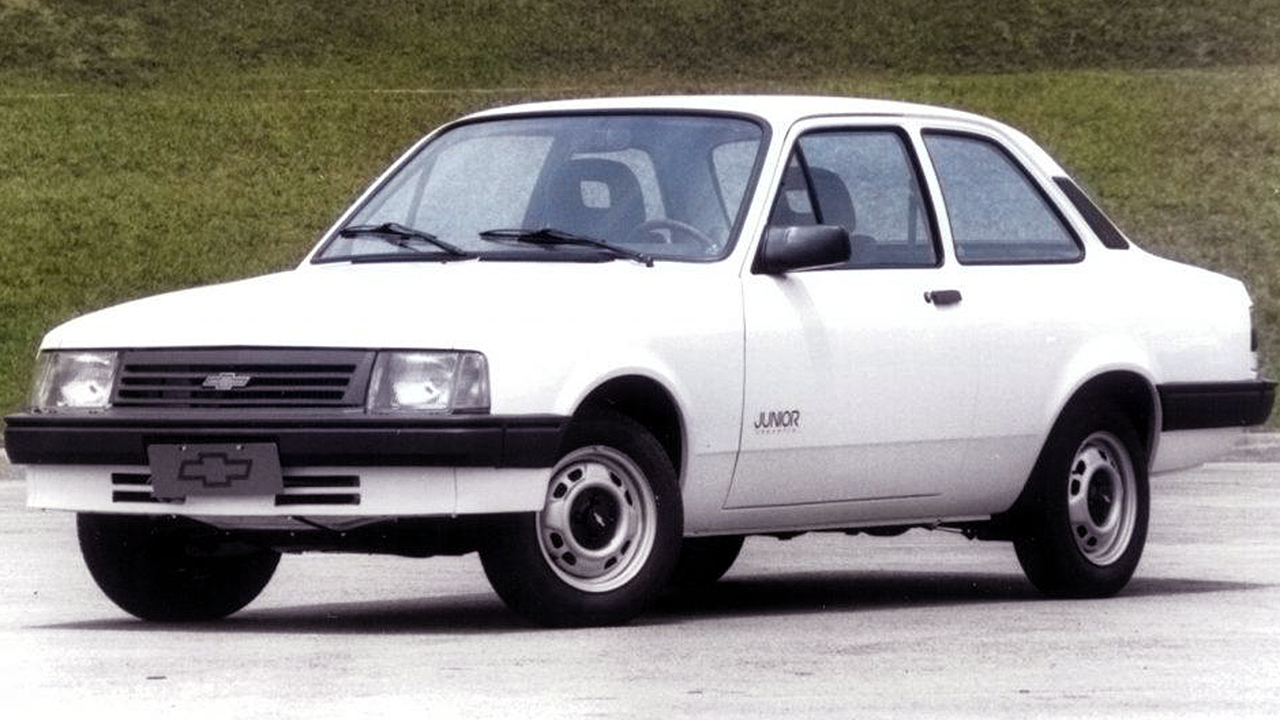
From the need to create the first more modern cars, other “bad” ones have even emerged. Let me explain: the Corsa 1.0, launched in 1994, was the first truly modern popular car. But between GM getting its development ready and the need to occupy that incipient market niche, the brand was forced to use a transitional product called “Chevette Junior”.
People. What a bad thing. Driving it was a necessary sacrifice, as GM was one of the main automakers in the country. Think of an improvisation that, although carried out with the best possible resources and solutions, still resulted in a horrible car.
With only 50 hp, but weighing almost 900 kg, the mechanical losses generated by the rear-wheel drive (cardan shaft and differential) meant that the power at the wheel was insufficient to move it. What did GM do? It created the shortest gear ratios in the entire history of galaxies – the differential was 4.88:1 (against 3.90:1 for the Chevette 1.6). Now imagine that the 1st gear was 4.28:1, against 3.74:1 of the 1.6 version. If it weren’t like that, you wouldn’t have the “strength” to get the car out of inertia.
In practice, however, you put 1st gear, accelerated, the engine speed went up there and the car had barely moved – you already had to put 2nd. It was the “possible” solution, ok, but, in practice, imagine how bad this was to operate on a daily basis, considering the stop-and-go traffic jams.
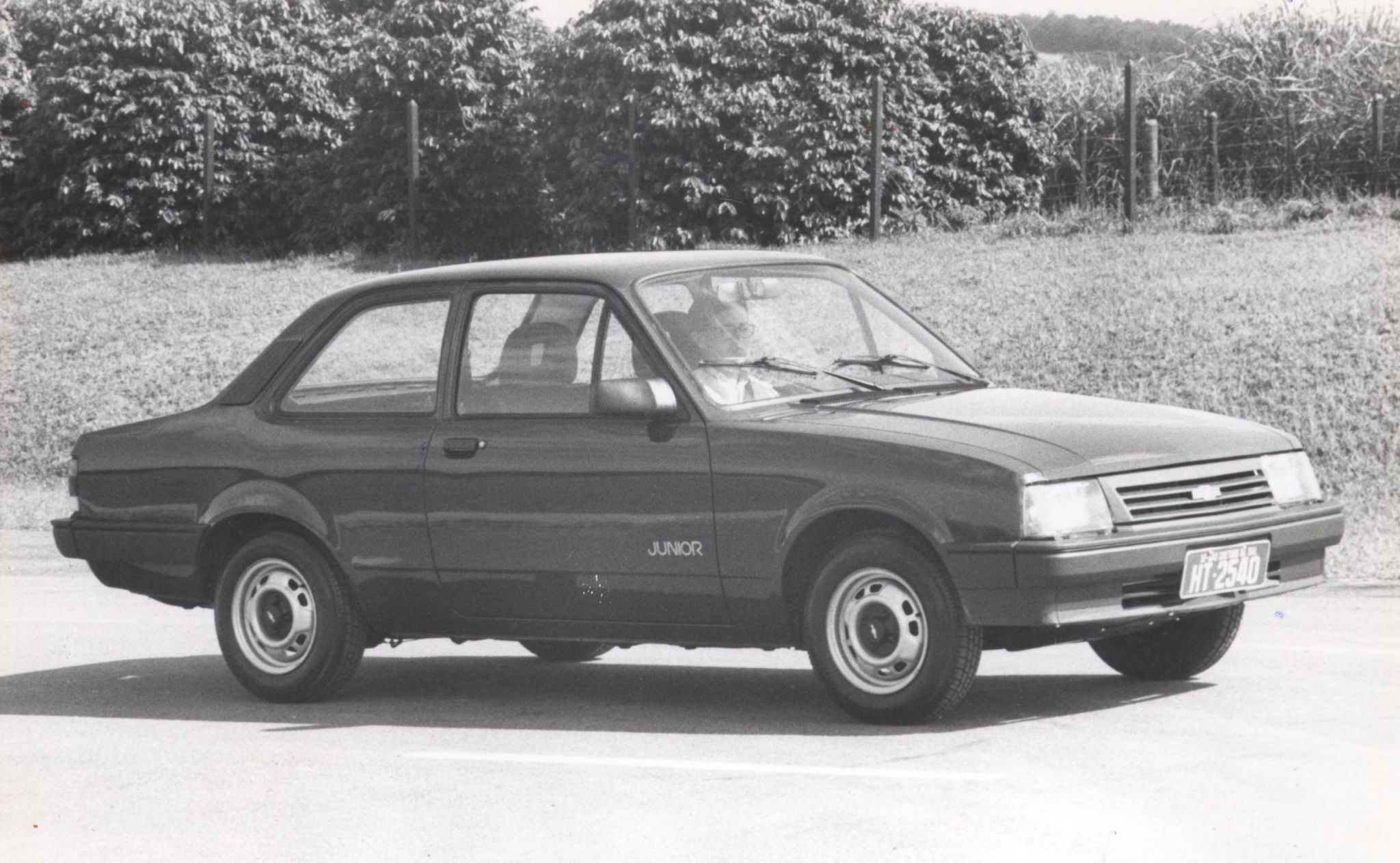
I always say that the Chevette Junior was the worst car I’ve ever driven – because the Gurgel BR800 wasn’t even a car. It was the BR800. It was also heir to a mechanical incompatibility that made its handling precarious: the 2-cylinder engine yielded 30 hp and the brand’s engineering, to save money, adopted the complete gearbox (with the same ratios), cardan and differential as the Chevette. Result: unlike the previous example, which was very short, Gurgel was loooongo. But put a long time into it. You didn’t have the torque and power to “fill” the four gears. Refinement of cruelty: the gears were “tuned” to be lighter… lol… but the number of teeth in each of them was identical to those of GM.
On record, the second worst car of all time that I drove in this aspect of (dis)pleasure when driving was the Ford Escort Hobby 1.0. The name “Hobby” seemed like a promise of fun. The reality was different. Inherited from the old CHT of previous decades, the AE engine struggled to move the set of a car that had been born as a “medium”.

While a Mille was 3.64 meters long and less than 800 kg, the Escort, 4.06 meters and 910 kg. Ah, but that gave the advantage of accommodating five people in comfort.” Yes, but then the said whose, loaded, did not start uphill. To extract just over 7 kgfm of CHTzinho torque, Autolatina’s engineering set the rotation at 3.600 revolutions. But the gearbox was also short! You squeaked out the first gears (it reached 6,000 rpm quickly), shifted quickly with the engine screaming in your ear… and the speedometer there, peaceful, slow, lazy, almost inert… at 30-35 km/h.
“I don’t run. I just walk slowly. And on top of all that, it’s very economical,” I heard at that time. Ahem. The Hobby did 10.8 km/l in the city. Your 1.5-ton automatic SUV today is more economical than that.
In order not to beat popular national models, I remember two imported jackfruits: Hyundai Excel and Mazda MX-3. Let’s start with the second. He promised a lot, he didn’t deliver anything. Despite displaying a bold design, the 1.6 engine was very bad. Long shifter, soft suspension, geometry that configured constant front exits, unbalanced braking. No sports fitness, nothing. Riding a Monza 1.6 was much more exciting.
As for Excel, it seems curious to remember that this was in 1994 – look how much these guys have evolved in 30 years!! It used a 1.5 Mitsubishi engine, it was carbureted, it had 80 or so horsepower. Do you know a bland car? Dull? Without a soul?? For what it cost, it made much more sense to buy a Chevrolet Kadett, a Fiat Tipo. Even a VW Gol was more business.
What about you? What was your worst experience behind the wheel ever?