China curbs price war domestically, but encourages loss-making exports, raising warnings about dumping and the future of the industry
China’s one-party government has ordered dozens of local manufacturers to stop offering ever-increasing discounts to win over more buyers. And he announced drastic and mandatory measures: he cannot sell wholesale at a price below cost, dealerships will not receive pressure to lower prices and the creation of an online platform to monitor fraud attempts.
SEE ALSO:
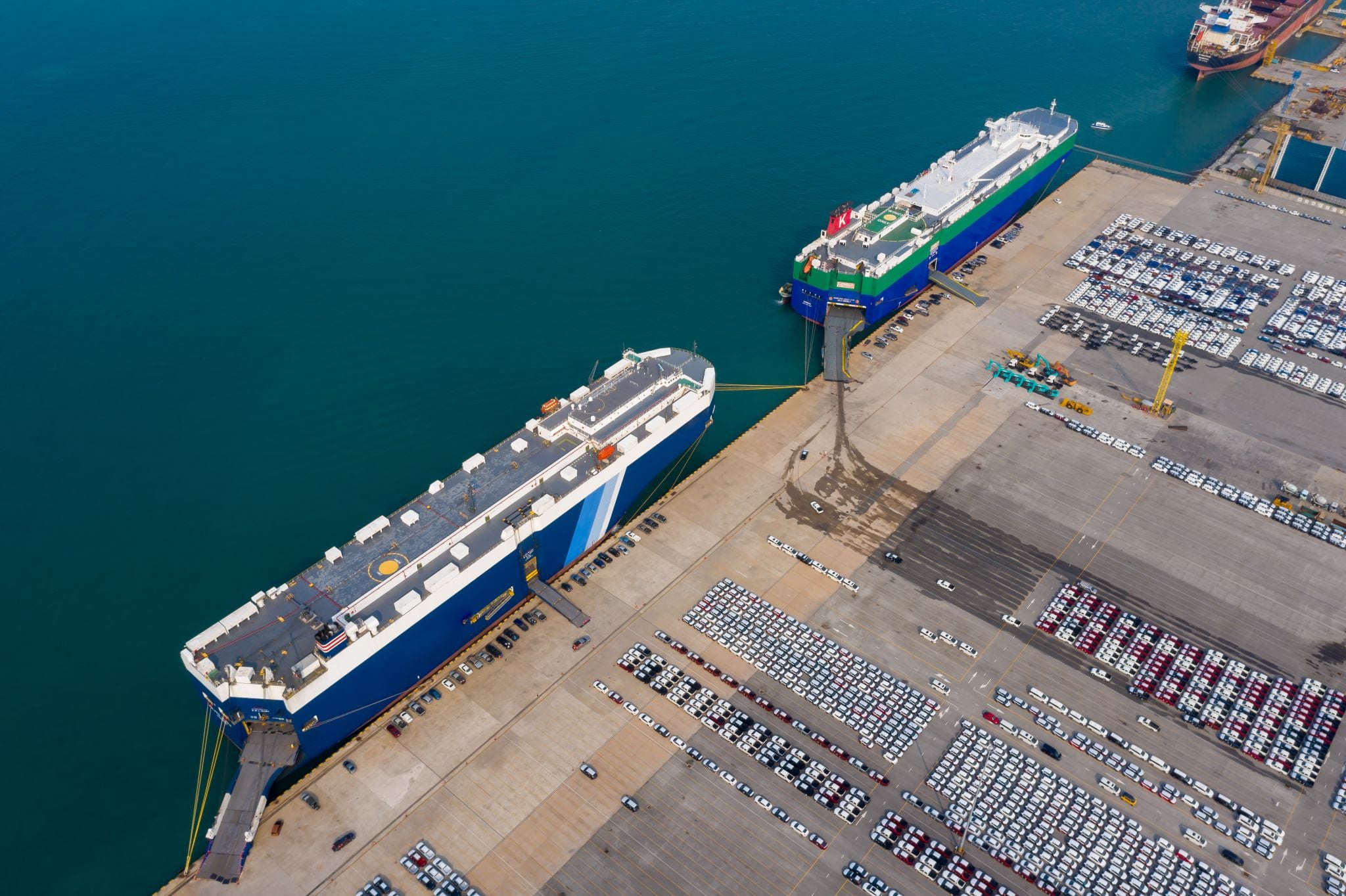
However, it did not bother at all to monitor the exports of vehicles with prices below cost, as its domestic market tends to grow a little less. It even financed as far as the eye can see the construction of state-of-the-art ro-ro ships to “facilitate” exports. Operation known as dumping (unfair competition). Other countries should make their own rules to defend themselves.
A fact is beginning to bother the Chinese central government. Its economy is on track to lose some of the exuberance of more than 20 years with enormous economic growth. It has become by far the largest vehicle market in the world. However, Energy News Beat, a news and analysis platform focused on the energy sector, fired:
“China’s electric vehicle market, while dominant at the global level, is close to crisis due to internal inefficiencies and external barriers. To revitalize the sector, it may need to implement gradual reduction of subsidies and market forces to drive consolidation, acting as a “defibrillator” to revive the heart of the industry. Without it, it could drag down related industries and undermine China’s green ambitions, even as the country continues to shape the global auto landscape.”
This position contains a certain degree of exaggeration. The Chinese branch of Automotive News followed a non-radical line in last week’s post: “Why is the unstoppable Chinese auto industry suddenly losing steam in its own country?”
Also balanced, the analysis of the economic consultancy S&P Global:
“Vehicle sales in China are forecast to decline by about 267,000 units in 2026, due to the end of 2025 incentives and lower economic growth. Towards electrification is now more complex. Hybrid and plug-in hybrid vehicles are seen as fundamental alongside battery electrics.”
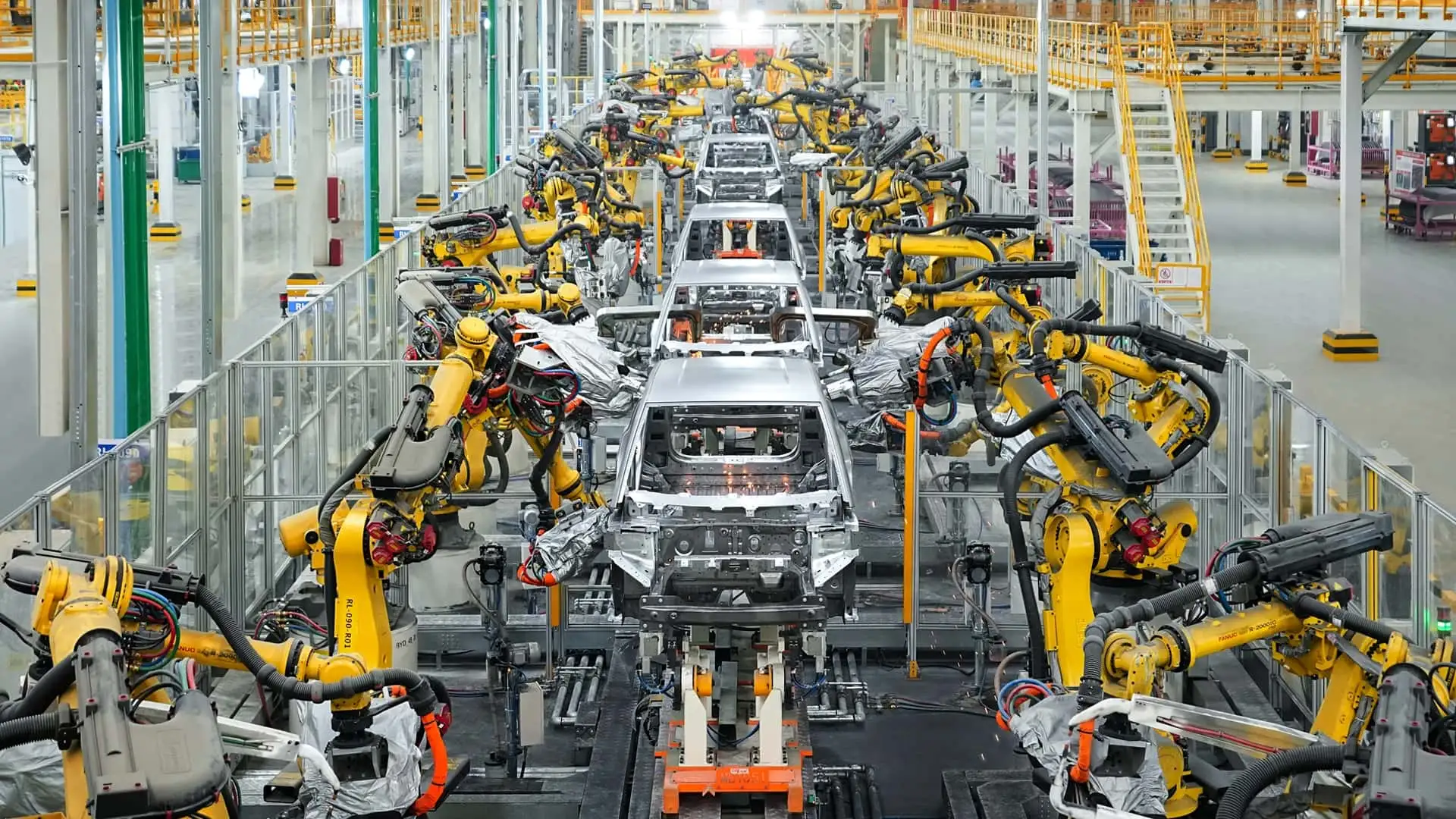
Industry experts predict that the first “dark factory” — a facility where 100% of assembly is done by robots, without human intervention — will open in China or the U.S. by 2030. A dark factory is not a force of expression: it means without any enlightenment at all. A milestone of enormous change in vehicle assembly. These manufacturing units will use A.I. and very advanced robotics in order to significantly reduce production costs and lead times.
Tesla (in Shanghai) and several Chinese companies already use automation on a large scale. These manufacturing units have a very low human presence. However, it is expected that fully automated manufacturing will only be a consolidated reality in four years.
These factories drastically reduce the need for staff (to up to 1/7 of the current workforce), with the remaining human roles concentrated on maintenance, data entry, and engineering oversight. But there are also serious challenges. The main ones include the high cost of implementation and the need to redesign vehicles for this advanced type of assembly.
Indispensable question: what if robots suppress too many jobs? Many jobs will be lost due to technological advances, but optimists (including myself) predict that new occupations will emerge. There may be fewer people picking items in a warehouse, for example, because robots do it better than humans. But other activities will gain strength such as big data analysts, information miners and managers of data sharing networks.



