Check out the rules and conditions for vehicles registered outside the country to circulate on Brazilian roads
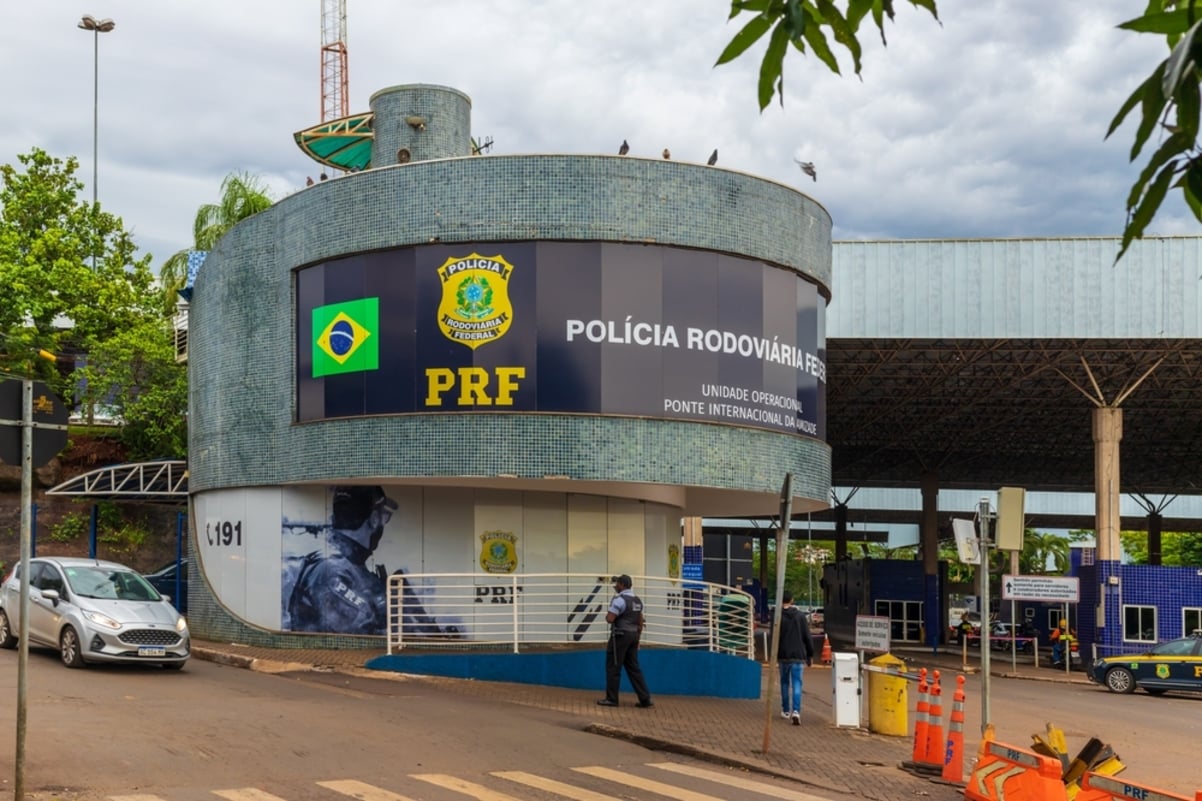
In 2025, Brazil reached an all-time high and closed the year with 9.3 million international tourists. These people arrive both by flights and by the roads that connect the country to 10 border countries. And those who come with a foreign car have to follow some specific rules to be able to drive regularly and smoothly in Brazilian territory.
To understand how the dynamics of international vehicles work in Brazil, it is necessary to know the rules that take into account:
SEE ALSO:
To enter Brazil with a foreign vehicle and drive it within the country, it is necessary to present documents of both the drivers and passengers, as well as the vehicle.
First of all, if you are entering Brazil with your car, all drivers and passengers must present an original personal identification document, issued by an official agency in the country of origin. And, in the case of the driver, he must also present the driver’s license under the following conditions:
In addition, the Brazilian citizen licensed abroad who intends to drive in Brazil with a foreign license must prove, at the time of inspection, that he maintained residence for at least six months in the country where he issued the document. This can be done through an attestation, declaration or certificate from the Brazilian consular authority in the respective country.
The International Driving Permit – IDP can also be presented accompanied by the foreign driver’s license. However, this is only valid for the signatory countries of the Vienna Convention on Road Traffic.
When entering the territory, it is essential that the driver also carry proof of entry into Brazil. The issuance of this item is done through a physical or digital document provided by the Federal Police of Brazil, or by the entry record in the passport.
And an important detail is that the Border Transit Card is not enough to prove the date of entry of the foreigner into Brazil, so it is extremely important to provide the correct proof. In general, a sworn translation and a record of recognition of any foreign qualification are not required.
In summary, it is necessary to carry or issue:
If the driver is the owner of the vehicle it is very simple, just present the original registration document. Now, if the driver is not the owner and the vehicle is registered in a country that is part of Mercosur, it is necessary to carry, in addition to the original registration, authorization from the owner in the form of a public or private document with a notarized signature. But this permission is waived for spouses or family members of the owner, up to the second degree of consanguinity.
For vehicles registered in the Mercosur States Parties, owned by Car Rental Companies (ELV), it is enough to carry the Authorization for Circulation in Mercosur (ACM). Drivers from countries associated with Mercosur do not need the owner’s authorization.
In addition to the vehicle document and any authorizations, the circulation of passenger cars (private or rent) registered in the countries that are part of Mercosur requires an insurance policy. The driver must carry the International Owner’s and/or Driver’s Civil Liability Insurance, and the certificate must be in a bilingual form (Portuguese and Spanish).
This insurance must have been contracted in the country of registration of the vehicle. For vehicles owned by rental companies, the insurance policy may be replaced by the Authorization for Circulation in Mercosur (ACM). Now, for vehicles registered in countries associated with Mercosur, there is no requirement for Green Card Insurance.
To enter and circulate in Brazilian territory, the vehicle also needs to meet some conditions ranging from the identification plate to mandatory general equipment and lighting systems. The requirements vary according to the country in which the car was registered.
The rules for vehicle identification plates are:
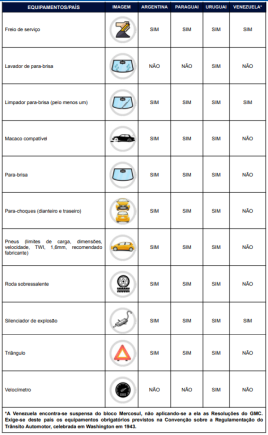
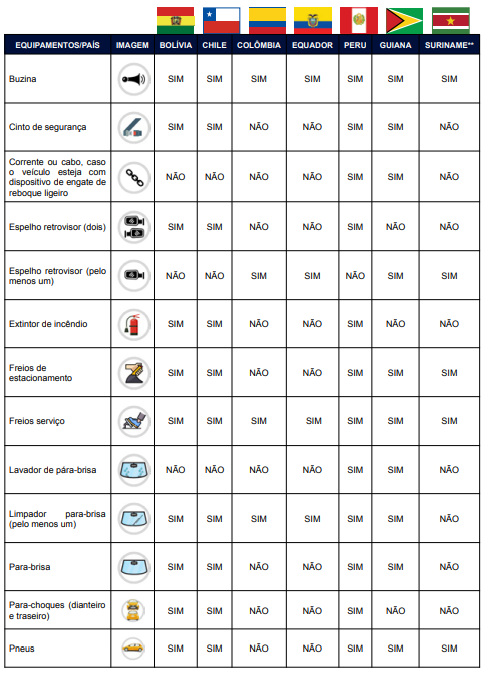
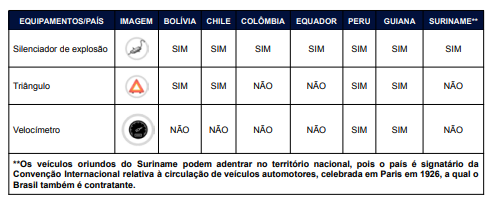
Vehicles coming from Mercosur member countries or other countries that border Brazil, must have the following mandatory equipment in good condition of use and operation:
Rules for light vehicles of Mercosur member states
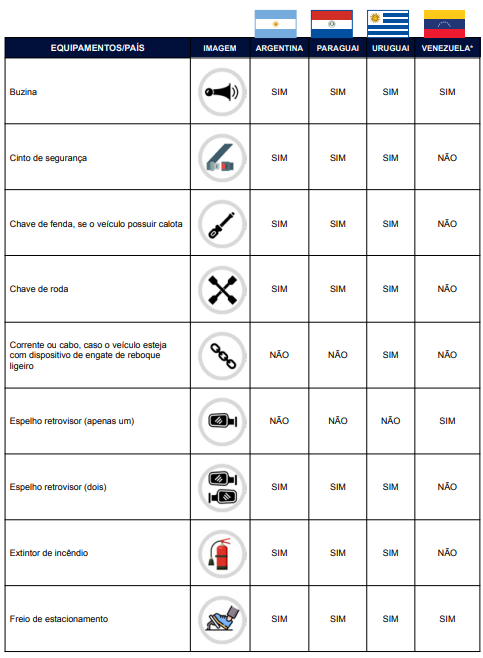
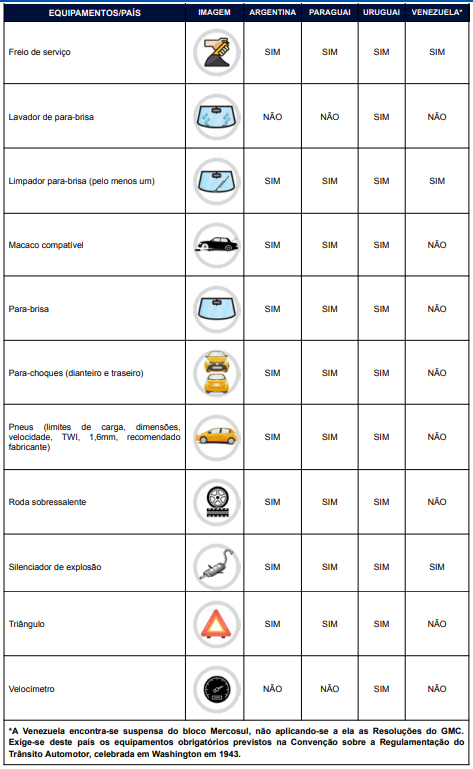
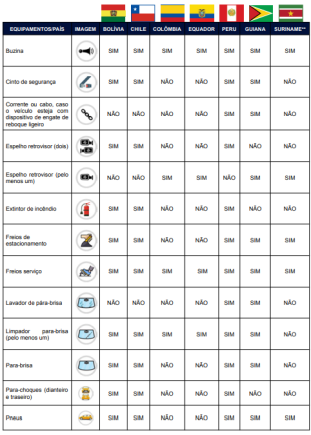
Rules for light vehicles of Mercosur associated states and other countries
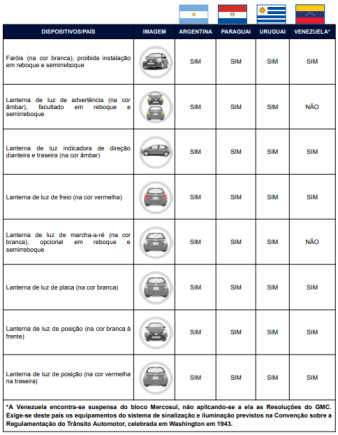
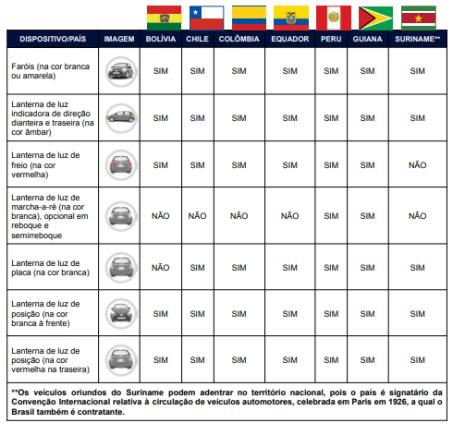
The same logic of general equipment is applied to the signaling and lighting system. Foreign vehicles that intend to circulate in Brazilian territory must have, in good conditions of use and operation, the devices of the lighting and signaling system listed below:
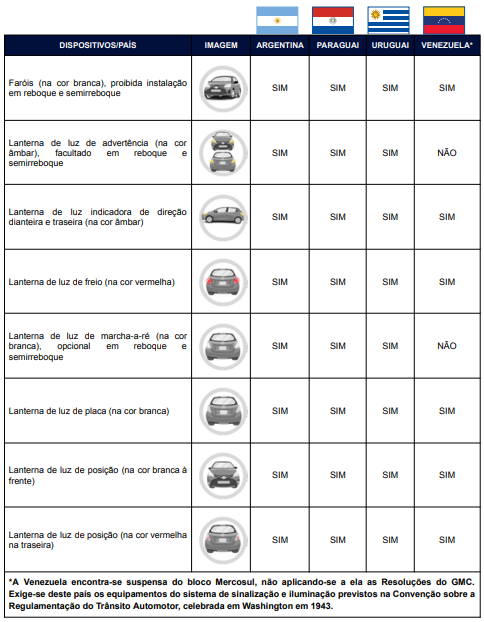
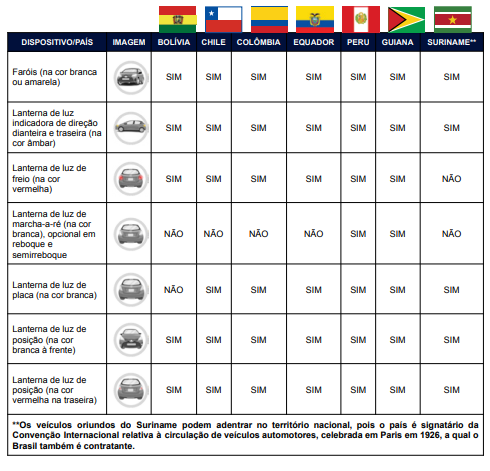
The length of stay of foreign vehicles in Brazil varies according to the driver and his nationality, the period of the visit, among other factors.
The foreign driver, when traveling in Brazil, must be aware of the rules of circulation and conduct established for the roads, defined by the Brazilian Traffic Code. They must be obeyed in full. The Guide for the circulation of vehicles in Brazil highlights the following standards:
If the foreign car is involved in a traffic violation, the payment of this fine must be made by the driver before the start of his trip to leave the country, in the banking network or partners. When the vehicle is inspected, fined and fined in Brazil, the police officer must, whenever possible, deliver to the driver the copy of the notification of the fine and penalty, along with the payment slip.
If it is not possible to issue the payment slip at the time of inspection, the driver must immediately go to the nearest inspection unit of the assessing agency. There it will be possible to issue and later pay.
If the driver tries to leave with the foreign car with an outstanding fine, he may be stopped and detained at an inspection point until the penalty is paid. Vehicles that leave the national territory without paying the fine, and that are later caught trying to enter or circulating in the national territory will be retained until the situation is regularized (payment of the outstanding fine debt).
If you are in doubt whether you have been fined or have any pending issues, you can check the PRF website.



