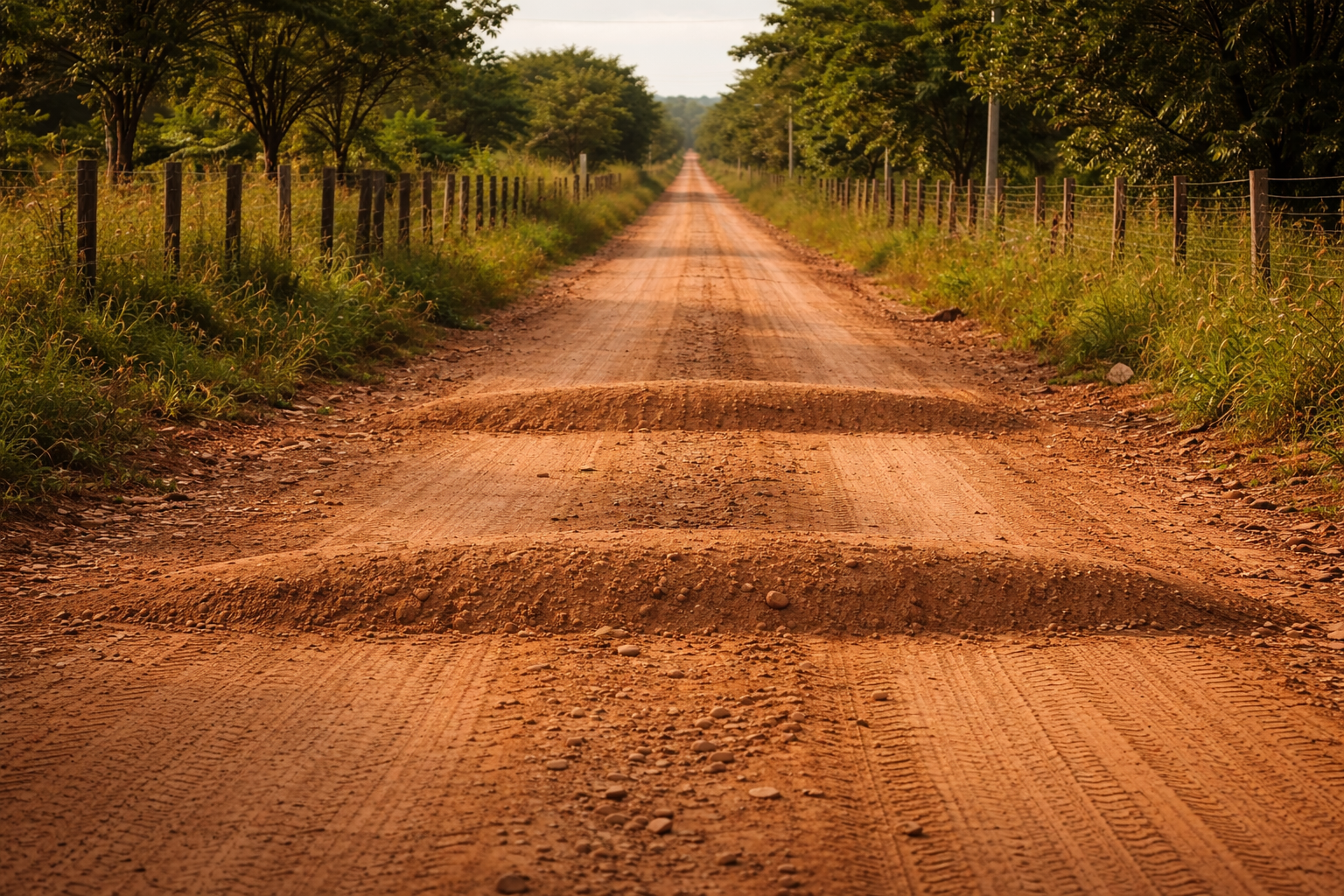
It seems like a joke, but DNIT, which has not completed the paving of the stretch of BR-030 in the vicinity of Itacaré (BA), "installed" speed bumps on the bad road
I traveled in January to Bahia, a region that puts many of the world’s famous beaches to shame. The French, for example, forgive me, but the luxury I imagined of the beaches of the French Riviera is garbage next to ours. But the government’s negligence greatly harms our tourism.
SEE ALSO:
I spent a week in Serra Grande (Bahia, between Ilheus and Itacaré) and another in Barra Grande (above Itacaré), both with breathtaking beaches. To get to the first, a few dozen km north of the airport of Ilhéus, with good asphalt. Between the two, however, the access is terrible. The BR-030, a federal highway from Brasilia to the south of Bahia, is the main access road to the Maraú Peninsula, where Barra Grande is located.
Drivers, cars, buses and trucks suffer because it is, above Itacaré, a stretch of land, pre-prepared to receive the asphalt. But, in the rainy season, the suffering of drivers is even greater, as several stretches become real mudflats.
The DNIT is the federal agency responsible for the highway and there is a general complaint about the constant delays in paving, despite repeated announcements of funds for the work. As it is one of the main access roads to the region, its movement is enormous and the flow of vehicles competes with roads in the South and Southeast regions.
It is a region of great tourist appeal with inns of all levels spread over beautiful beaches. And, unfortunately, the highway receives an intense flow of cars, motorcycles, trucks, buses and vans suffering from ditches, sideburns, holes and craters without adequate signage, service and service points. But the flow will now reduce: I at least don’t go back there until the asphalt shows up…
And here comes the tragicomic detail of this stretch of BR-030: despite the uneven floor, the dirt and full of unevenness, sideburns and holes, the DNIT decided to further complicate the driver’s life by adding a few more obstacles, the sadly famous speed bumps (“speed bumps”) along it.
Easy to imagine that a speed bump on the ground is a real mockery on a rough floor that doesn’t even allow higher speeds. In addition, its signage is terrible or non-existent, and there is no way to comply with the requirement that they have black and yellow paint to increase their visibility. Paint on the earth? The DNIT is well protected in its camp next to the road: one speed bump before, another after, in defiance of the regulations (minimum distance between them) and up to their dimensions according to the traffic code.
In addition to increasing the time needed to overcome the unpaved section, vehicles suffer from irregularities, suspension is severely demanded, tires puncture more easily and become unbalanced with debris in the grooves. Filters get dirty faster and increase the cost of maintenance. And, in addition to all these inconveniences, the icing on the cake, totally irregular and dispensable, the famous “transverse undulation”, spine or Speed Bump which, in fact, is a “Break-Everything”.



