Between memories behind the wheel, Beetle 1300 and criticism of AI, a personal account of what really defines driving pleasure
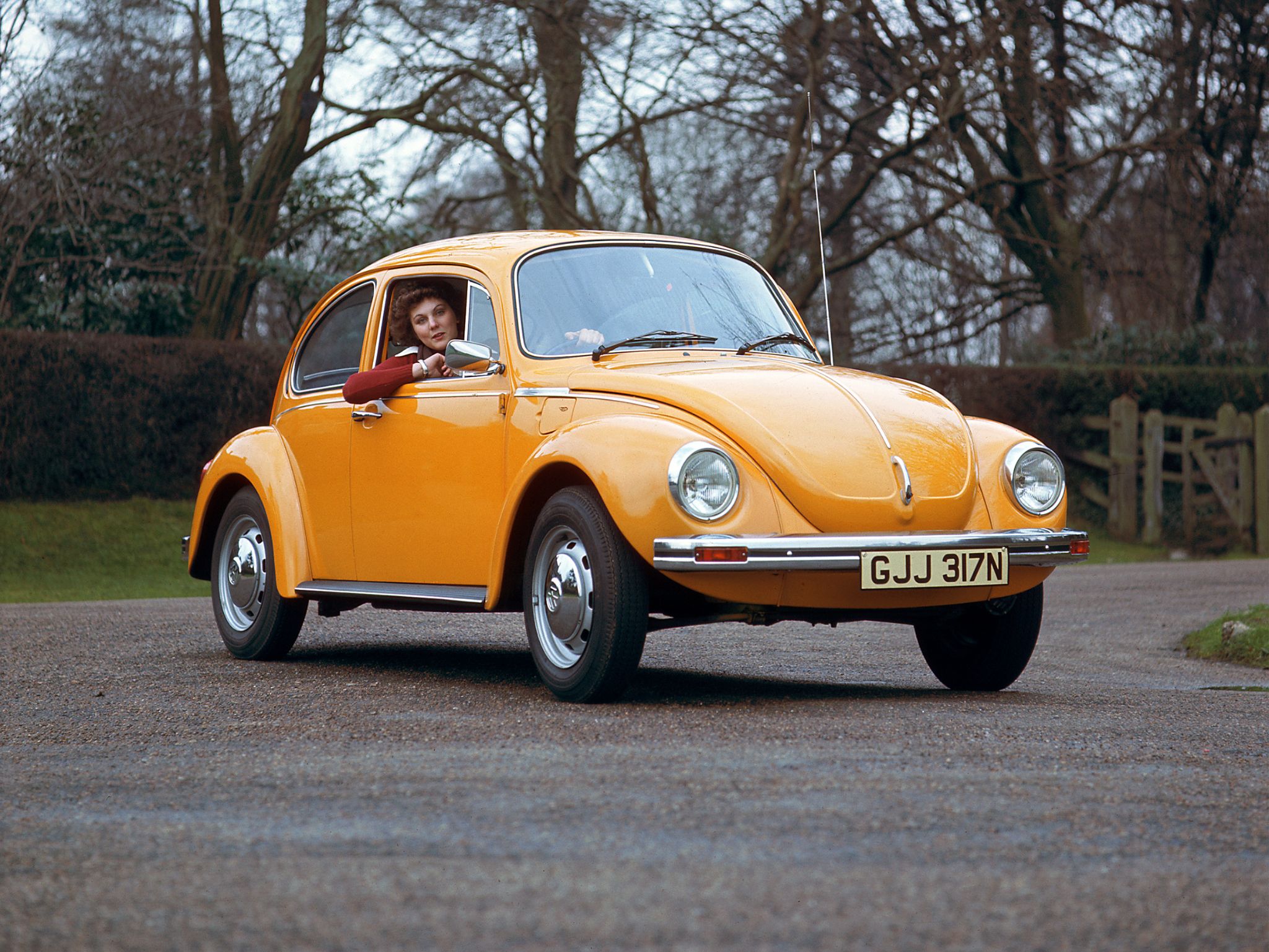
I was born at the very end of the 1960s, almost at the turn of the 1970s. I learned to drive in a Kombi 1200 ’59, owned by my grandfather, there on the streets of Sorocaba. He was 12 years old. And I spent my adolescence washing my father’s Voyage (later two Monza) and my mother’s Beetle 1300 ’75 unfailingly on Saturday mornings… to earn the right, at the age of 14 or 15, to take a walk around the block.
SEE ALSO:
I accumulated a lot of mileage in this Beetle in the following years. It is precisely because he drove so much in it that this passion for automobiles flourished.
As my father’s background was in mechanics, he took care of the maintenance of the cars at home. I remember seeing him transforming the 4-cylinder gasoline engine of a Commodore (1978) into an alcohol version, using copper wire to heat the intake manifold, in addition to living with a collection of giclés in his pocket. The Beetle had Brasília wheels (14-inch rim) and wider diagonal Opal tires. I think it was 7.35/14. Otherwise, totally original.
In years of use, this Beetle has never broken down. Nothing. Nothing at all. In fact, only once, when the dynamo’s belt broke. And I was there in the hat house. Of course he had a spare belt and my father had taught me how to change. It was easy. But that’s all, in more than eight years he was at home. I drove this Beetle a lot. I even think that my passion for cars is born from having driven a car so much… so bad! The Beetle is like the taste of a citizen who only knows spaghetti with a sweat! The day you taste a Bolognese sauce, oh, what a difference! “How is it better!!” You need to ride a Beetle every day to give value to other sauces, I mean, cars.
As all incoherence is welcome in passions, today, of course, I have a Beetle 1300 (1976). But I also have a Variant 1600 (1974). The Beetle only exists to justify the qualities of the Variant: every time I drive one, I am immediately extremely happy to have the other!
Being this old guy, I confess that I am resistant to using AI. I’ve tried a few times and I was even scared by the accuracy of the result compared to what I ordered. One day, I’ll end up joining. To write my texts, however, never.
Except today.
I asked one of these tools to come up with a text that talked about pleasure when driving cars and motorcycles. It came something like this:
The road calls, a silent invitation that the soul recognizes. It’s not about fate, but about dance, the mechanical symphony that begins by turning the key or pressing the ignition button.
In the car, pleasure settles in a cabin that is a sanctuary. The cabin welcomes, the seat embraces, and the commands respond to a touch, to a thought almost. It is the orchestration of movement: the deep roar of the engine, the precision of the steering, the way the chassis reads the asphalt and translates the landscape into tactile sensations.
On the bike, the experience transcends the shelter. Stripped of the glass and steel barriers, the pilot merges with the wind, the temperature of the air, the smell of the approaching rain. There is no cabin, just the perfect union between body and machine.
And so on.
Guys, it’s not like that at all. I’m glad the AI doesn’t know what I’m talking about. It parades a litany of poetic sentences, but it will never, ever be able to synthesize what it is to brake a Porsche 911 Carrera GTS, the new (or the old, it doesn’t matter) at the end of a straight, on a racetrack, at more than 220 km/h. She doesn’t know. So let me explain to you what driving pleasure is, at least for me.
I speak with a racing heart when you feel the back of a car, in a fraction of a second, start to escape. Or the sweat on your forehead when you lay the bike on a curve at an angle beyond what you had done… And it works. Or feeling the hairs on your arms when braking hard, above 200 km/h, to get into Senna’s S at about 70 km/h, with the rear end loose and you hitting the steering wheel.
Driving pleasure
I’ll highlight some cars and their respective whys.
There is a risk that I will not be able to finish this text, because I have not even begun to describe the “crème de la crème”. And it starts with the…
I fit in the car like I had never felt anything before. I sewed with him in traffic as if I had known him for a long time. I didn’t even change gears. He slapped the lever with contempt. And she always understood where to go. What about the balance of the car in high corners, versus the rear-wheel drive without any electronic controls? Good. The second unforgettable 3 Series was an M3, I think the E46, in 2000 or 2001: the first one that came with a paddle shift. People (2). I’ll summarize it in the following: I ground a tank and a half of gasoline in 3 days (this is not force of expression. I spent all that.)
The Italian replied: “Questa macchina non ha nemmeno 120 hp. Questo fenomeno è intenzionale. Si ha l’impressione che cammini molto più di quanto non faccia in realtà”. Or “this car doesn’t even have 120 hp. This phenomenon is deliberate. You get the impression that he walks much more than he actually walks.” Is this or isn’t it great? From that moment on, I became much more of a Fiat fan than I could have imagined a few years before!
The list is long. Will you come back next week for the second chapter? I’ll talk about cars like the Dauer 962 LeMans, the Chevrolet Zafira, the Chevrolet Omega CD, the Ford Ka 1.6, the Kawasaki Z900RS, the Honda Civic VTi, the Porsche Macan Turbo (the electric one), plus a few others that I’ll remember. Oh, of course, and the 911. Until then.