Automotive industry discusses the advances, costs and risks of Level 3 automation and the evolution of ADAS systems

Effort began about 20 years ago. Several manufacturers have dedicated themselves to perfecting new features to increase the active safety of vehicles. Today the acronym ADAS (Advanced Driver Assistance Systems) arouses growing interest. After all, avoiding accidents is at the heart of the concerns of the industry, traffic authorities and also insurance companies.
SEE ALSO:
“Allowing drivers to engage in other activities while driving could be a next step in helping manufacturers cope with the considerable investments in autonomous driving,” said the British news agency Reuters, in an article on the 23rd. Drivers could take their eyes off the road for a mobile chat and even use a laptop as long as the car alerts them to regain control of the vehicle. This is conditional automation, Level 3.
Ford intends to offer this feature from 2028. GM and Honda are also committed. Tesla already provides a semi-autonomous system that it has totally inappropriately named Full Self-Driving and has already caused accidents in the US. Mercedes-Benz even made Level 3 available in the USA. However, it recently stopped due to limited speed and restricted conditions. But it did not give up on the program, unlike Stellantis, which pointed out high costs, technological challenges that are difficult to overcome and expectations of real consumer demand.
Other executives argue that switching control between the car and the human driver is unfeasible or unsafe, as well as complex liability issues. “We don’t know if Level 3 will ever make sense financially,” said Paul Thomas of Bosch North America. This level of automation is intermediate in scale up to 5.
The development could reach $1.5 billion, almost double Level 2. It is not even possible to imagine how much it would cost to reach Level 4 and Level 5 (in this case the cars would not even have a steering wheel and pedals).
“The big technological challenge for Level 3 is to design a system capable enough to detect the need for human intervention, provide a warning, and continue in action until the driver takes control,” said Bryant Smith, an expert on autonomous driving regulation.
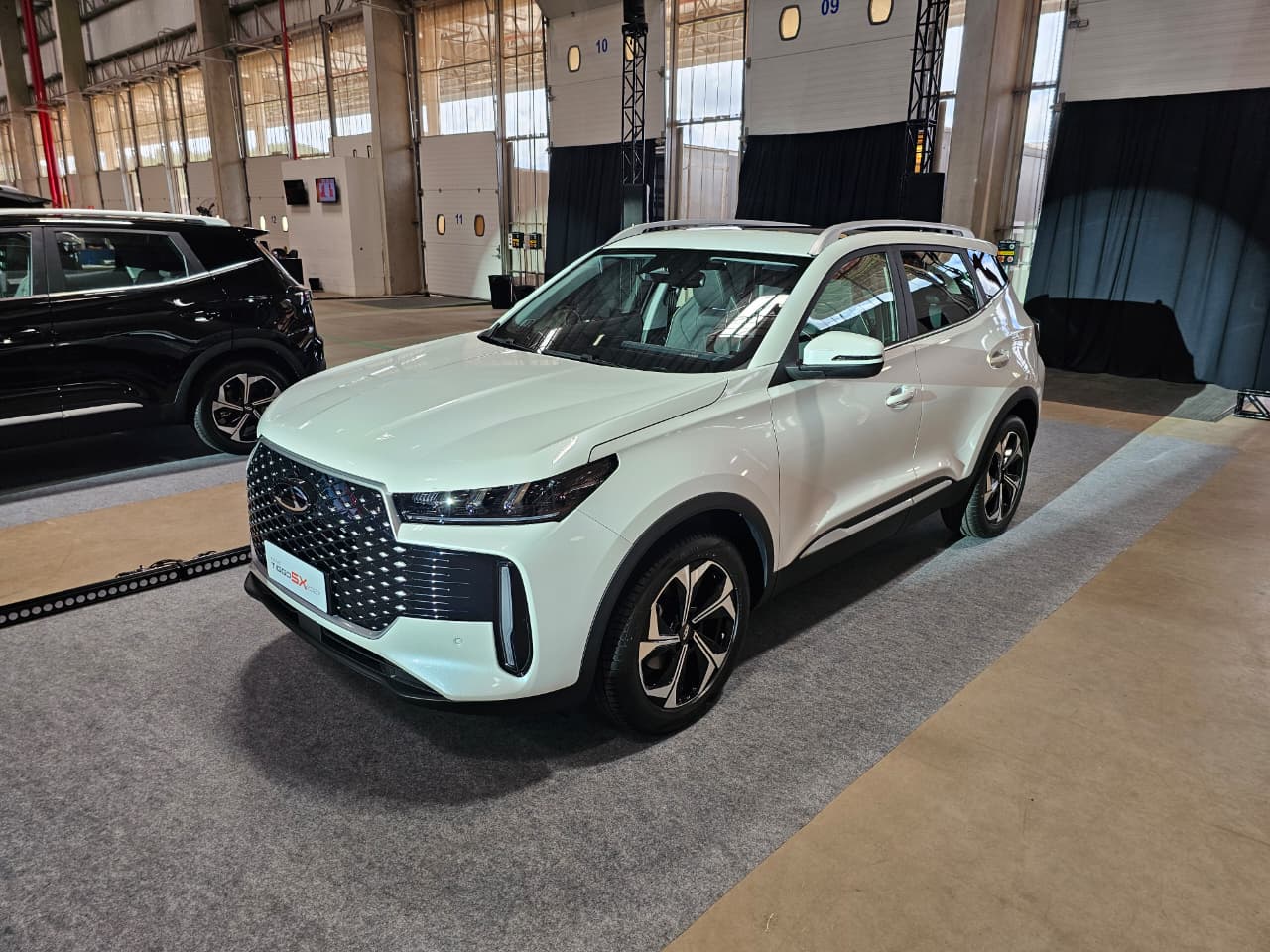
New front identity, Full LED headlights and DRL, redesigned grille and striking light signature. 18 in. diamond wheels and rear with taillights interconnected by LED bar reinforce the sophistication proposal of the Tiggo 5x 2027. Inside, 20.5-inch panel. integrates a digital instrument panel and multimedia center with wireless connection to Android Auto and Apple CarPlay. There is a 50 W induction cell phone charger, driver’s seat with electric adjustments and lumbar support, front parking sensor and panoramic sunroof.
It offers seven inflatable bags as standard, including a central between driver and passenger. Adas Package 2 covers autonomous emergency braking, adaptive cruise control, forward collision warning, lane keep assist, blind spot monitoring, rear cross traffic alert, automatic high beam switching and 360° camera.
In the dynamic evaluation, between Guarulhos and Franco da Rocha (SP), the 5X 2027 stood out for its good acoustic insulation and steering with adequate weight, without exaggerated assistance. Suspensions favor a smooth ride and absorb the imperfections of the asphalt well. Behavior consistent with the family proposal.
Although the manufacturer discloses that the performance of the Tiggo 5x is among the best in the category, in practice this perception is not fully confirmed. The 1.5 L turbocharged four-cylinder engine delivers 150 hp and 22.75 kgf·m. CVT transmission, nine gears. However, the throttle response is slow. There is a noticeable delay in starts and resumes. This decreases the feeling of agility compared to most direct competitors.
By contrast, the systems in the Adas 2 package performed consistently along the way. Highlight for the lane keeping assistant that operated without annoying interference. Overall, the model stands out more for comfort, on-board technology and safety than for performance.
Prices: R$ 119.990 to R$ 134.990 (until the end of February).
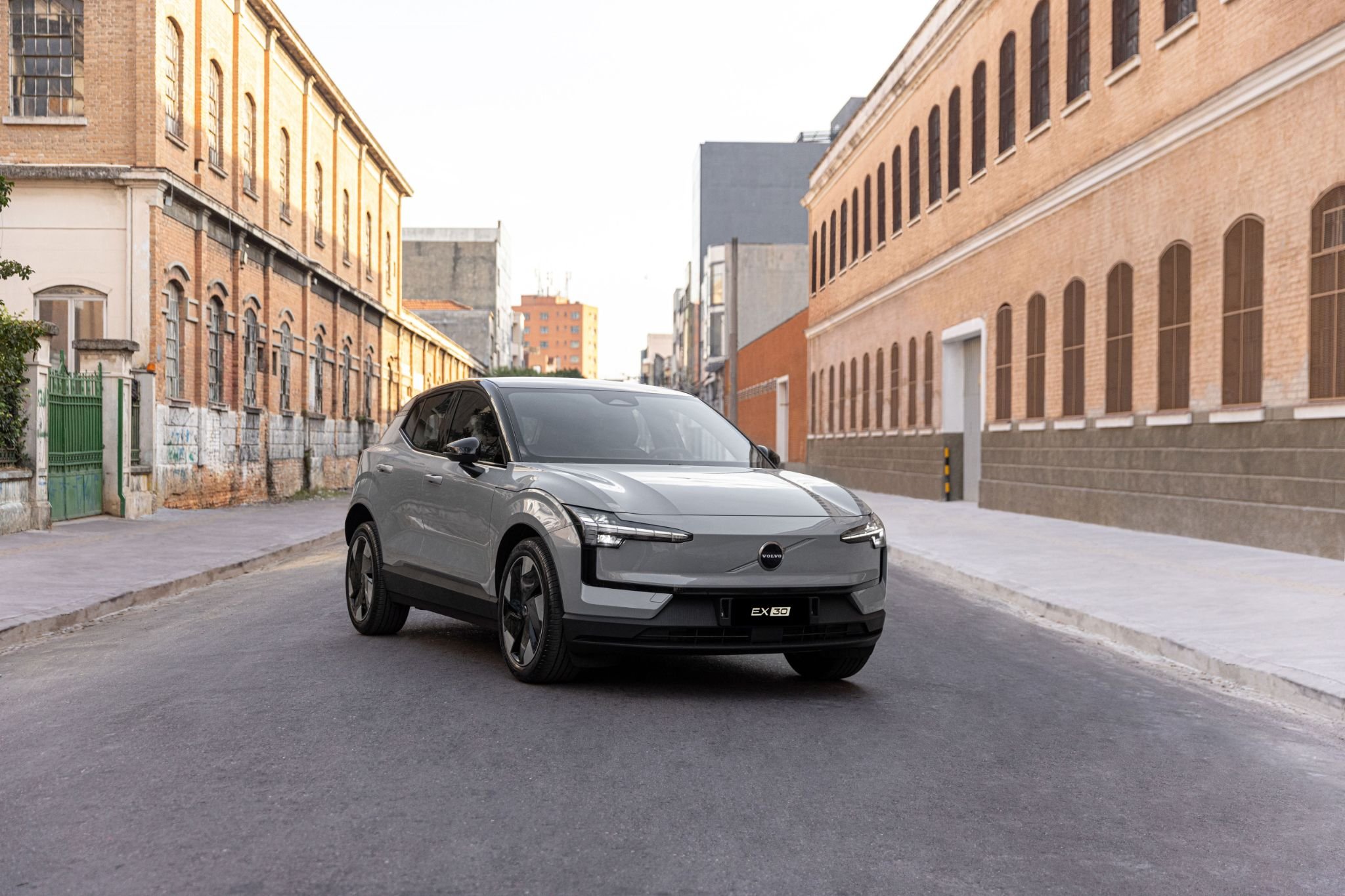
The US, Brazil and Australia, as well as several other countries, had already received instructions to limit battery recharging to 70% in order to avoid fire risk. And also park away from buildings. The Swedish Volvo cultivates the tradition of prioritizing the safety of its cars and does not usually suffer discredit from its image. Earlier this week, it finally announced a recall of 40,323 EX30 compact electric SUVs. They have been on the market since mid-2023.
Controlled by the Chinese conglomerate Geely, the company had already made a misstep by buying the Swedish battery factory Northvolt in 2025. The investment did not work out for financial and technical reasons, but no battery was purchased. There was no lack of examples of care with suppliers of an extremely sensitive item. GM, in 2020, faced problems with the batteries of the South Korean LG. About 140,000 Chevrolet Bolt were partially grounded and the recall cost $2 billion.
Finally, Volvo was also hampered by another problem. New batteries came from China, manufactured by a partnership between its parent company and a manufacturer specialized in this field. Shandong GeelySunwoda Power Battery Co. also produced defective batteries. Not even Geely’s respected name in the supplier’s corporate name avoided the difficulties. The cost of the recall was not disclosed.
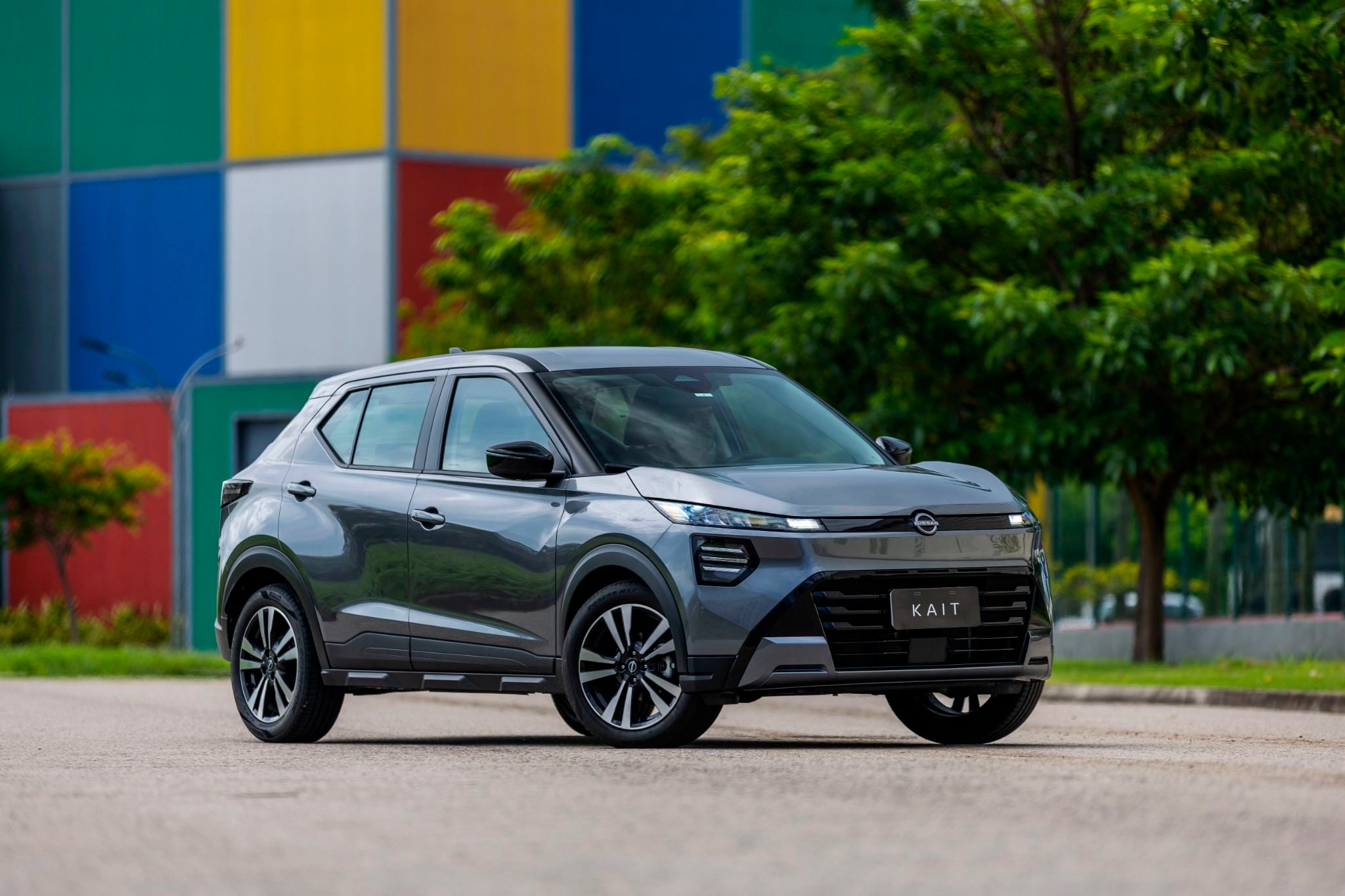
Nissan needed a good effort in order to counterbalance the weight of the age of the Kicks launched 10 years ago. The Kait’s architecture is the same as the veteran compact Kicks Play with a symbolic gain of 10 mm in the wheelbase. Width and trunk are exactly the same. It received a brand new, imposing front, high hood and wide and low radiator grille. Lateral, practically the same. At the rear, taillights, bumper and trunk lid have changed.
Dimensions (mm): length, 4.304; wheelbase, 2,620; width, 1,760; height, 1,611. Volumes (L): trunk, 432 (very good compared to Tera or Kardian, for example); tank, 41. Mass: 1,157 kg. 4-cylinder 1.6 L flex engine: 110 hp (G)/113 (E); 14.9 kgf·m (L)/15.3 (E). Consumption (km/L Inmetro): city, 11.3 (G); 7.8 (E); road, 13.7 (G); 9.4 (E). As the tank is small, the range leaves something to be desired compared to the aforementioned competitors (km): city, 463 (G) and 320 (E); 562 (G) and 385 (E). CVT automatic transmission, six speeds.
Finish, in the top version (Exclusive), includes leather seat upholstery and adaptive cruise control. The instrument panel now has a digital speedometer and a 9-inch multimedia screen. it is also new with reasonable resolution and despite its accessory appearance it offers wireless Android Auto and Apple CarPlay. There is good legroom in the rear seat, but no air conditioning vents.
In the dynamic evaluation, the Kait revealed the limitations of a naturally aspirated engine combined with the bland behavior of the CVT transmissions. In urban use, when less demanded, it can still please, as long as you don’t step on the accelerator. When overtaking on roads, the noise bothers much more. However, it offers cornering behavior that conveys confidence. On mountain descents, the brakes showed low loss of efficiency, even when imposing rigor.
Price: R$ 152.990.



