In three decades, traffic has undergone countless changes, but the code that governs its operation has stalled in time
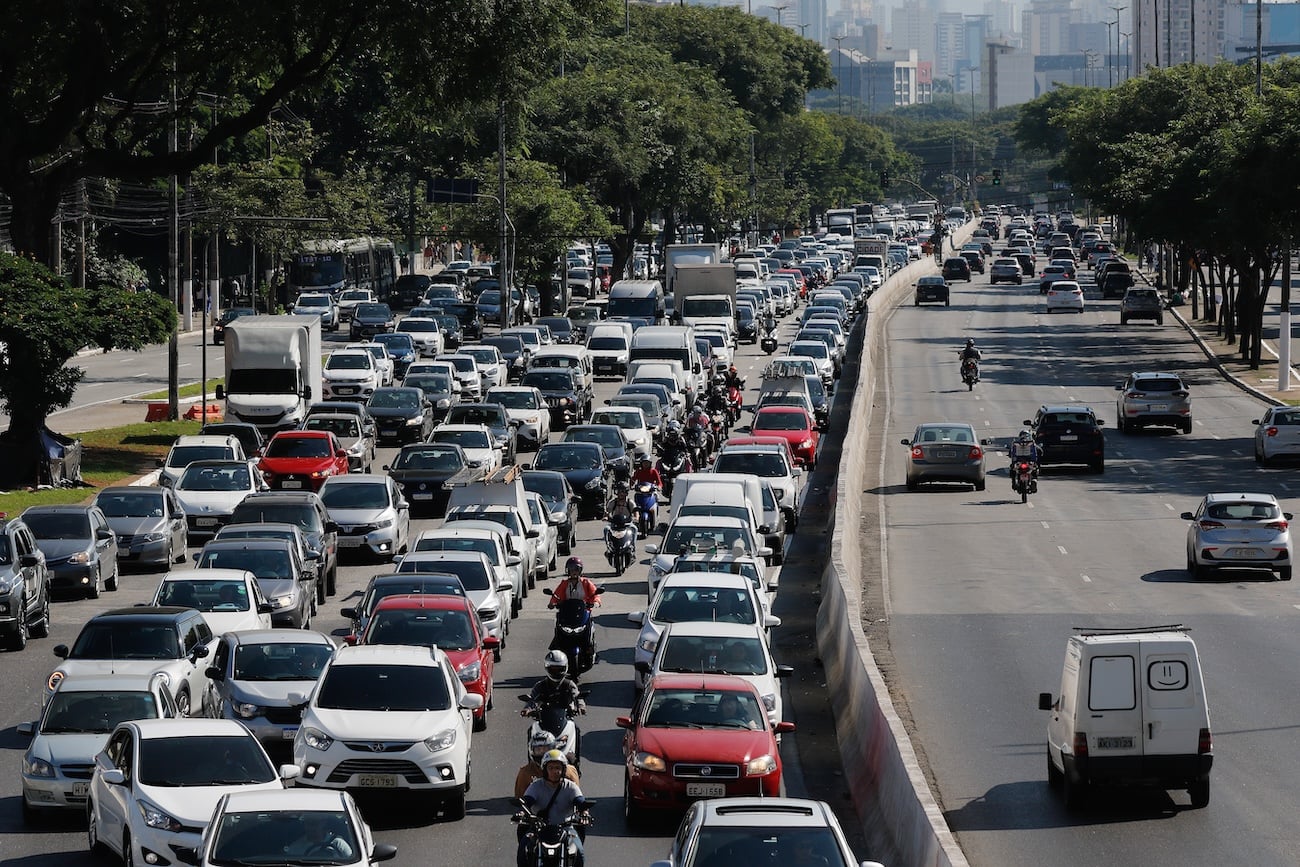
Since last December, the news has appeared. It is now required to carry out the toxicological test with a wide detection window for those who wish to obtain the National Driver’s License (CNH) in the categories of cars and motorcycles. Before, only professional drivers were included. The eliminatory goal test was extinguished, although the candidate needs to know how to park the car at the end of the exam. Letting the vehicle “die” no longer fails and automatic transmission can be used. However, the CNH would have an observation that the driver could not drive vehicles with manual transmission.
SEE ALSO:
This Wednesday, March 18, the first of four public hearings (the last on April 15) will begin the analysis of 270 proposals on mobility and road safety that amend the Brazilian Traffic Code (CTB). There are many suggestions, such as reducing the minimum age for obtaining a CNH from 18 to 16 years old, as occurs in other countries (not all). The problem is also legal and includes the Statute of the Child and Adolescent.
According to the Câmara de Notícias Agency, representatives of driving schools and experts criticize the precariousness of traffic education, which with the recent changes “puts unfit drivers on the streets”. This is a topic that deserves attention. Of course, there was an exaggeration in the obligation of a fixed number of classes in driving schools that made the process more expensive and disregarded the natural abilities of each candidate. The government demagoguery of the “CNH for all” borders on pure irresponsibility. A lame premise that there are 20 million who drive without documents based on an “official” circulating fleet that does not exist, because older vehicles are abandoned without the proper document write-off.
There is, however, a proposal that can put an end to a clearly unfair current situation. The buyer of a used car is penalized with the automatic transfer of fines for infractions by the previous owner and that were not yet in the system at the time of sale. Deputy Hugo Maia (PSD-RJ) proposes that the collection be linked to the CPF or CNPJ of the former owner. In addition, the existence of these old debts would not prevent the new owner from being able to issue the Vehicle Registration Certificate (CRV) or annual licensing.
Maia also proposed the return of mandatory insurance (former DPVAT) to support traffic victims. I have a suggestion: if the owner of the vehicle proves that he contracted this insurance on his own, he would not have to be forced to pay the successor of the DPVAT again, as was the case before.

Much has been said about the evolution of current batteries and several manufacturers are committed to anticipating solid-state batteries. Changan had taken a preliminary step forward. The debutant Nevo A06, the first model with sodium-ion batteries, from CATL, also Chinese, replaces the current lithium, cobalt and nickel ion batteries. There are two advantages: price and greater thermal stability. But with lower energy density.
Solid-state technology, however, should really change the landscape. Forecasts indicated launches from 2030. Changan surprised by announcing for the beginning of 2027 the first model (unrevealed) with this type of battery. Price is high, but much safer because solid electrolyte eliminates leaks. It is very difficult to fight fires in conventional lithium batteries, even if they are not involved in collisions.
Solid-state batteries have higher energy density, faster charging, and longer lifespan. Donut Lab, a Finnish newcomer founded in 2024, presented a battery of this type ready for launch. Many experts say that numbers, graphs and test configurations of that company do not stand up to basic analysis. Renowned companies, such as Toyota, QuantumScape, CATL and Samsung, show caution and transparency in relation to their schedules.
This step forward in the strategy of growing in Brazil and, in the future, exporting to Latin America is consolidated through a new investment. The Chinese brand decided to diversify, without focusing only on Camaçari, Bahia. The automobile testing and evaluation center will be built on Ilha do Governador, where the Antônio Carlos Jobim International Airport, also known as Galeão, is located.
R$ 300 million will be invested in a total area of 184 thousand m². The works will begin at the end of this year and are expected to open in 2028. Stella Li, Global Executive Vice President and CEO of BYD Americas and Europe, once again came to the country. She pointed out that, in addition to research and development in the capital of Rio de Janeiro, the center will be able to test and prepare the official homologation of all the brand’s products, from automobiles to light commercial vehicles. He did not advance details such as support for flex engines that should be in the plans, alongside gasoline and electric engines.
There will be lanes of various types, including without asphalt pavement and with cobblestones. Also pool sealing tests that reproduce flooding (unfortunately so common). Having facilities of this type will certainly promote anticipation of launches due to the more agile adaptation to the various conditions of use in Brazil.
This is an advantage over competitors, including Chinese ones, which are constantly arriving and expanding the offer of models such as the MG 4X, from archrival SAIC, second in sales in the East Asian country. GAC has just confirmed a production agreement in Catalão (GO), at the same facilities as the Brazilian company HPE that assembles Mitsubishi’s pickup trucks (L200 Triton) and SUVs (Eclipse Cross).
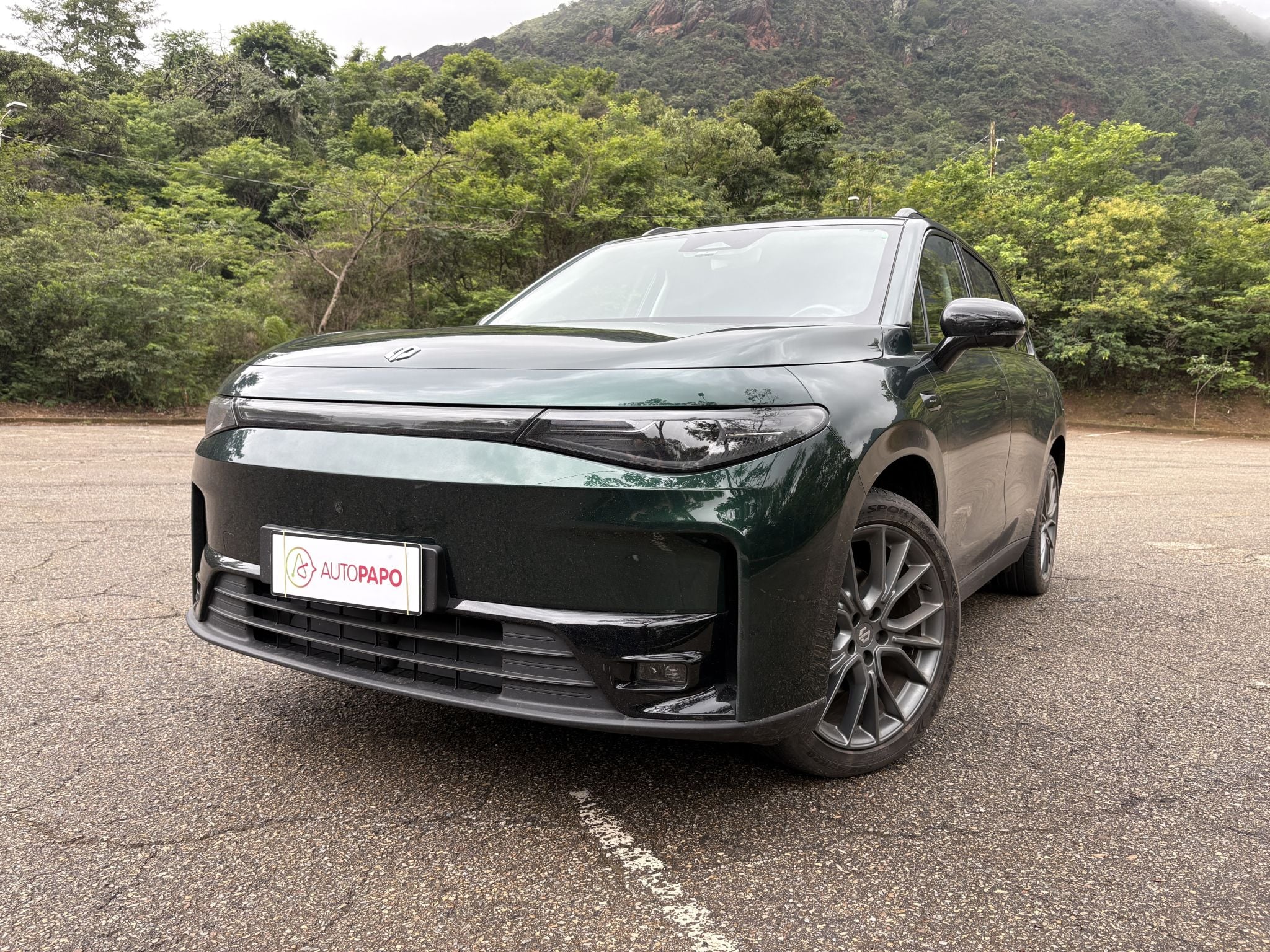
Extended-range electric or series hybrid, the latter classified by SAE? It is strange that the SAE (Society of Mobility Engineers) frames a model that only moves by means of an electric motor and the combustion engine only serves to drive a generator that charges the battery. By the way, this is nothing new because the BMW i3 REx, launched here in 2014, already qualified as an EREV (Extended Range Electric Vehicle). The C10 EREV also makes it possible to recharge the battery at an outlet. Leapmotor (49%) and Stellantis (51%) are partners and in order to comply with Brazilian legislation they ended up opting for the term ultra-hybrid. Models of the Chinese brand will be produced domestically.
Dimensions (mm): length, 4.73 m; wheelbase, 2.82 m; width, 1.90 m; height, 1.68 m. Volumes (L): trunk, 435; tank, 50. Mass: 1,976 kg. Rear electric motor: 215 hp; 32.6 kgfm. Front engine-generator, 4-cylinder 1.5 L, 88 hp, 12.7 kgf·m. Consumption (km/L, Inmetro): city, 12; road, 12.9. Range (km): motor-generator, 600 and electric, 111. Rear-wheel drive.
Flexibility in city or highway use, regardless of whether there is anywhere to recharge, is an asset, with no other competitors (for now) and at a reasonable price. A complete SUV: seven airbags (one of them central), panoramic sunroof, large 14.6-inch multimedia screen. and very good finishing materials. It brings some complications because almost everything must be adjusted by the screen, including air conditioning commands. Side mirror adjustments are not on the driver’s door but on the steering wheel spokes. Interior space stands out both in the front and for the three rear seat passengers (flat floor).
Suspensions (multi-link at the rear) handle the almost two tons of mass well, but require more attention on uneven surfaces due to the high center of gravity of every SUV. Well-calibrated steering and correctly sized brakes, without noticeable changes of efficiency loss when required.
Price: R$ 219.990.



