Category A now follows practically the same requirements as licenses for four-wheeled vehicles and the use of motorcycle lanes is implied
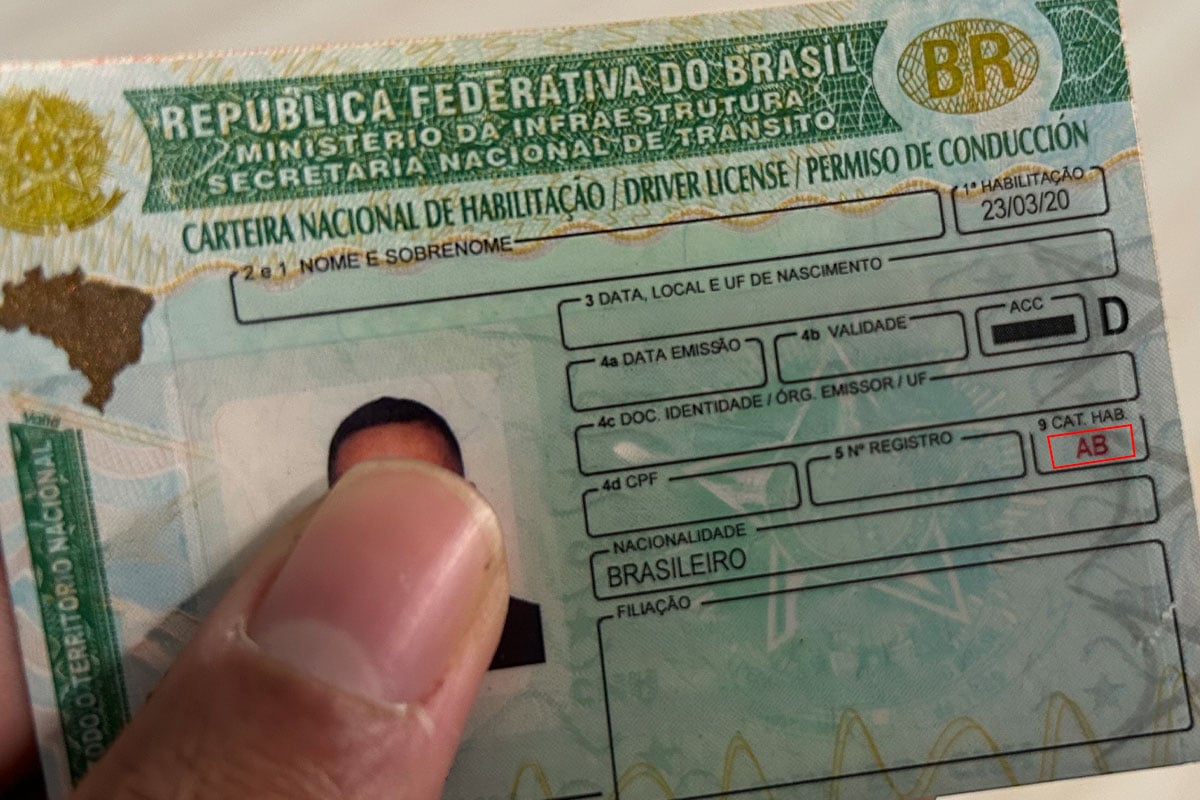
Since December 2025, a new policy for obtaining a driver’s license has been in force in Brazil. The so-called CNH do Brasil was reformulated by the National Traffic Council (Contran) in Resolution No. 1,020, of December 1, 2025, and many rules have changed.
Among the changes, the end of the obligation to link up with driving schools, the end of the minimum workload of theoretical classes, the reduction of the workload of practical classes from 20 hours of class to 2 hours of class and the possibility of using a private vehicle stood out.
Much has been said about this reality for applicants to CNH B, but the fate of citizens who aim for CNH A, the motorcycle driver’s license, was implicit in the document. After all, can motorcyclists now use their own motorcycle and practice on open public roads, just like cars?
SEE ALSO:
The new Resolution changed the CNH withdrawal process for cars and motorcycles. In the first phases, medical and theoretical, everything is the same for both.
Here, the main change is that the candidate can now directly choose the professional responsible for the evaluation, as long as he is accredited by the state’s executive traffic agency. Before, the DMV indicated the clinic where the exam should be done.
With the new rule:
In addition, the rule details the appeal procedure for candidates considered unfit, allowing contestation with the state traffic councils and, if necessary, reassessment by a special board formed by three professionals in the corresponding area.
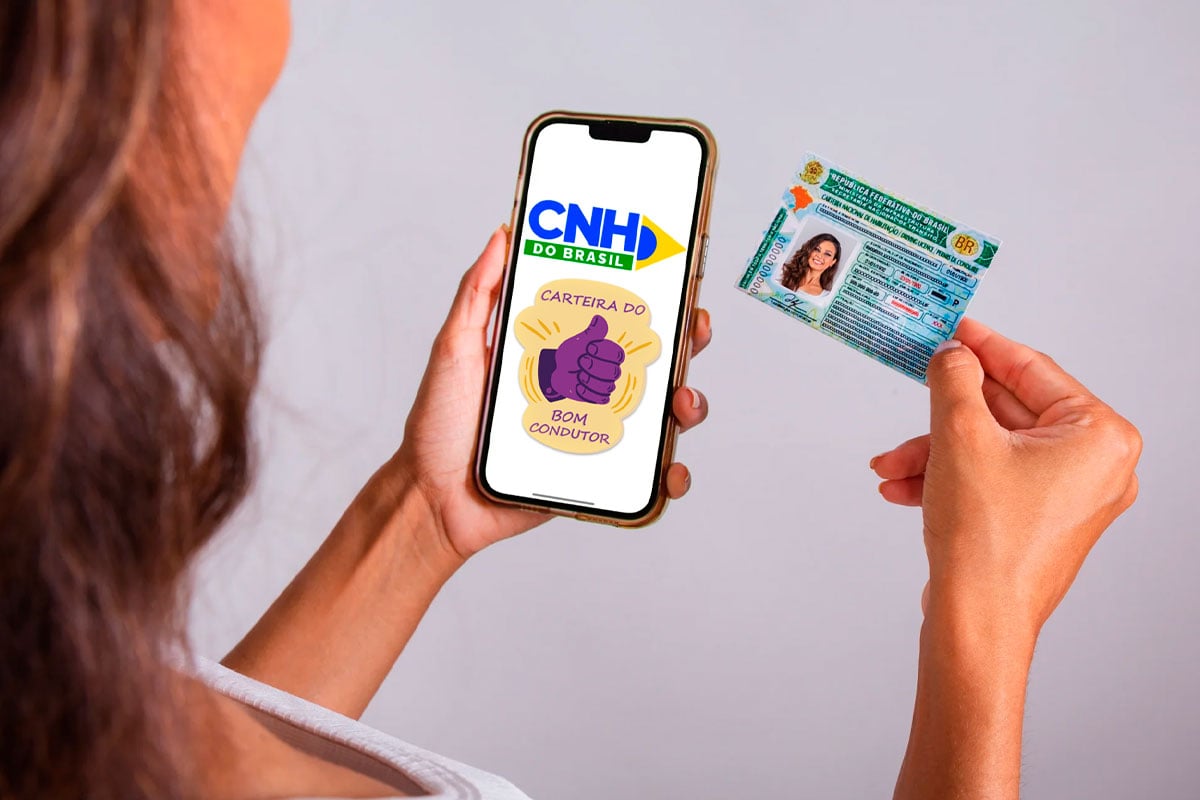
The theoretical process to get a driver’s license is now started by the CNH do Brasil application, which replaces the old Digital Traffic Card (CDT).
Available for free on Google Play and the App Store, the app allows you to:
The biggest change at this stage is that now the theoretical course is online, free and with no minimum workload. Before, there was a mandatory minimum workload of 45 class hours.
The course can be taken by different means:
The Ministry of Transport has already made fully digital material available. According to Ordinance No. 923, the content addresses:
The material is offered in videos, podcasts and complementary content. There are also mock exams with questions in the same format as the official test.
Upon completion, the certificate is automatically issued and registered in the National Traffic System (SNT), proving the completion of the course.
The test continues to be objective, with:
The questions are drawn from the National Issues Bank, organized by the Ministry of Transport. The main novelty is that the executive traffic agency of each state now defines the application format. The proof can be:
In case of failure, there is no limit to the number of attempts. The second attempt can be carried out without charging an additional fee, according to the new regulation.
In this part, the changes appear. Although the details are not expressed by the Resolution, it is implied that care must be different in the case of cars and motorcycles.
At first, everything seems the same, and the main change was the drastic reduction of the minimum workload, which fell from 20 to only 2 class hours. Once this minimum is met, the candidate can now request the practical exam.
Classes can be taught by:
The candidate can choose how many classes he wants to take (respecting the minimum of two) and can also replace the instructor at any time.
The standard allows the vehicle used in classes and in the exam to be:
There is no longer a requirement for dual brake and clutch camshafts. The vehicle only needs to meet the safety conditions provided for in the Brazilian Traffic Code (CTB) and complementary rules. Identification as a learning vehicle can be done by means of a removable band, as provided for in the legislation.
The evaluation model was also changed. Before, the candidate was disapproved when committing an eliminatory fault or when exceeding three negative points. Now:
There is also no longer a limit on attempts to retake the exam. The second attempt can occur without charging an additional fee, according to the regulation.
This is where the change comes from. In Resolution No. 1,020, unlike Resolution No. 789, of June 18, 2020, it is not specified that the driving test for two-wheeled vehicles has the need for “an area specially designated for this purpose” (Art. 17), that is, a motorcycle lane.
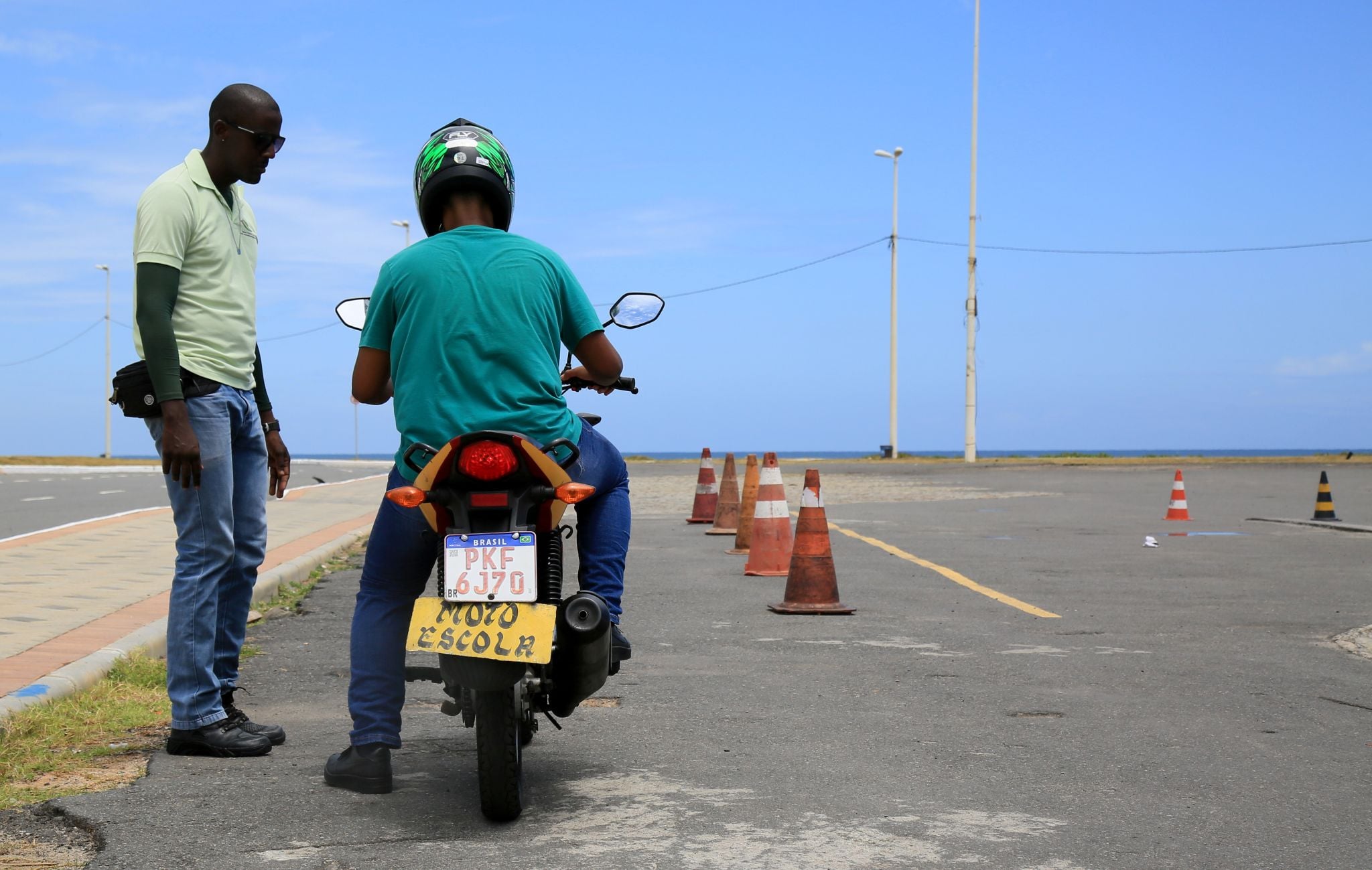
According to the president of the National Federation of Driving Schools (Feneauto), Vilnei Sessim, the update of the rule is of great concern when it comes to motorcyclists, since the rule does not bring anything specific about the motorcycle track, and the risks to the health of citizens are even greater.
We will be delivering to society drivers without sufficient skill to drive safely”, said the head of the Federation.
The document protects itself by stating, in its Article 38, paragraph 1, that: “the planning and execution of practical classes must observe, as a priority, the safety of the candidate, the instructor and other road users, and it is up to the traffic instructor to ensure compliance with traffic rules and adopt preventive measures that minimize risks throughout the instruction”.
In addition, the performance of the exams is at the discretion of the state Detrans, which may choose to keep the activities in the same places specified above.



