Faced with blockade and lack of gasoline, mechanic transforms car with disposal parts into a mobile gasifier; technology dates back to World War II
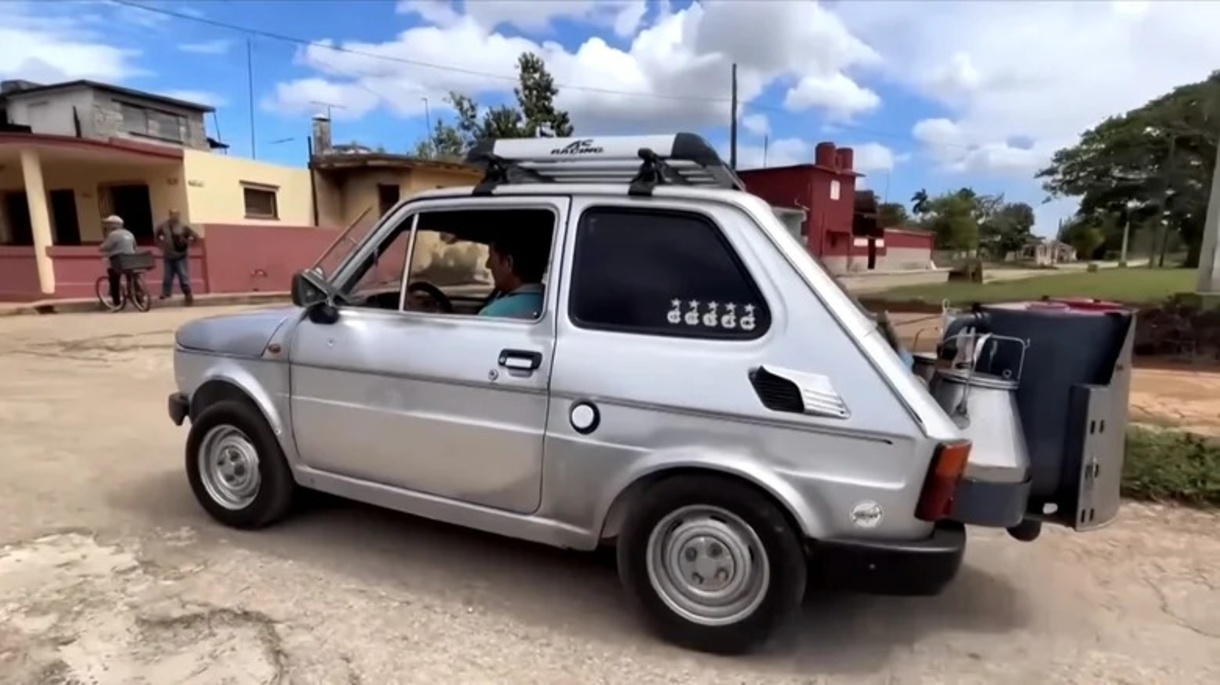
Faced with the supply crisis and the oil blockade affecting Cuba, mechanic Juan Carlos Pino found an ingenious alternative to keep his vehicle running: he adapted a 1980 Polski Fiat to be powered by charcoal. The homemade solution, based on 20th-century technologies, circumvents the gasoline shortage by turning the car into a mobile gasifier.
The model used, a version produced under license in Poland of the classic Fiat 126, had the rear engine cover removed to house the invention. In recent tests, the adapted vehicle traveled 85 kilometers and reached a maximum speed of 70 km/h, a performance considered satisfactory in the face of the paralysis imposed by the lack of fuel on the island.
SEE ALSO:
Far from relying on high-end components, the vehicle’s rear-mounted system was built entirely from waste materials. The main combustion chamber consists of an old propane gas cylinder, hermetically sealed with the lid of an electrical transformer. The filtration system, crucial to prevent impurities from reaching the engine, was improvised with a stainless steel milk gallon filled with old clothes.
Mechanics is based on the principle of gasification. The coal burns in the chamber and generates carbon monoxide. Initially, an electric blower forces this gas through a cooling chamber and the filter until it reaches the carburetor, where it mixes with air to feed the engine, just as gasoline vapor would. As soon as the engine reaches continuous rotation, the vacuum generated by the cylinders starts to pull the gas, eliminating the use of the blower.
Despite drawing attention on the streets today, the technology is not unprecedented. The use of gasogens coupled to automobiles became extremely common in Europe during World War II, a period also marked by severe rationing.



