Even with global expansion, Chinese giant sees slowdown in annual growth and retraction in passenger vehicle sales
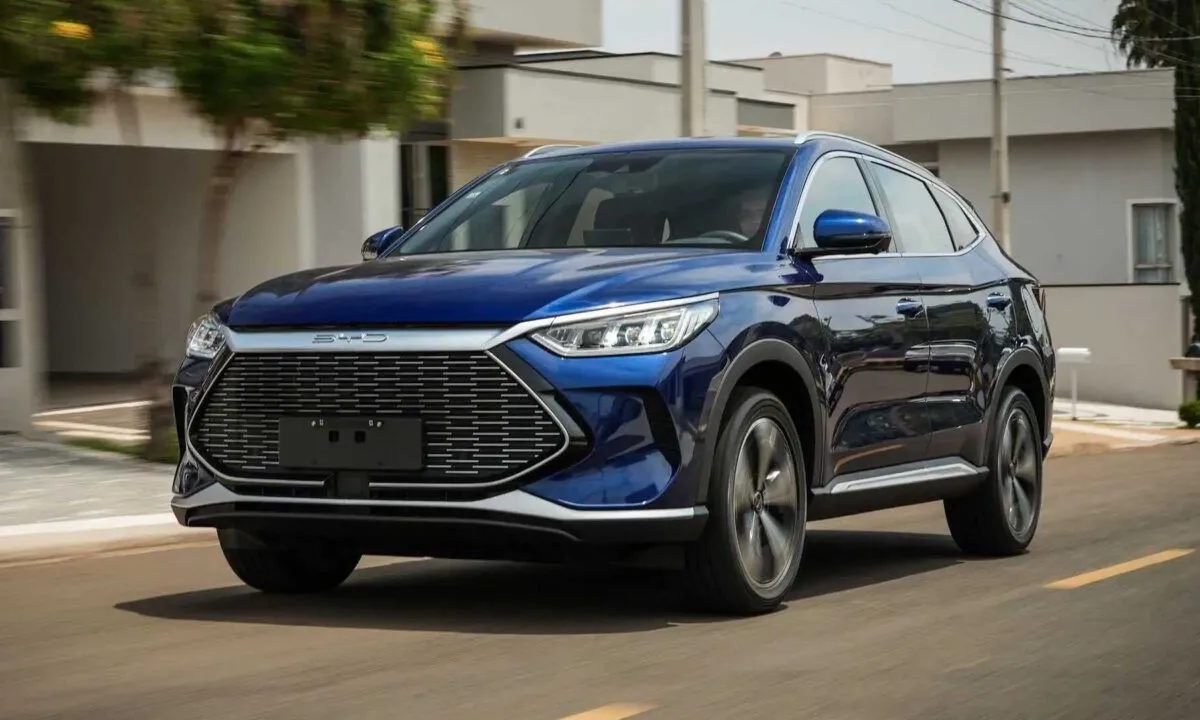
BYD ended 2025 with a scenario that serves as a warning to the brand’s executives. This is because, despite the expressive numbers in the global market, the Chinese company faced, once again, difficulties in the total volume of registrations in the final stretch of the year. BYD sold only 414,784 passenger vehicles globally in December, which represents a drop of 18.6% compared to the same month in 2024 and a decrease of 12.7% compared to November.
The result marks the fourth consecutive month of annual retraction of the Chinese giant, signaling a one-off slowdown, driven mostly by the domestic market in China.
SEE ALSO:
When analyzing the energy matrix of the registrations, a change in consumer behavior is noticed. In the 100% battery-electric vehicle segment, the automaker sold 190,712 units in December, a moderate drop of 8.2% year-on-year — this being the category’s first decline in 2025 and only the third in the last five years.
Plug-in hybrids (PHEVs), which once led the growth, suffered a more severe impact: they totaled 224,072 units in the month, a retraction of 25.7% compared to 2024, marking the ninth consecutive month of decline for this technology.
Year-to-date, the total numbers remain positive, although with a less explosive growth rate than in previous years. The company totaled 4,550,036 vehicles sold in 2025, an increase of 7.1% compared to 2024. Of this amount, pure electric vehicles (BEVs) gained prominence, totaling 2,254,714 units (up 27.9%), while hybrids (PHEVs) totaled 2,288,709, down 7.9%.
With this performance, the share of pure electric vehicles in BYD’s portfolio rose to 49.6% in 2025, compared to 41.5% in the previous year. The big highlight, however, is the foreign operation: sales outside China surpassed the symbolic barrier of 1 million units for the first time, reaching 1,046,083 vehicles.



