With a barrel above US$ 100, Canada and Europe reduce restrictions on vehicles from China to ensure supply and contain the energy crisis
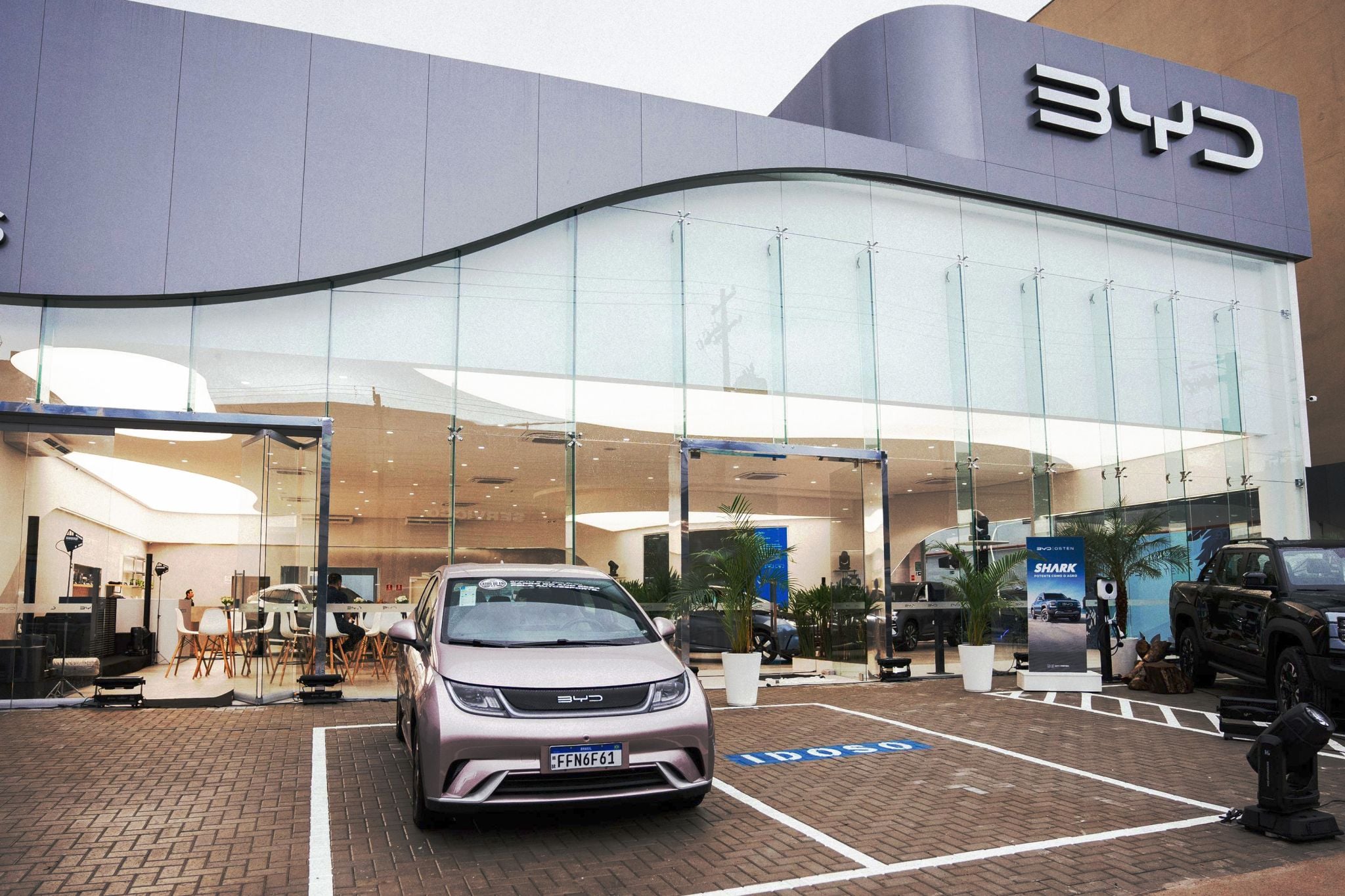
Geopolitical instability in the Middle East and the consequent spike in fuel prices are expected to drive BYD’s global expansion in 2026. With oil surpassing the $100 mark in April — a direct reflection of the conflict involving Iran and the blockade in the Strait of Hormuz — the Chinese automaker’s president, Wang Chuanfu, told Reuters that the scenario has led to electrification from an ecological choice to an economic survival strategy.
The energy shock has forced a retreat from protectionist policies in the West: Canada, which previously applied a 100% surcharge to Chinese electric vehicles, reduced the tax to 6.1% under a fixed-quota regime. At the same time, the European Union, which had been tightening the trade siege since 2024, opened negotiations to relax tariffs in exchange for minimum import prices, prioritizing the supply of vehicles that are independent of petroleum products.
SEE ALSO:
For BYD, the international offensive is a response to the saturation of the domestic market. After recording a 19% drop in net profit in 2025 and a 30% retraction in domestic sales in early 2026, the Chinese giant has set the goal of exporting 1.5 million vehicles this year. Demand is already reacting: in the United Kingdom, registrations of battery-powered models hit a record in March with 86 thousand units, while in Australia inquiries for electric vehicles rose 50% in a few days of conflict.
The movement is followed by other manufacturers in China. In the first quarter, Geely recorded growth of 150%, and Chery added 250 thousand vehicles sold in the first two months of the year alone. According to Chuanfu, the energy crisis accelerated transformations that would take years to consolidate in the traditional market. In the current scenario, the electric vehicle emerges as the main alternative to mitigate the impacts of external volatility on global transport costs.



