Considered the largest self-propelled vehicle in the world, NASA's rocket carrier has been upgraded for missions that take man back to the Moon
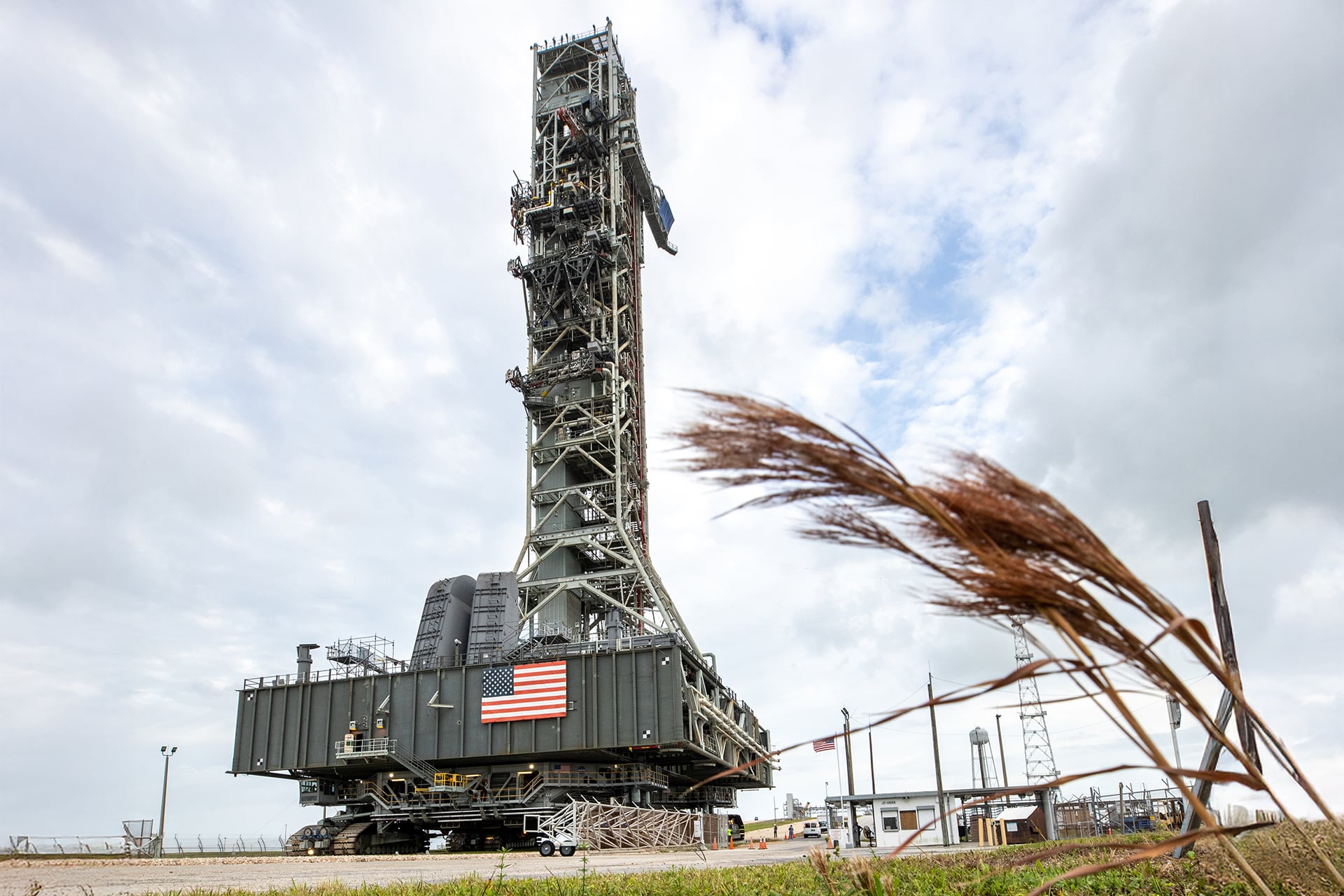
To get humanity back to the moon, NASA relies not only on state-of-the-art rockets, but on a 61-year-old terrestrial ‘monster’ that consumes a frightening 388 liters of diesel for every kilometer driven. Certified by Guinness World Records as the largest self-propelled vehicle on the planet, Crawler-Transporter 2 has recently been modernized to carry the brutal weight of the new Artemis program missions.
Parked at the Kennedy Space Center in Florida, the vehicle is the size of a baseball field and weighs 3,000 tons (3 million kilograms). To support the extra load of the new Space Launch System (SLS), the machine underwent structural and power upgrades, being informally renamed the Super Crawler. Its mission is to transport the rocket from the assembly building to the launch pad at a speed that rarely exceeds 1.6 km/h.
SEE ALSO:
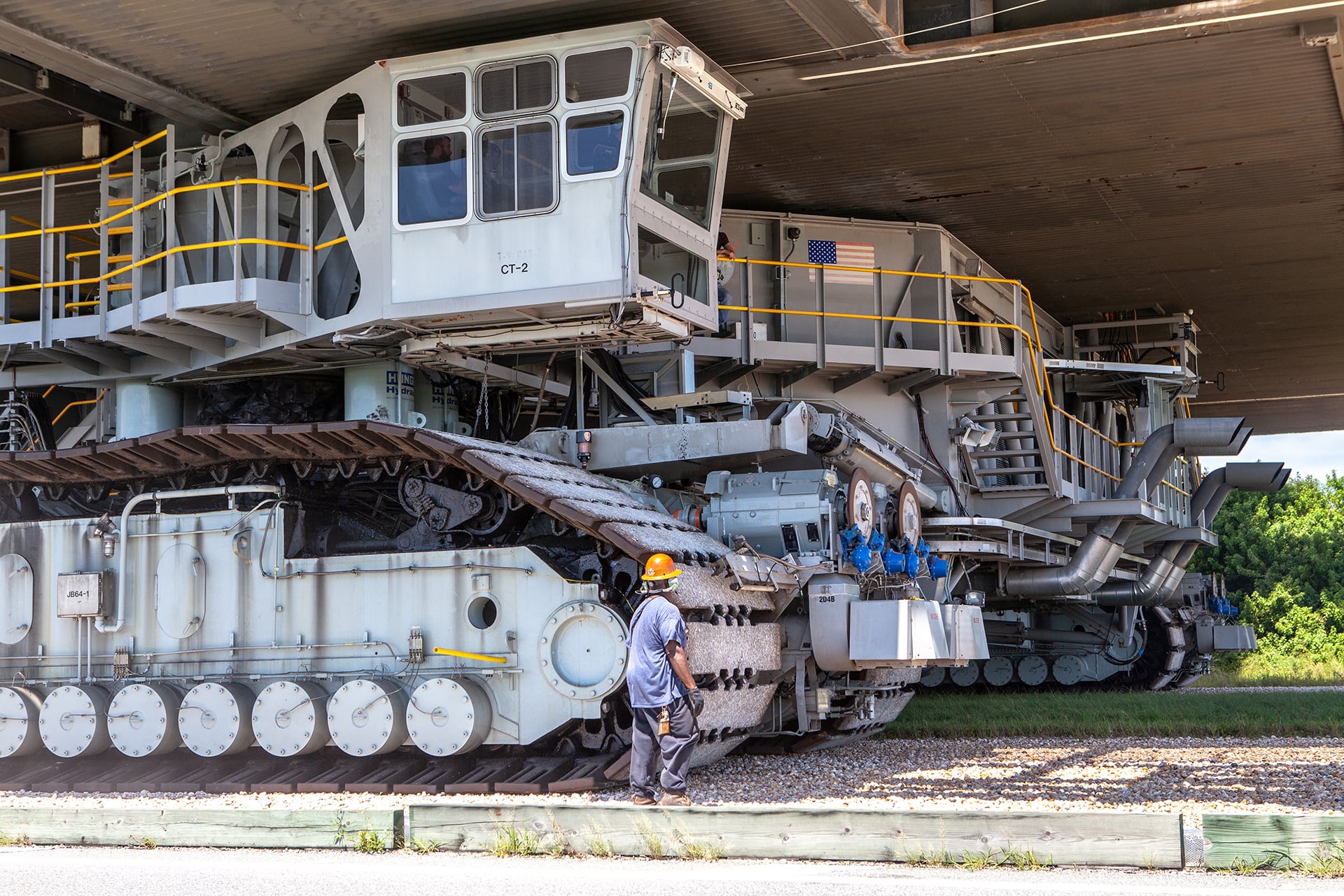
The capacity to carry loads greater than 2.6 thousand tons requires a mechanical assembly that borders on the irrational by traditional standards. The Crawler uses two huge V16 diesel engines, originally designed by the American Locomotive Company (ALCO) to pull heavy freight trains in the USA and Australia. Together, they generate 5,500 hp.
The operation, however, is ingenious: it is a serial hybrid system. Diesel engines do not drive the tracks directly, but they power generators that send power to 16 electric traction motors. This arrangement increases the combined power and ensures the variable and millimeter torque necessary so that the rocket does not tip over during the journey.
Despite the glaring energy inefficiency — the original mark is 390 liters of diesel per kilometer — the durability is impressive: in more than six decades of service under Florida’s harsh climate, the giant has traveled more than 3,700 km, proving that the crude engineering of the 1960s is still the foundation that underpins the future of space exploration.



