Researchers from USP are developing a chemical method capable of stabilizing niobium, transforming it into high-power "fuel".
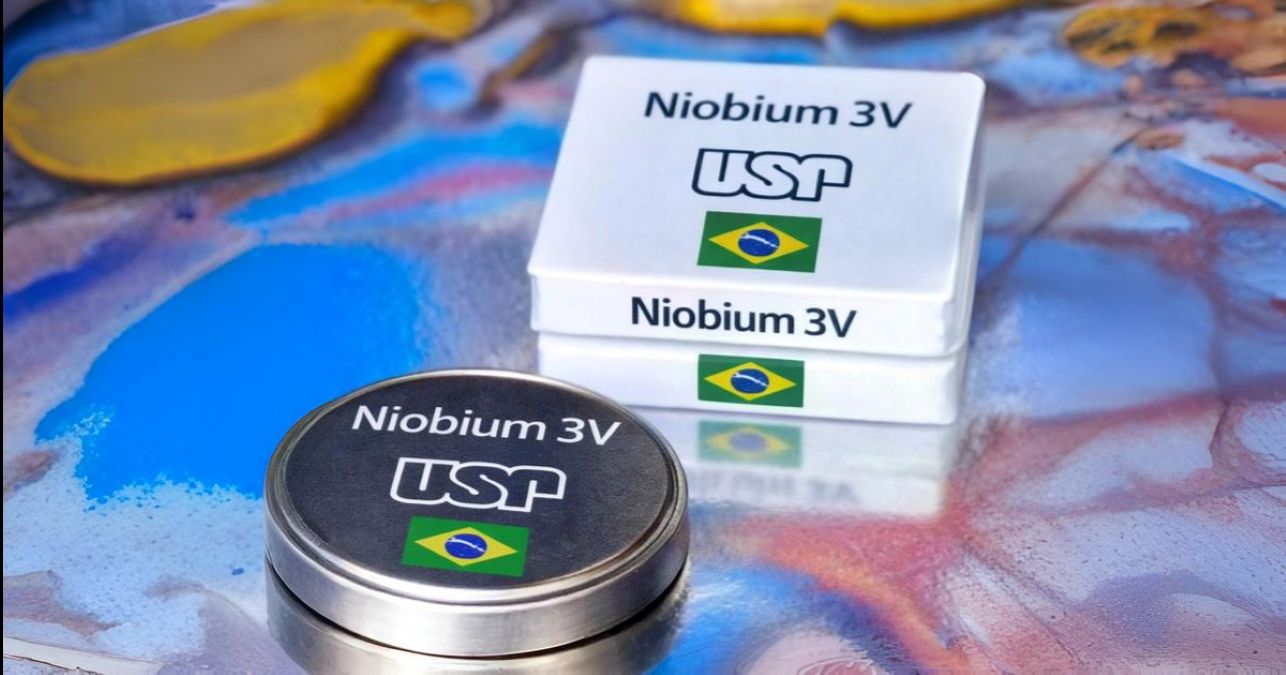
Researchers at the University of São Paulo (USP) have reached an unprecedented milestone in materials science by developing a battery capable of using niobium as the main active element in energy storage. The innovation overcomes the high chemical instability of the metal, which until today prevented its full use in high-performance devices.
The technology, which has already been patented, creates a controlled microenvironment that stabilizes niobium, allowing it to react electrochemically in a predictable and safe way. Until then, the Brazilian metal was used in industry only as an adjuvant — an additive in small quantities to improve lithium batteries.
SEE ALSO:
The major obstacle overcome by the group from the São Carlos Institute of Chemistry (IQSC-USP) was the reactivity of the material. Under normal conditions, niobium tends to undergo uncontrolled oxidation reactions that block the transfer of electrons, making the charge unfeasible. To get around this, the team coordinated by Professor Frank Crespilho developed a solution inspired by biological systems, such as proteins.
The architecture of the new battery uses two complementary molecular layers. The first, called NB-RAM, acts as a “chemical cage” around the central atom, stabilizing it. The second, called N-MER, works as a regulator, organizing the flow of electrons during the charging and discharging processes. This molecular engineering allowed the prototypes to reach voltages of about 3 volts and operate for hundreds of cycles with high reversibility.
The advance is strategic for Brazil, which has the world’s largest reserves of the ore. According to researchers Luana Italiano, Graziela Sedenho and Rafael Colombo, who participated in the study, the innovation paves the way for batteries with higher energy density and ultra-fast charging, reducing global dependence on critical and expensive metals, such as lithium, cobalt and nickel.
With the technology validated in the laboratory and patented in Brazil, the next step involves international intellectual protection and the search for partners for industrial scale, aiming at applications ranging from portable electronics to hybrid electric vehicles.



