Unit dedicated to the circular economy disposed of more than 360 tons of waste and sold 4 thousand used pieces in the period
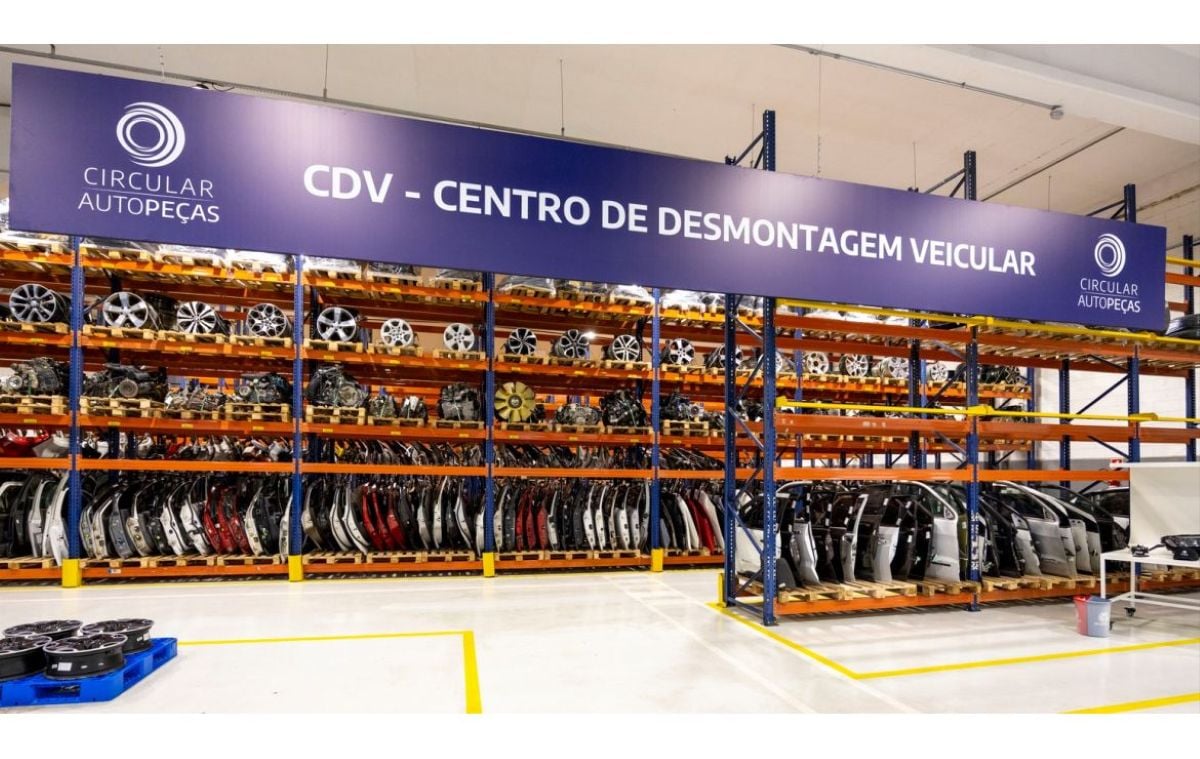
The Circular AutoParts Vehicle Disassembly Center, maintained by Stellantis in Osasco (SP), recorded the dismantling of approximately 600 vehicles in its first six months of operation. The initiative, which focuses on the circular economy in the automotive sector, allowed the reuse of more than 9,000 used parts, now destined for sale.
The plant is the first of its kind managed by an automaker in South America and operates in the transformation of end-of-life vehicles into reusable components and raw materials. Of the total items recovered, more than 4,000 have already been sold through physical and digital channels. E-commerce emerges as the main route for the flow of these products: the unit’s official store on Mercado Libre concentrated about 80% of sales, offering consumers multi-brand original pieces with certified quality and origin.
SEE ALSO:
In addition to the financial return from the sale of components, the operation has a direct environmental impact. In 180 days, the São Paulo unit correctly disposed of more than 360 tons of industrial waste. This volume was separated by type of material and sent to partners approved by the manufacturer for the recycling process.
Most of the amount, about 334 tons, corresponds to steel and aluminum taken from the carcasses and structures of the vehicles. The balance of the semester also points to the reuse of 26 tons of plastic, the recovery of 1.8 tons of copper and the proper disposal of 2,500 liters of automotive oil.
For Paulo Solti, Senior Vice President of Parts and Services at Stellantis for South America, the strategy creates a new business front. “We are transforming end-of-life vehicles into new opportunities to generate value, through the recovery of parts and responsible recycling”, says the executive. According to him, the measure demonstrates the feasibility of combining efficiency and sustainability in the future of urban mobility.



