With 480 kW, the Esquina do Futuro station exceeds (and a lot) the national average and promises to charge the battery while the driver has a coffee
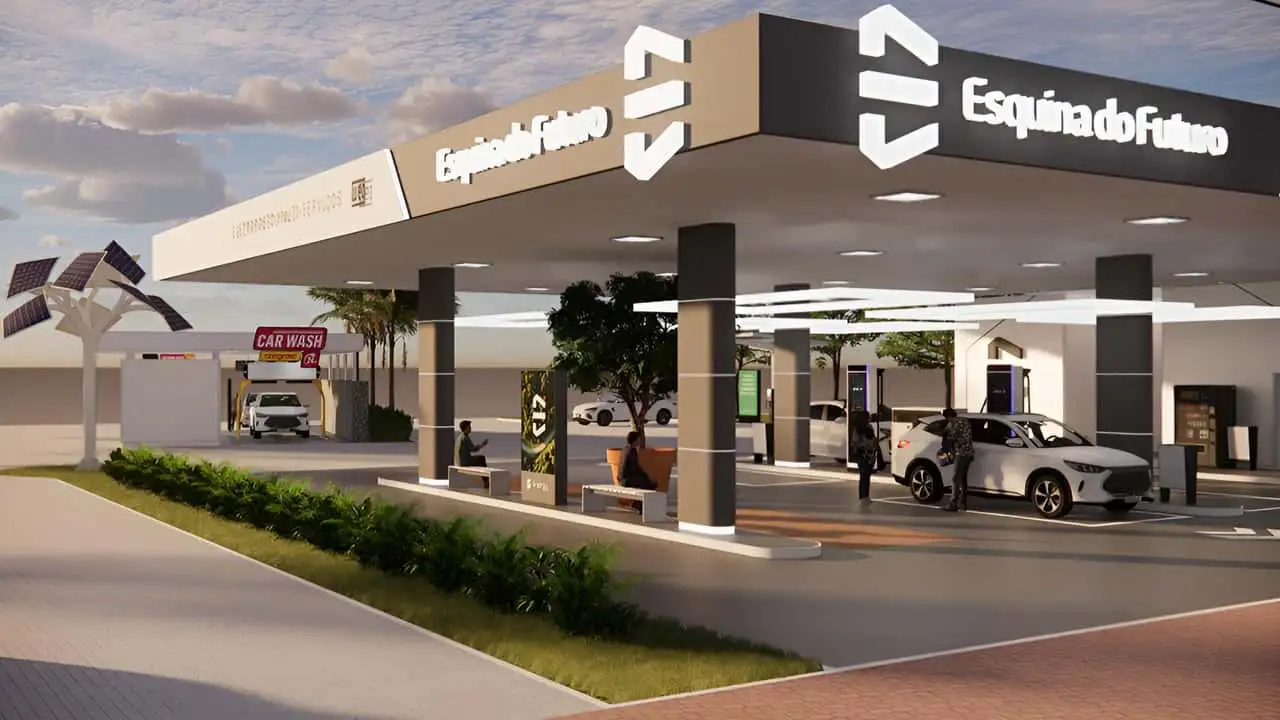
The Brazilian charging infrastructure will experience a significant technical milestone in March 2026 with the inauguration of the country’s first 480 kW charger. The equipment, part of an investment of R$ 1.5 million, will be installed at the Complexo do Futuro hub, in Porto Alegre, in an operation of the company Esquina do Futuro in partnership with WEG and Tupi.
The arrival of this equipment begins the attempt to mitigate a historical bottleneck in the sector: the mismatch between the evolution of vehicles and the supply network. Currently, models with 800-volt architecture — such as Hyundai Ioniq 5, Kia EV9 and Porsche Taycan — support recharges above 300 kW (the Chinese Zeekr 7X already exceeds 400 kW). However, the national grid rarely offers powers higher than 150 kW, forcing these cars to operate far below their potential.
SEE ALSO:
With the new 480 kW station, the promise is greater operational efficiency. This is because the system uses dynamic energy management, allowing you to charge up to four vehicles simultaneously by dividing the power or deliver the maximum charge to a single compatible car. According to the company, under ideal conditions, a recharge of 10% to 80% can be carried out in about 15 minutes.
The project goes beyond the isolated installation of a plug. The concept is to create a convenience station similar to traditional high-end gas stations, offering rest areas, connectivity, restrooms and exhibition spaces. Eduardo Costa, founder of Esquina do Futuro, says that the technical partnership with WEG allowed us to achieve equipment availability rates above 99%, another critical point in the electric user experience.
The company’s expansion strategy is aggressive. In addition to the pioneer charger, 17 other fast chargers were acquired to expand the network in the southern states. Still in 2025, new units should be inaugurated in Criciúma and Passo de Torres (SC). The goal is to jump from the current 25 stations to 40 by the end of this year, totaling R$ 10 million in investments.
For the course of 2026, the plan gains national scale: the projection is to install more than 100 new points and reach 150 fast charging stations in Rio Grande do Sul, Santa Catarina, Paraná and the Federal District. The company also confirmed its entry into the disputed São Paulo market later this year, although it did not reveal the exact location of the future points.



