With Finnish technology and construction in China, project tests feasibility of radical decarbonization in the maritime sector
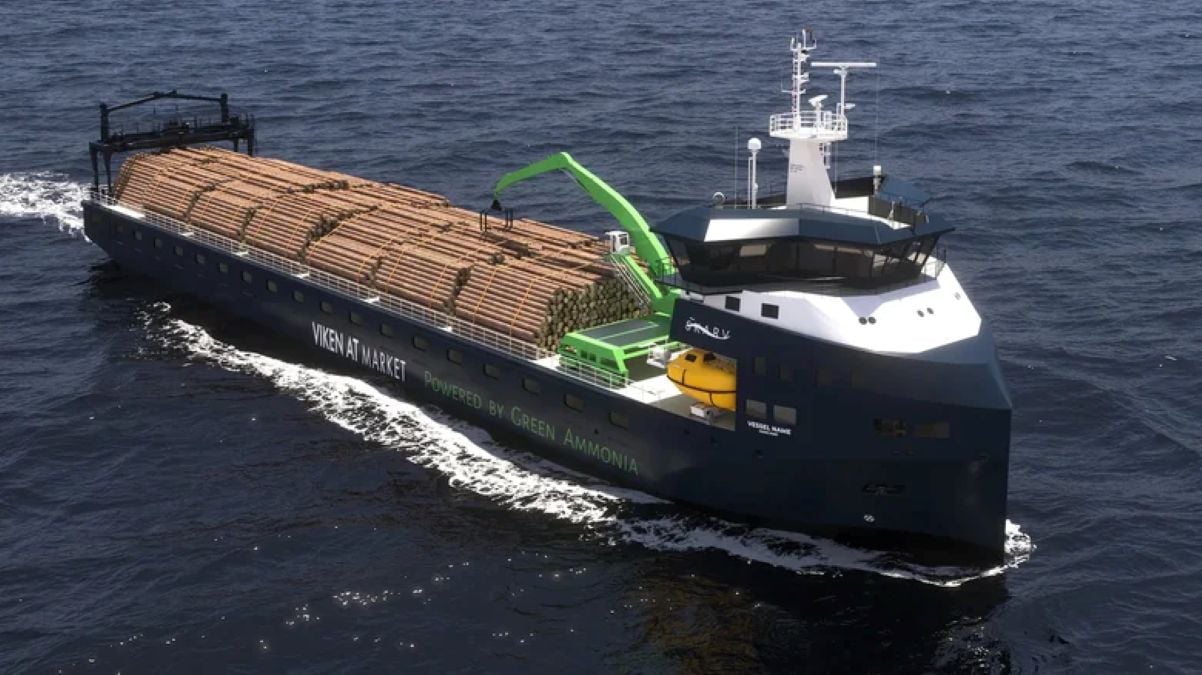
In a pioneering move towards the decarbonization of global shipping, Norwegian exporter Viken AT Market has commissioned the construction of what is expected to be the world’s first ammonia-powered logging ship. The initiative, which unites Finnish technology and Chinese construction, represents a crucial practical test for the viability of alternative fuels on a commercial scale.
The vessel, scheduled for launch next year, will be equipped with a multi-fuel engine developed by Wärtsilä, a global reference in naval propulsion. The project, signed by Skarv Shipping Solutions, will be executed at the Huanghao shipyard in China. The strategy focuses on transporting timber between the coast of Norway and continental Europe, a short route that favors the adoption of experimental technologies.
SEE ALSO:
According to Skarv, the freighter was not designed for high-speed transoceanic crossings, but rather optimized for efficiency at low regional speeds. This pragmatic approach aims to mitigate initial technical risks by allowing the industry to evaluate the performance of ammonia under real logistics operating conditions before an eventual expansion to global routes.
Chemically composed of three hydrogen atoms and one nitrogen atom, ammonia stands out for not emitting carbon during its direct burning. However, Wärtsilä’s current technology does not yet offer absolute “zero emissions” operation. The system requires a small amount of pilot fuel — usually diesel or other conventional oil — to start combustion and maintain engine stability, in a technical limitation that marine engineering is still trying to overcome.
Despite this caveat, the projected environmental gains are significant. Estimates indicate that the new engine can reduce greenhouse gas emissions by between 85% and 90% compared to ships powered by heavy fuel oil. On the other hand, the use of the substance brings new challenges, such as the need for selective catalytic reduction (SCR) systems to neutralize nitrogen oxides (NOx) generated in burning, in addition to strict safety protocols due to the toxicity of the compound.
With no forecast of massive adoption in the short term, Viken’s project serves as a floating laboratory. The success of this endeavor could set the pace of the energy transition in the North Seas, establishing ammonia not only as an industrial chemical, but as a viable energy vector for the future of shipping.



