Man returns to the Moon next month: meet astronauts and mission details
About to step on the moon after 55 years, NASA has scheduled for February the mission that will take four people for a ride around the natural satellite
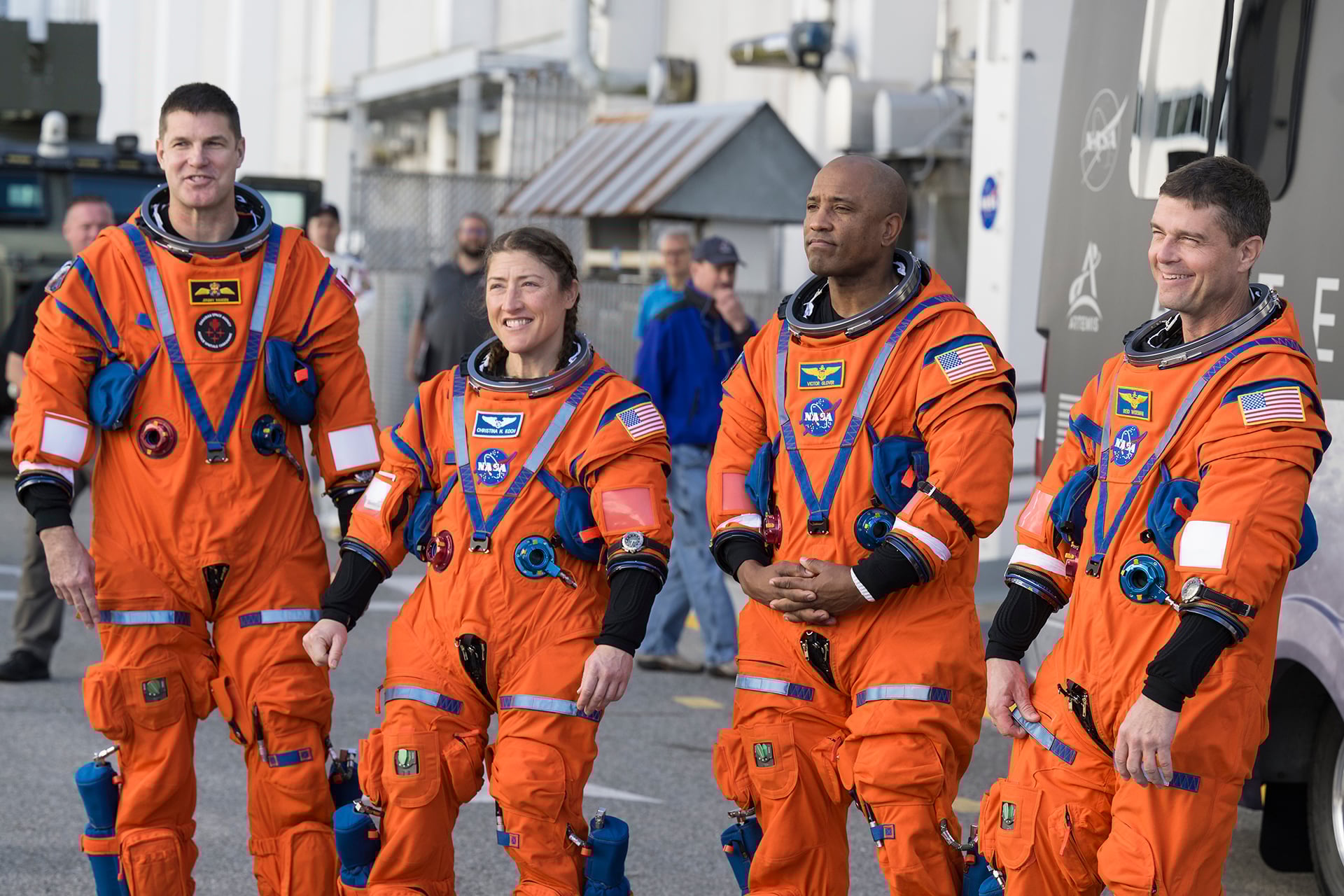
Crew that will return to the Moon is diverse: there is a woman, a black man and a Canadian (Photo: Aubrey Gemignani | NASA)
By
Eduardo Passos Published on 2026-01-23 at 09:00 AM
Updated on 2026-03-18 at 12:40 PM
More than half a century after the end of the Apollo program, humanity is about to visit the Moon again. The Artemis 2 mission — with a possible launch starting February 6 — is not just a technical test; it is the beginning of a new era of space exploration that aims to establish a permanent presence on the Moon and, in the future, take man to Mars.
If Apollo was a Cold War-motivated short-distance race, the Artemis program is a marathon focused on sustainability and science. Below, a guide to understand the pillars of this endeavor.
What will the mission be like?
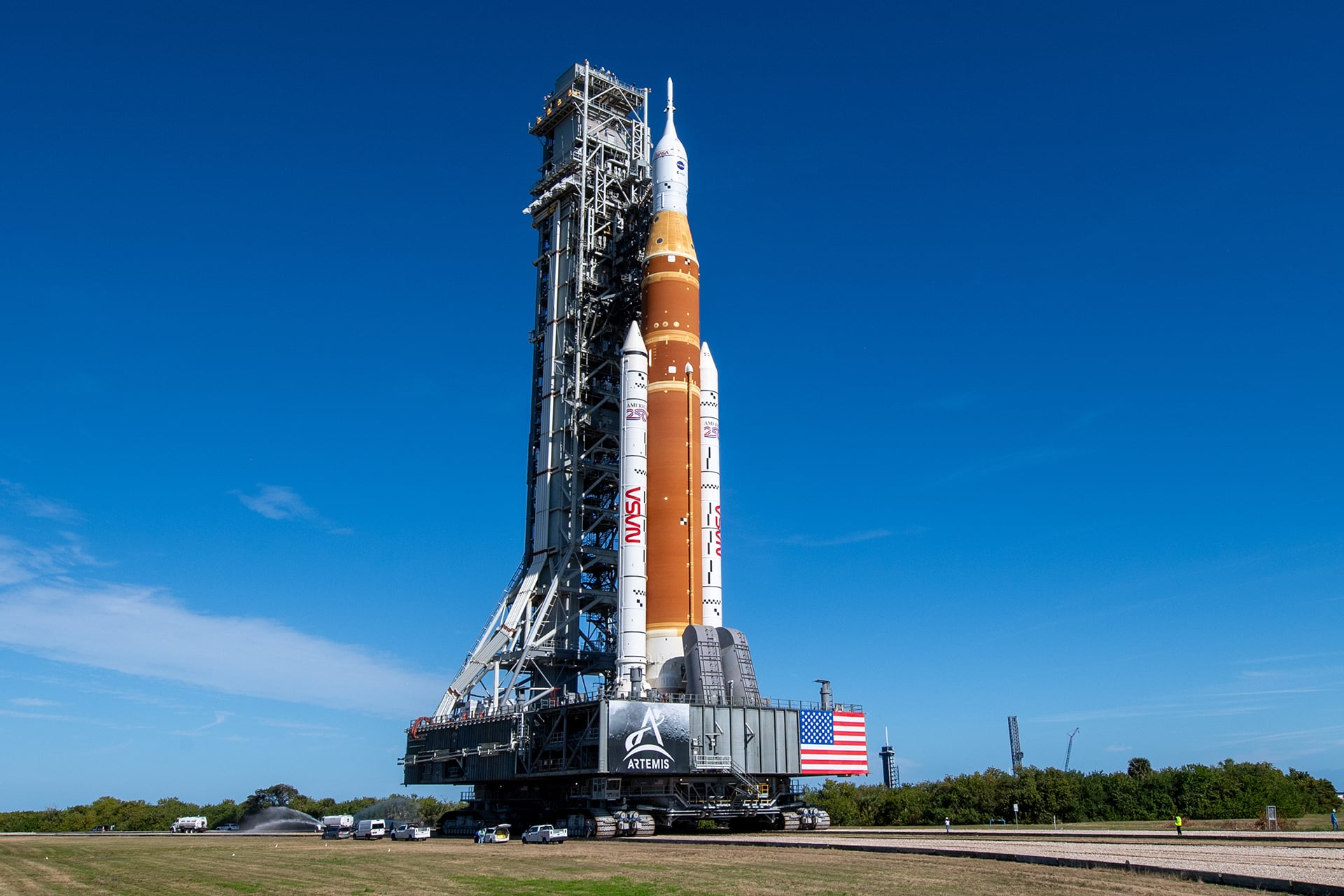
The largest rocket ever built by man will be responsible for taking astronauts to the Moon (Photo: Keegan Barber | NASA)
Artemis 2 will not yet land on the lunar surface. Like the Apollo 8 mission (1968), the idea is to send astronauts around the dark side of the Moon, then return to Earth. It will be the first time since 1972 that humans have gone this far and, if all goes well, the Artemis 3 mission will perform the lunar landing next year.
The vehicle: the crew will travel aboard the Orion capsule, powered by the Space Launch System (SLS) rocket — the most powerful ever built by NASA.
The trajectory: After launching from the Kennedy Space Center in Florida, the spacecraft will orbit around the Earth to gain momentum and test vital systems. It will then be fired towards the Moon, where it will make a flyby of about 10,300 km of the satellite’s hidden surface, using lunar gravity to be “slingshot” back to Earth.
Duration: The full mission is expected to last about 10 days, ending with a landing in the Pacific Ocean.
Who’s on board?
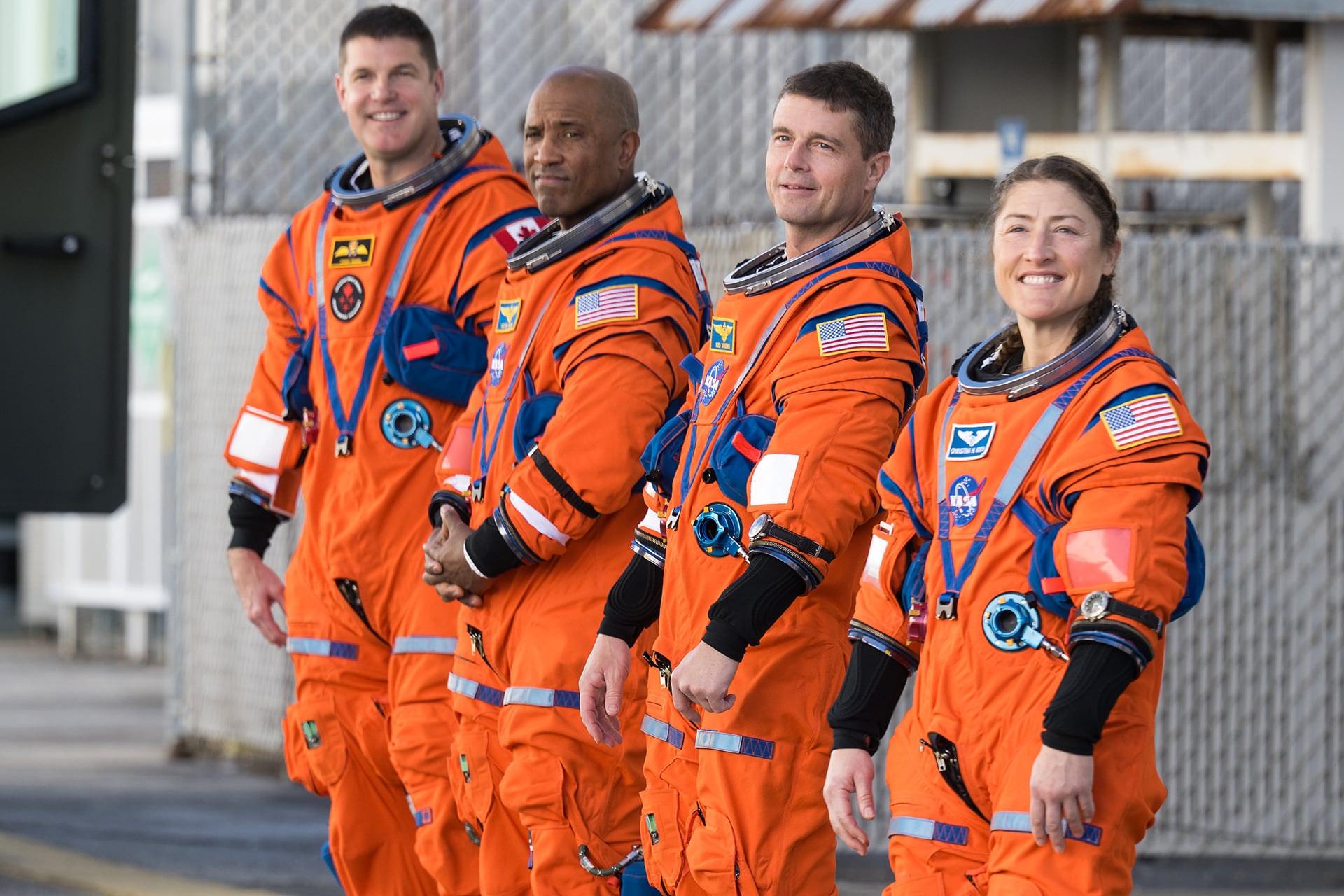
Artemis 2 mission crew is already ready for takeoff (Photo: Aubrey Gemignani | NASA)
The crew reflects the diversity and international cooperation of the 21st century, contrasting with the homogeneous profile of the 1960s. Among the group, there is a woman, a black man and a foreigner:
Reid Wiseman (USA): Mission commander.
Victor Glover (USA): pilot and first black man to travel into deep space.
Christina Koch (USA): mission specialist and first woman to orbit the Moon; holds the record for the longest continuous spaceflight by a woman.
Jeremy Hansen (Canada): Mission specialist and first non-American to leave Earth orbit, symbolizing the partnership with the Canadian Space Agency (CSA).
Why go back now?
NASA lists three main reasons for the return, summarized in the motto “Science, Inspiration and Mars”:
Laboratory for Mars: The Moon will serve as a proving ground for essential technologies on long journeys, such as habitats, spacesuits, and life support systems in an environment of intense radiation.
Water and Resources: The focus is now on the lunar South Pole, a region where large reserves of water ice are believed to exist in the shadowed craters. This water can be used for consumption and to produce rocket fuel (hydrogen and oxygen).
Geopolitics: maintaining leadership in space exploration in the face of the advancement of the Chinese space program, which also plans manned lunar missions for the 2030s.
And the next missions?
The success of Artemis 2 is the trigger for the next steps, which are progressively more complex:
Artemis 3 (mid-2027): it will be the mission that will effectively land on the Moon. NASA plans to bring the first female and the first non-white man to the surface of the South Pole lunas. The schedule depends on the development of the lander (a version of SpaceX’s Starship) and the new spacesuits.
Artemis 4 (2028): Focused on assembling the Gateway, a space station that will be in orbit around the Moon and will serve as a staging point for future surface descent missions and as a scientific laboratory.
Comments are the sole responsibility of their authors and do not represent the opinion of this site. Comments containing profanity or offensive language will not be published. If you identify anything that violates the terms of use, please report it.