With a science fiction look, the new electric Staria arrives to replace diesel vans with luxury and cutting-edge technology
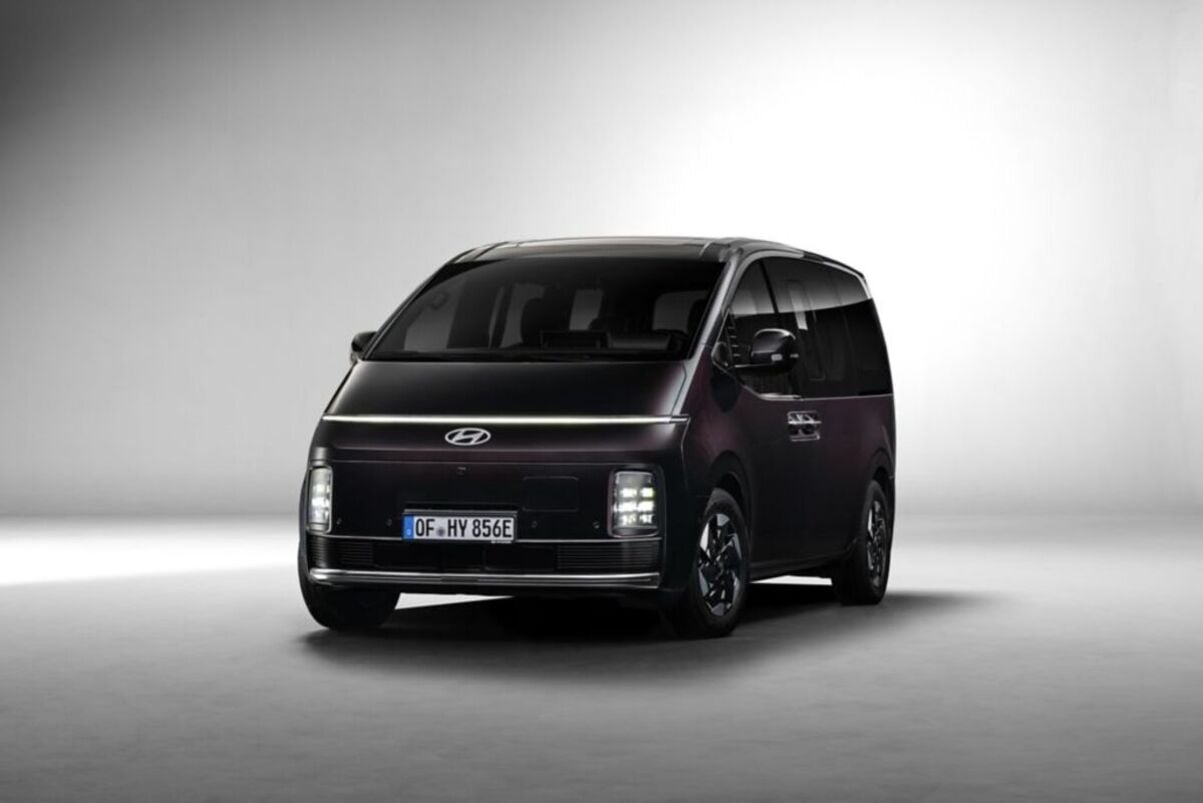
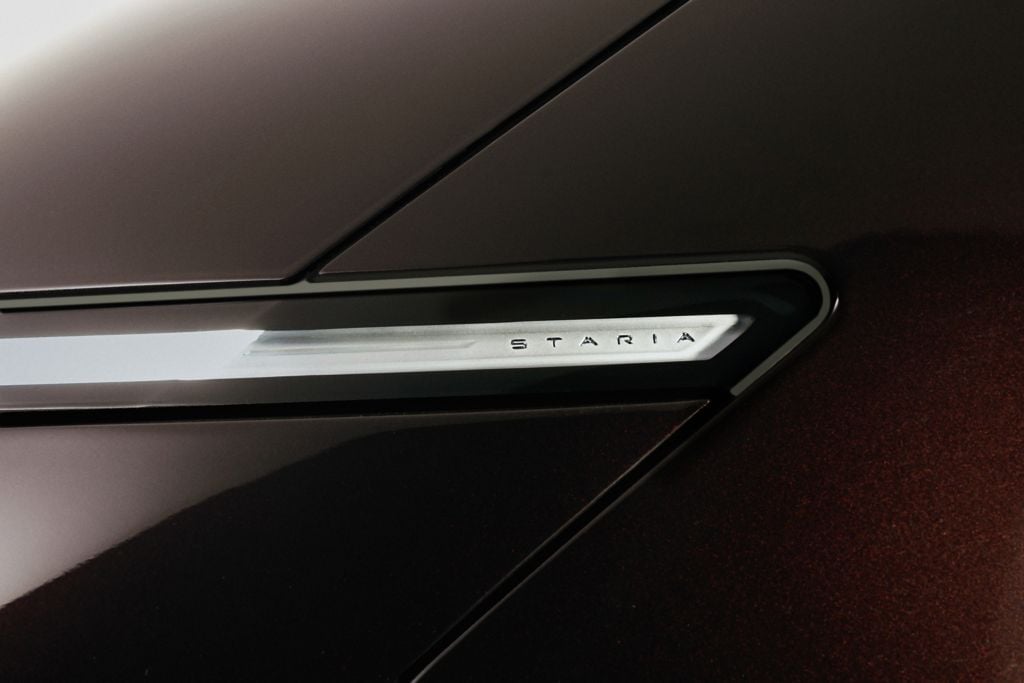
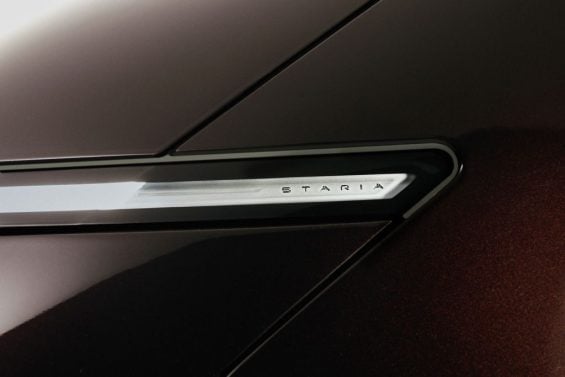
Hyundai extends its offensive in the commercial and family vehicle market with the official presentation of Staria Electric. Maintaining the futuristic design that earned it the nickname “spaceship”, the van abandons combustion engines to adopt a high-voltage electric architecture, aiming for carbon neutrality and efficiency in urban and road transport.
The focus of the project is on versatility. The model was designed to serve from executive fleets to large families, offering a zero-emission alternative in a segment still dominated by diesel. Sales are expected to start in Europe in the first half of 2026.
SEE ALSO:
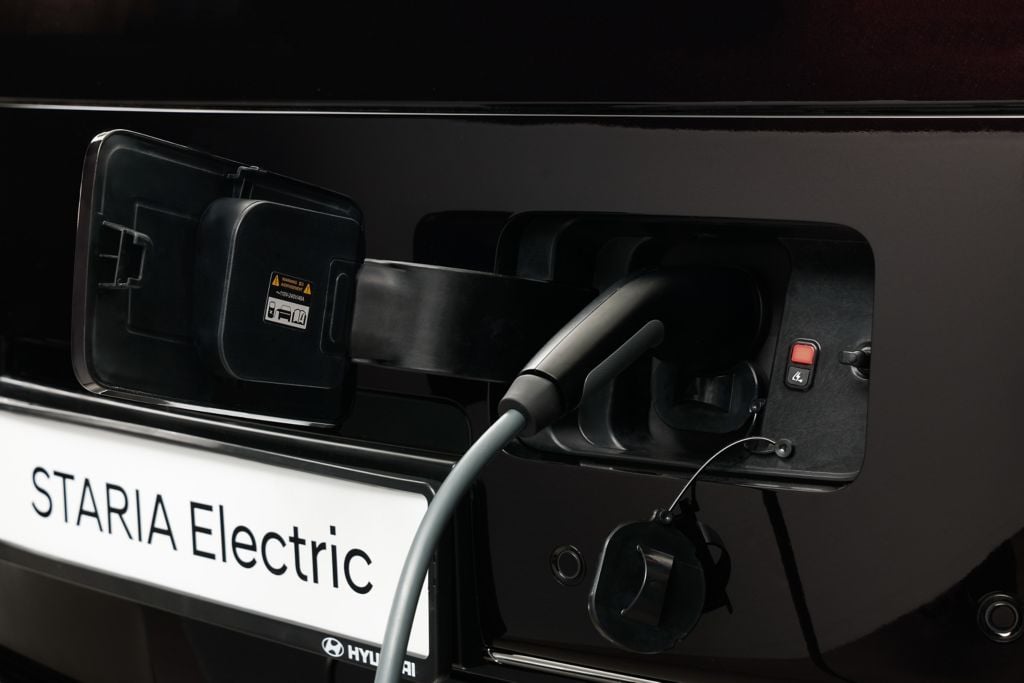
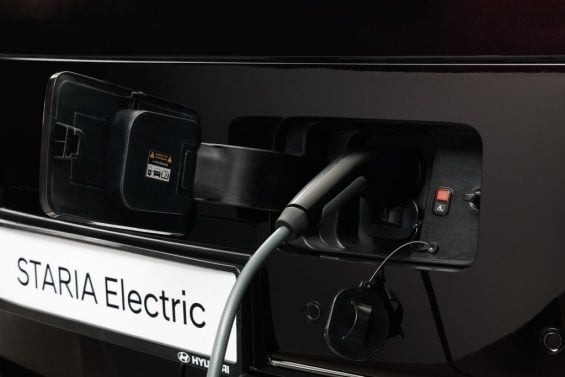
To ensure viability on long journeys, Hyundai has equipped Staria with a set of high-capacity lithium-ion batteries, delivering a range of more than 450 km in the WLTP cycle. The big technical differential, however, is the 800-volt architecture — a technology similar to that used in electric sports cars — which allows ultra-fast charging.
Thanks to this technology, the system is able to recover from 10% to 80% of the charge in less than 20 minutes at compatible stations. All energy management is aided by an intelligent navigator, capable of calculating recharge stops considering the topography of the route and traffic in real time. In addition to efficiency, replacing the combustion engine eliminates vibrations, ensuring a higher level of silence and acoustic comfort on board.
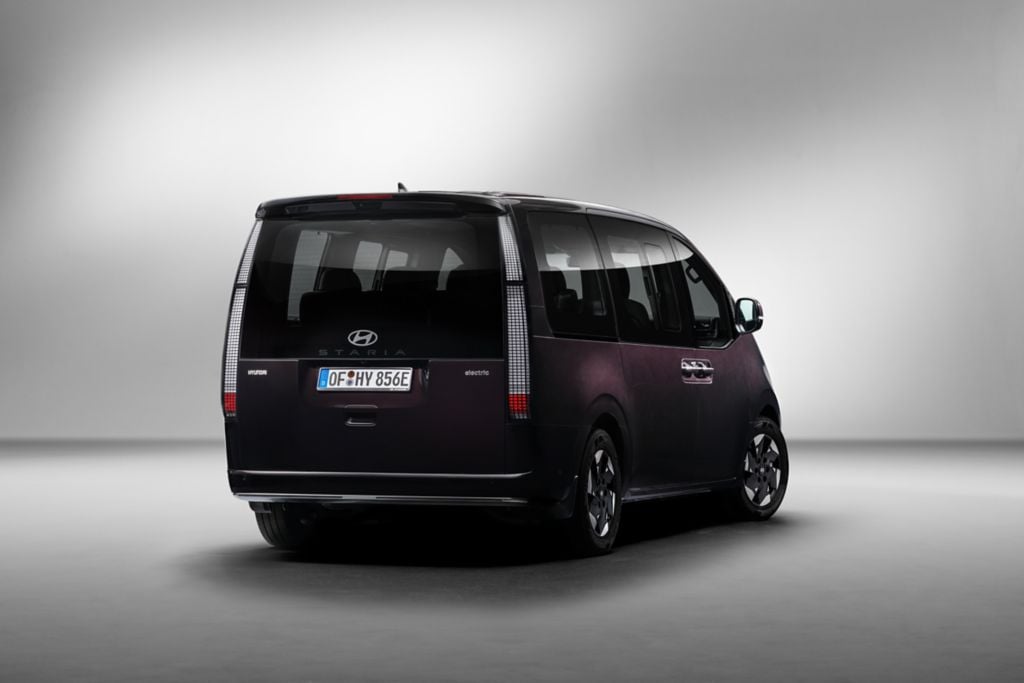
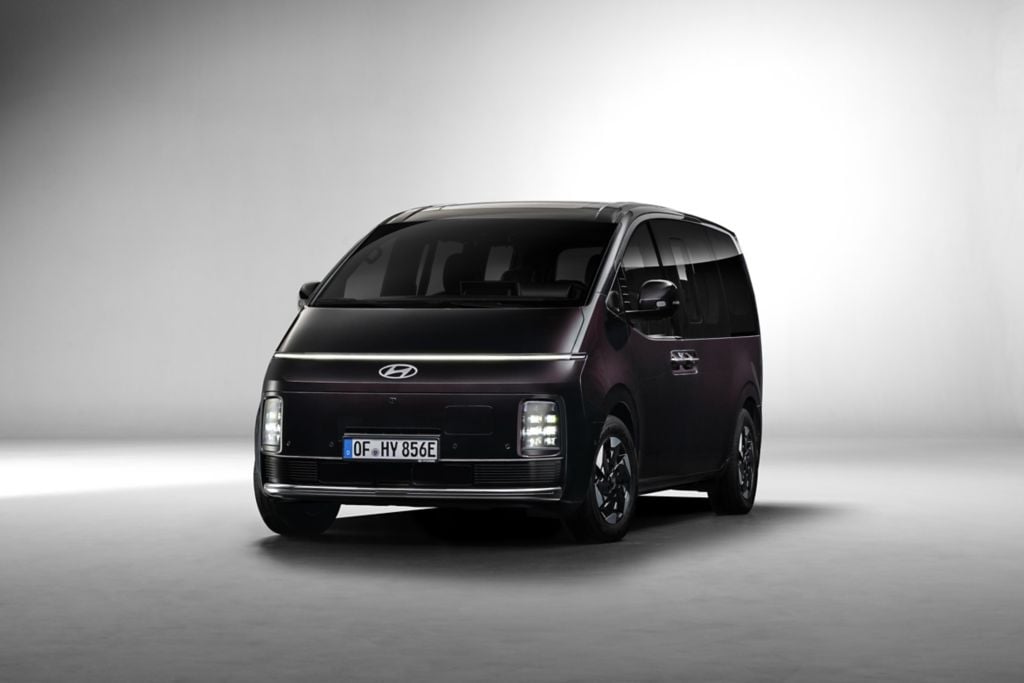
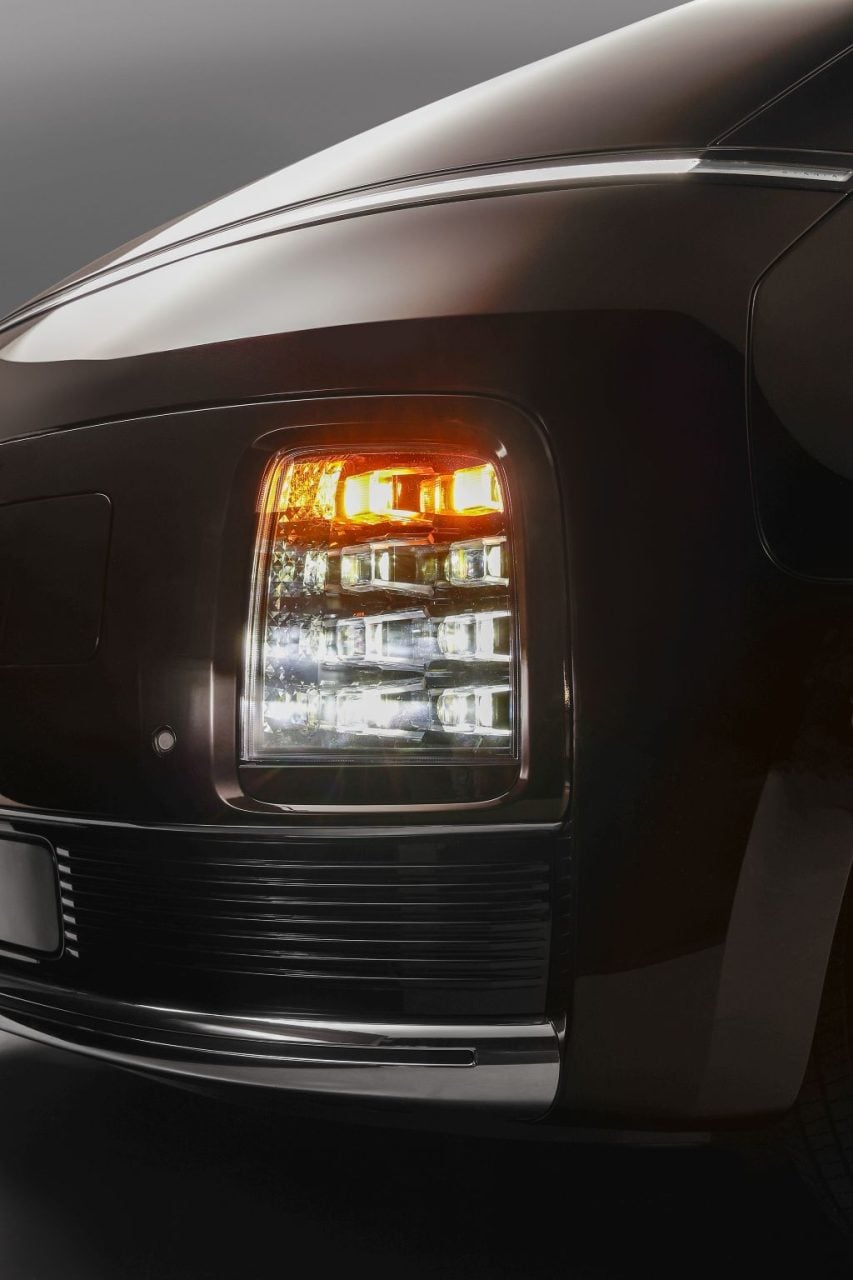
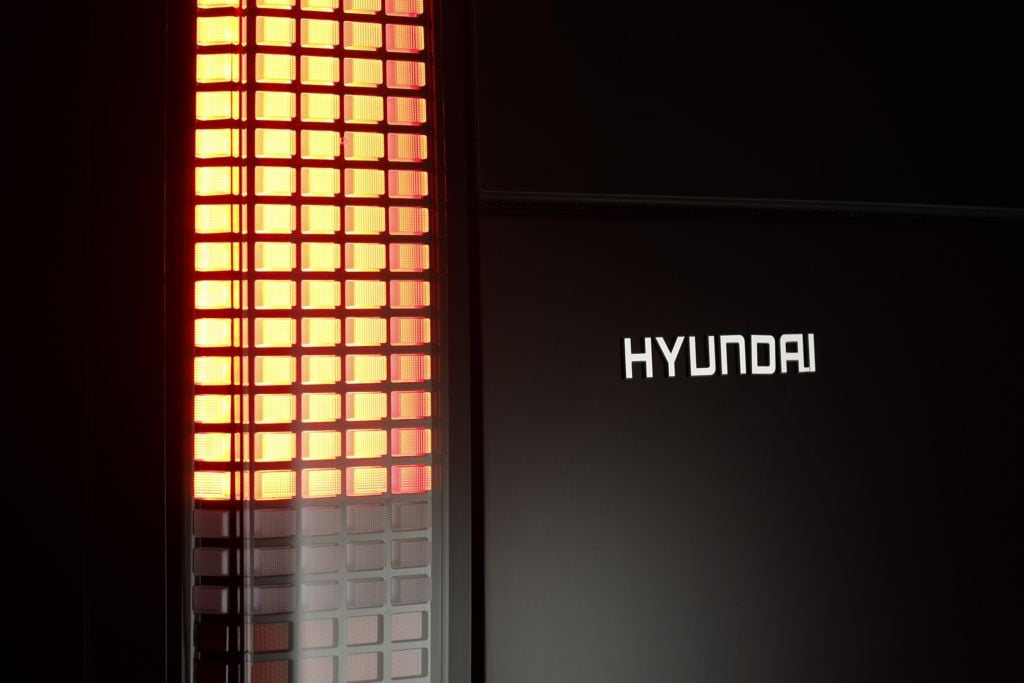
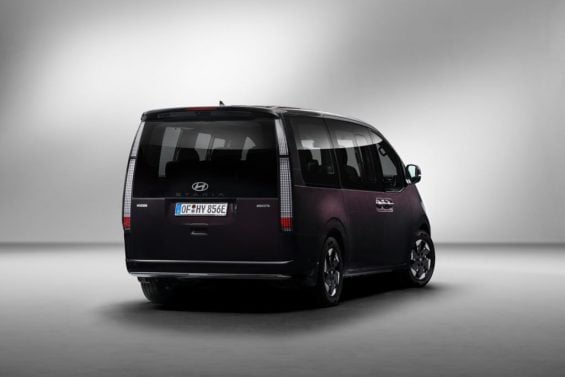
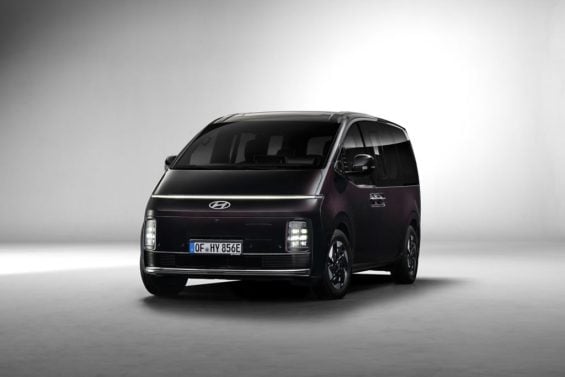
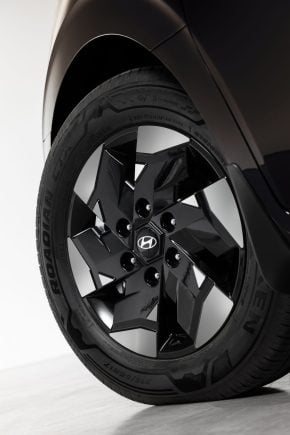
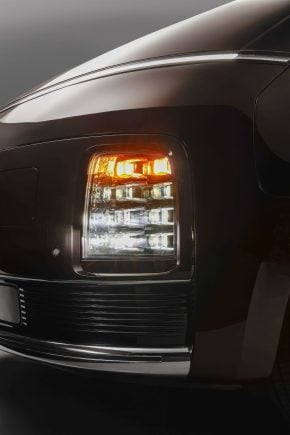
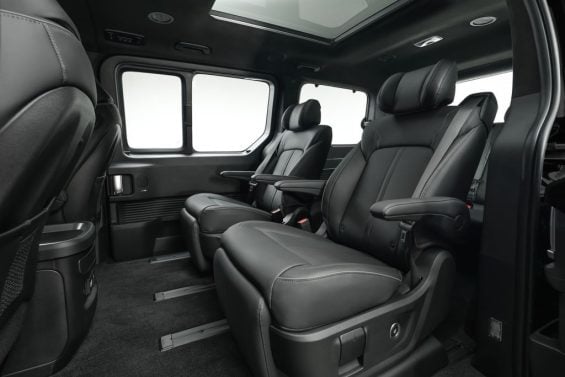
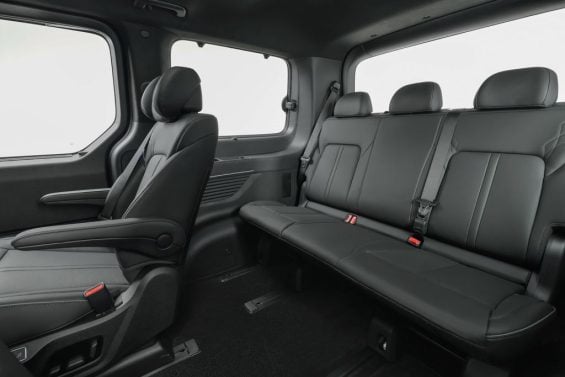
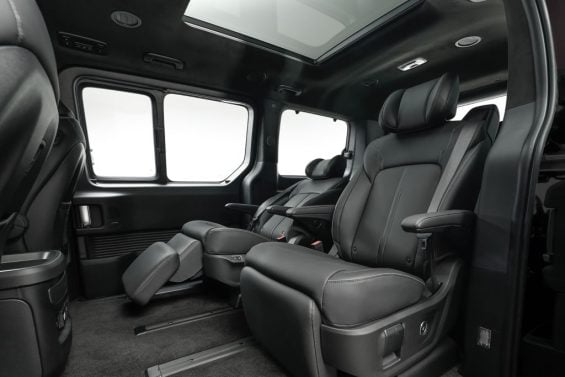
The cabin explores the concept of “lounge on wheels”. Taking advantage of the flat floor of the electric platform, Staria offers configurations ranging from 2 to 9 seats. In the more sophisticated versions, the seats in the second row can rotate 180 degrees, creating a living room environment facing the rear passengers.
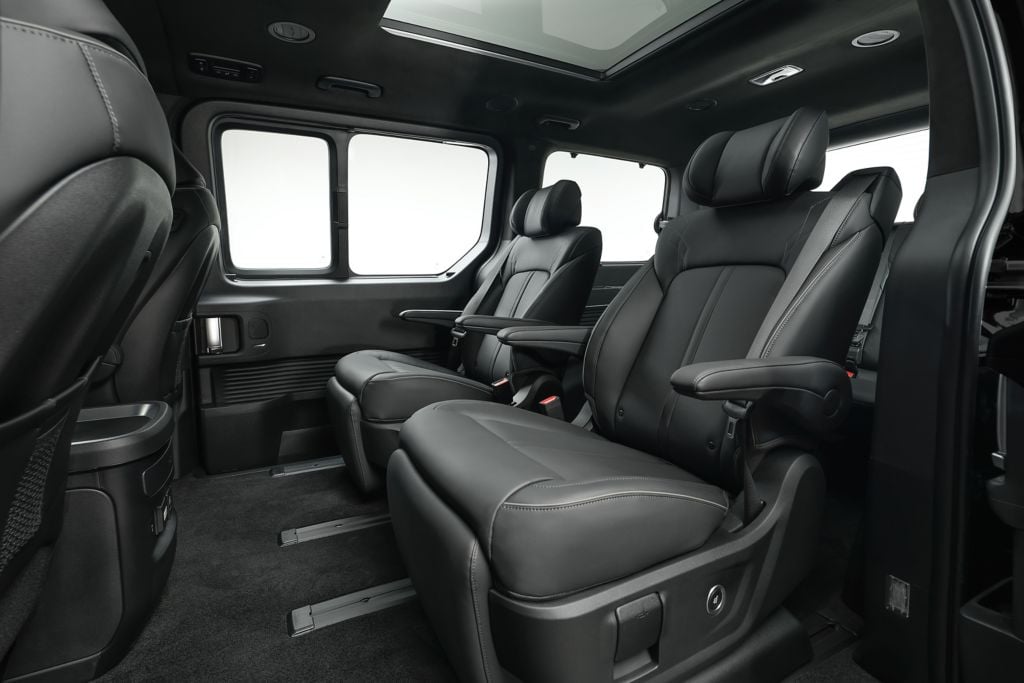
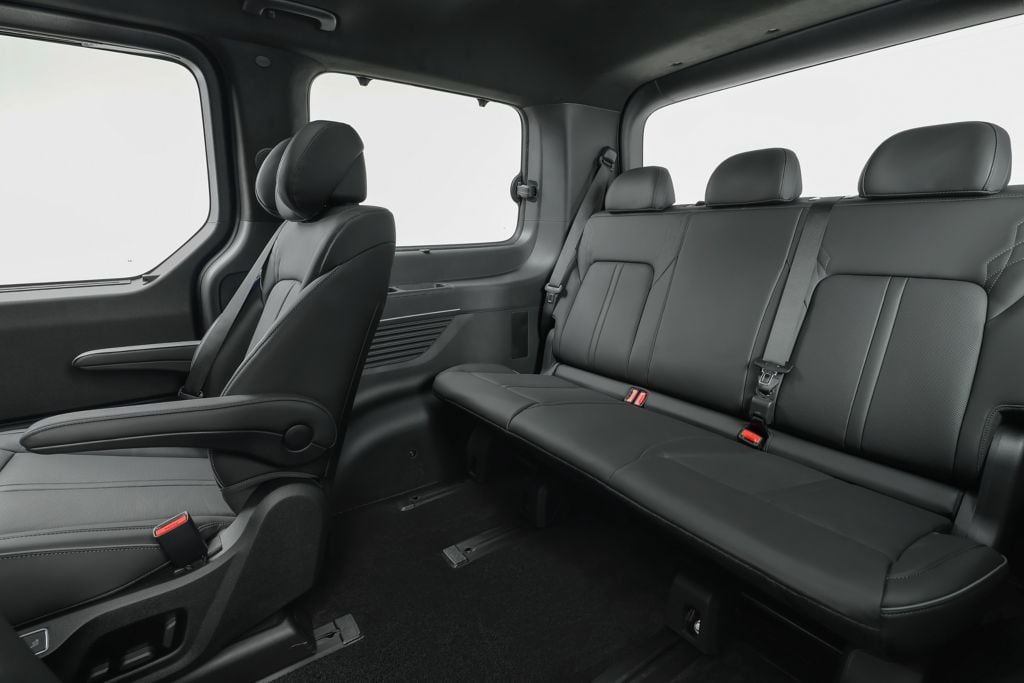
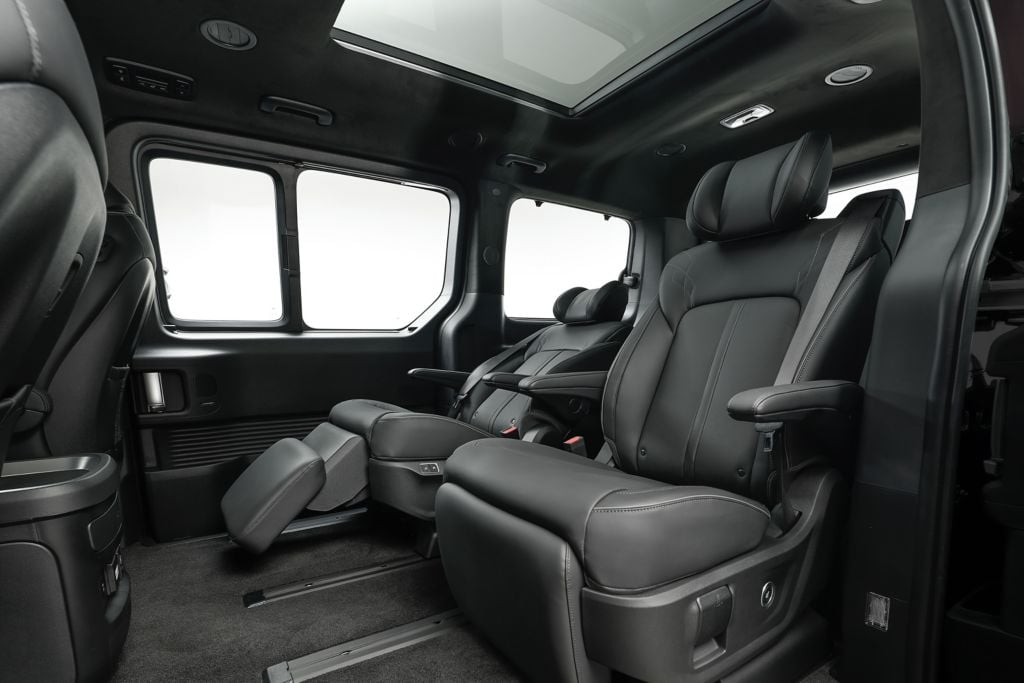
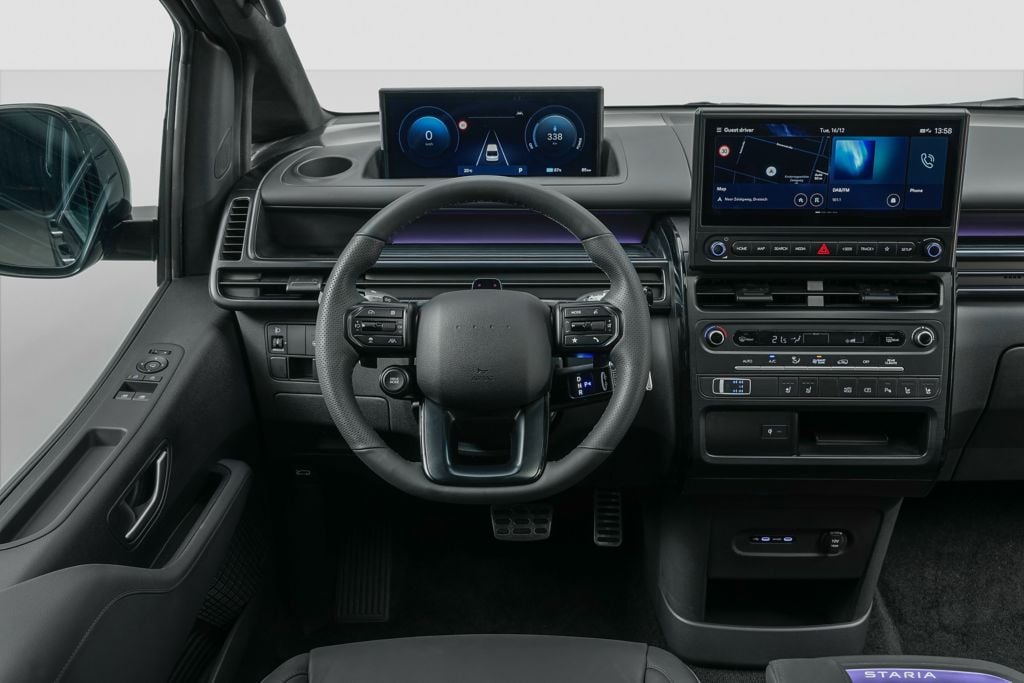
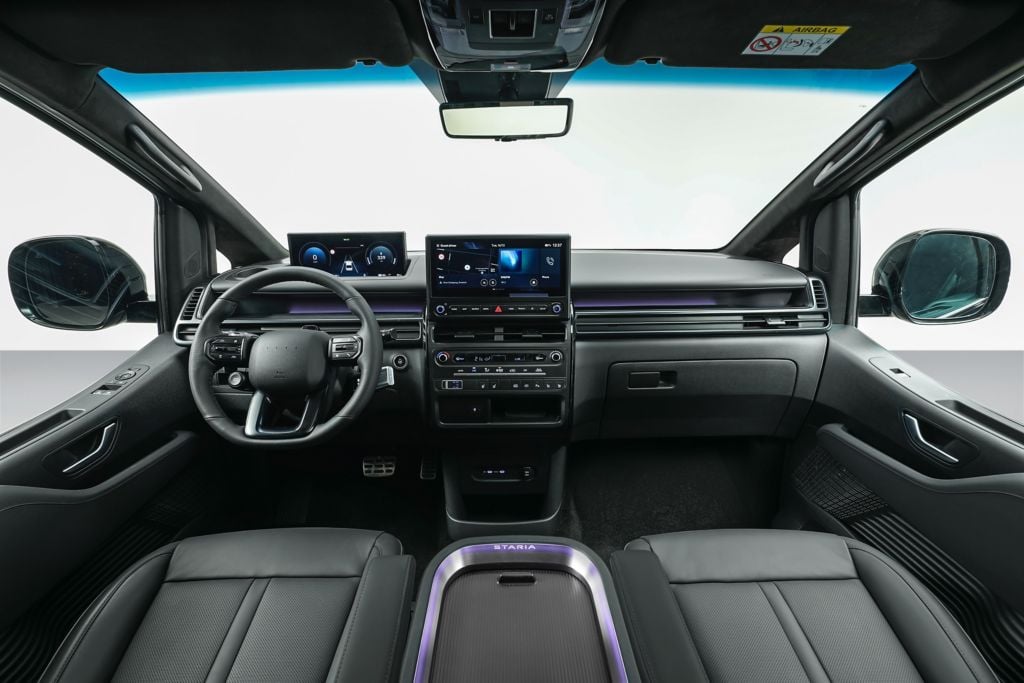
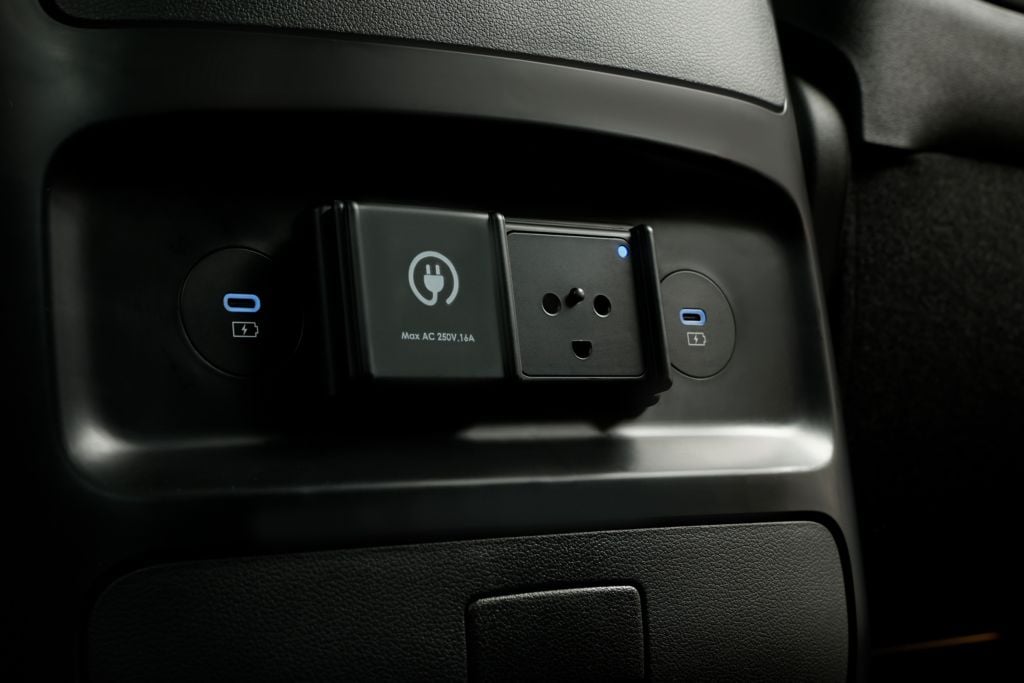
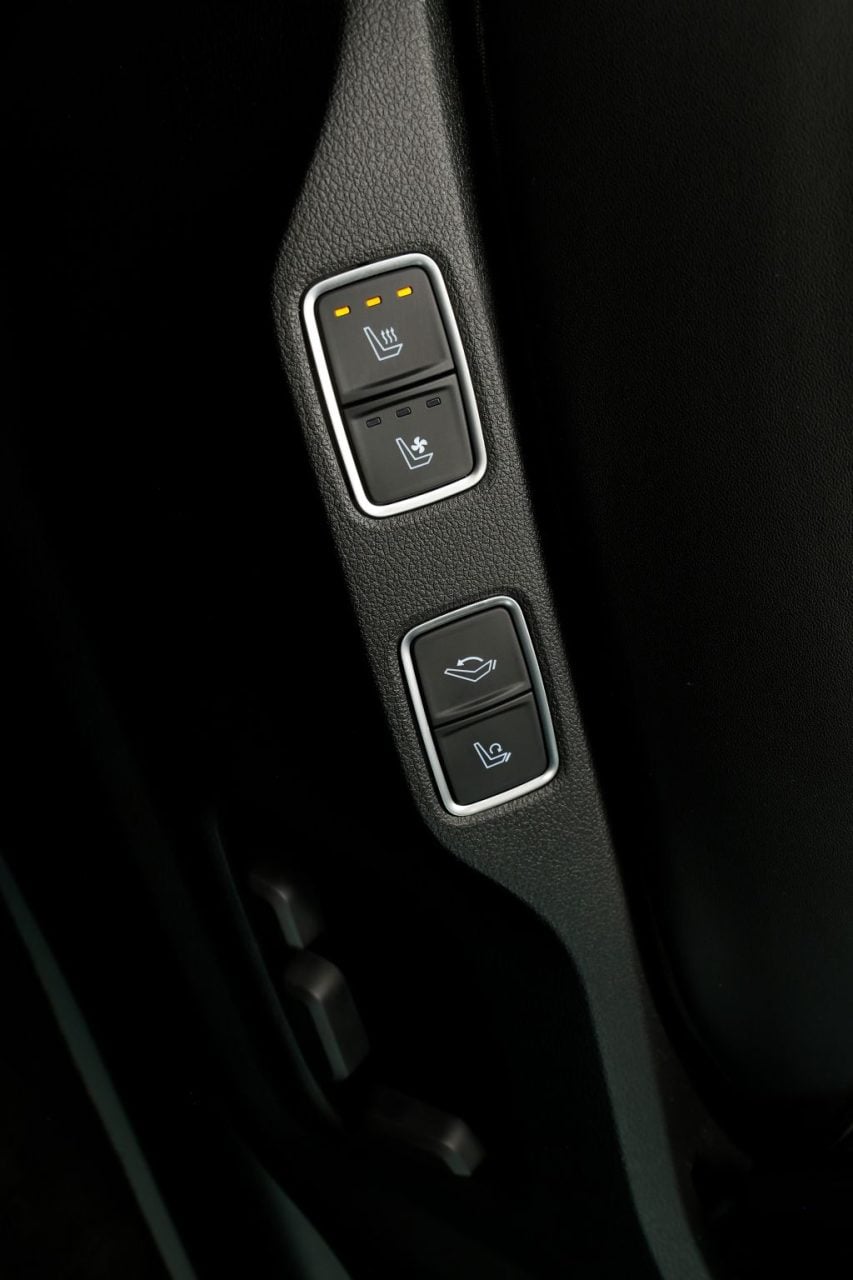
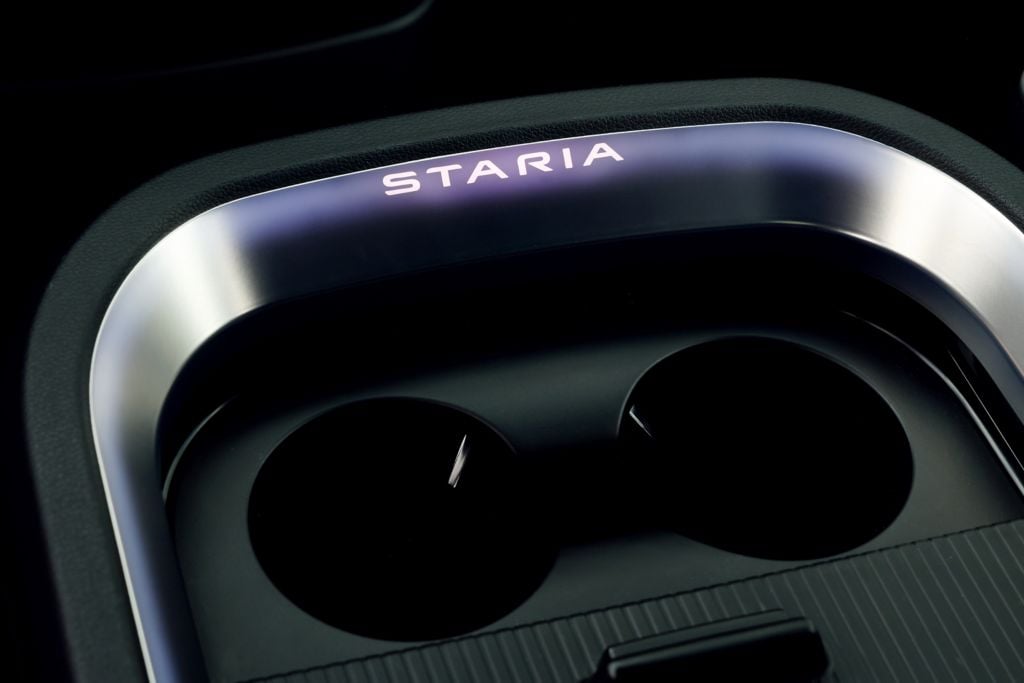
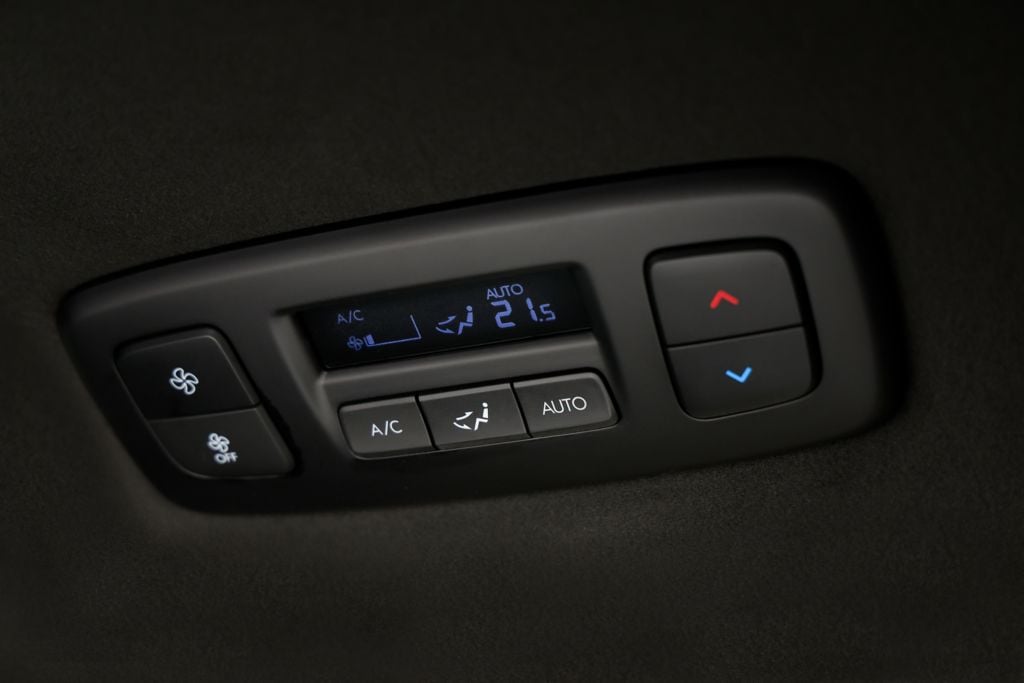
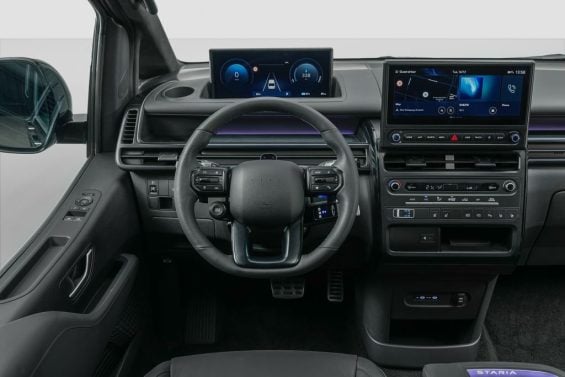
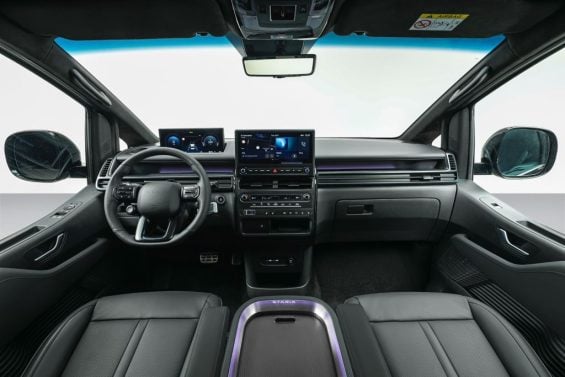
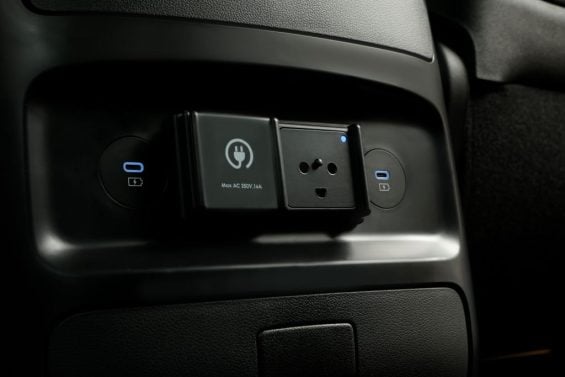
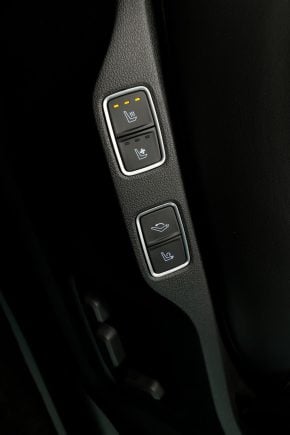
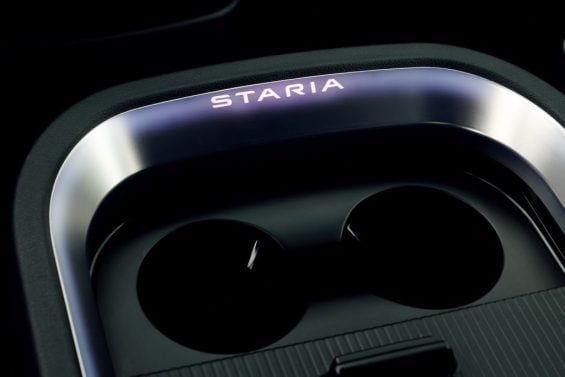
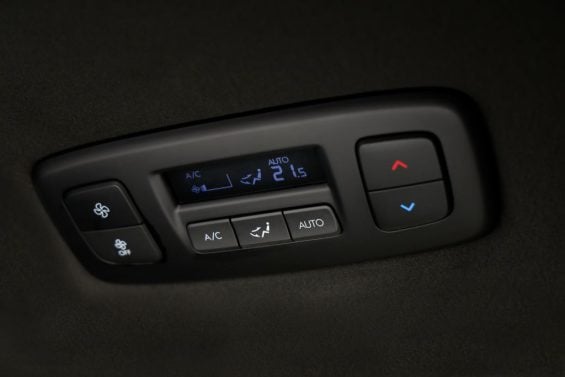
The technological package includes two 12.3-inch screens and support for remote updates (OTA). Another functional highlight is the V2L technology, which transforms the van into a mobile power bank, capable of powering external appliances or charging camping equipment, reinforcing the vehicle’s mixed-use proposal.



