Luxeed V9 focuses on the luxury segment with on-board oxygen generator and unprecedented passenger protection system
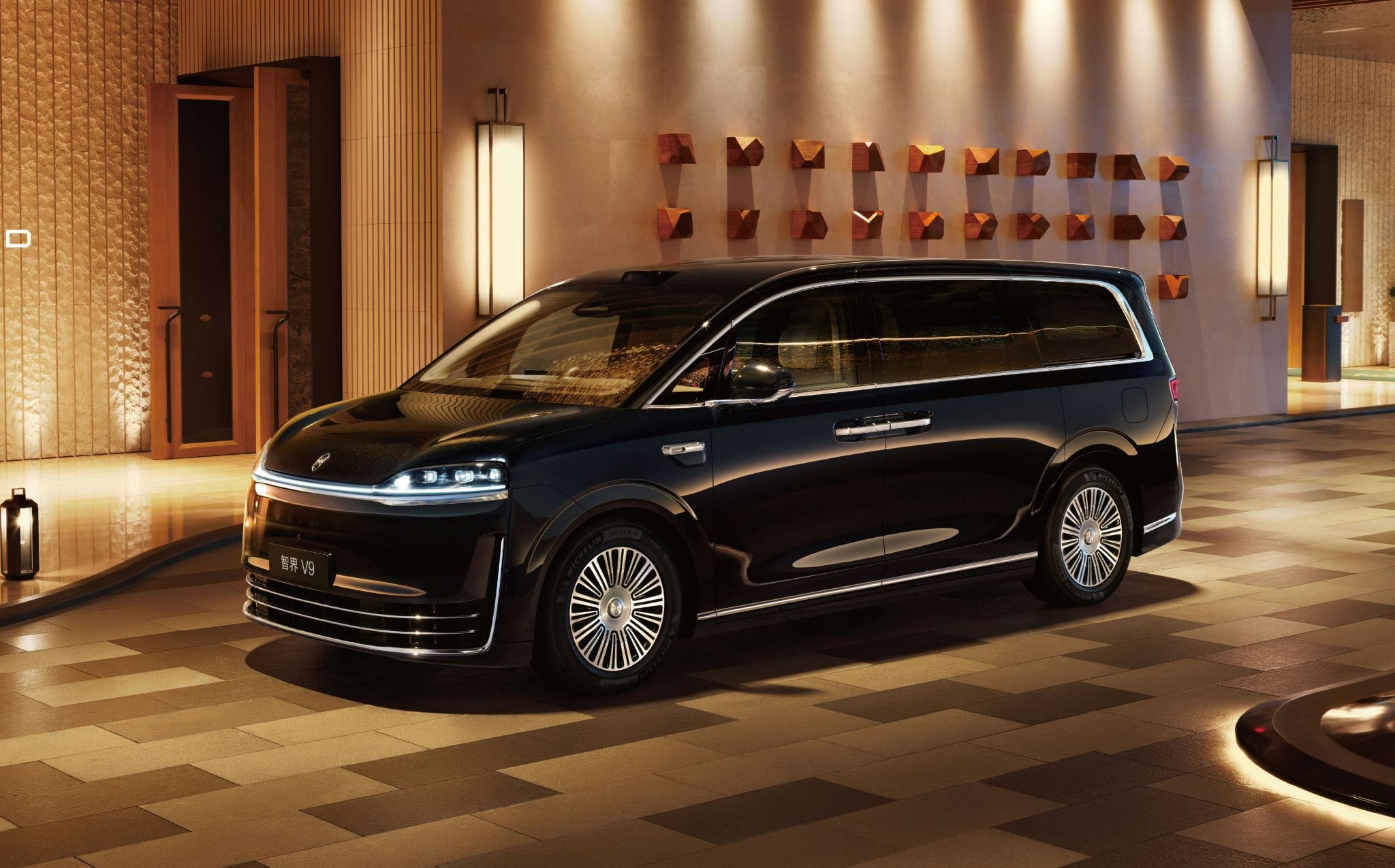
Luxeed — a joint venture formed by Chinese giants Huawei and Chery — has released the first official images of its new top-of-the-line model: the V9 minivan. The large vehicle arrives in the Asian market with the promise of introducing unprecedented passive safety and well-being technologies on board, including a “helmet airbag” and an oxygen generation system.
The model adopts an electric motorization with range extender (EREV), combining electric motors with a 1.5 turbo combustion engine of 154 hp that works only as a generator. According to the manufacturer, this configuration allows a total range of up to 1,200 km (CLTC cycle), being able to run between 158 km and 223 km only in electric mode, depending on the battery chosen.
SEE ALSO:
The great innovation of the V9 is in the safety of the rear occupants. The vehicle debuts a “helmet airbag” concept developed by supplier Yanfeng. Unlike traditional side curtains, this device is integrated into the seat and, in the event of a collision, inflates to completely envelop the passenger’s head and shoulders, offering superior protection in multidirectional impacts.
Another highlight focused on comfort — and possibly the executive market and high-altitude regions — is the inclusion of an oxygen generator integrated into the cabin, a rare feature in the automotive industry. The interior follows the “living room” pattern on wheels, with zero-gravity armchairs in the second row.
Built on Huawei’s DriveONE high-voltage (800V) architecture, the V9 promises ultra-fast recharging. The technology package also includes Huawei’s advanced autonomous driving system (ADS 3.0), supported by a 192-line LiDAR positioned on the roof, ensuring high-level driver assistance capabilities. The model is expected to be officially launched in China in the second half of 2026.



