Understand what the automaker discovered about the limit of the human body in electric cars and how the unprecedented Luce promises to revolutionize the feeling behind the wheel
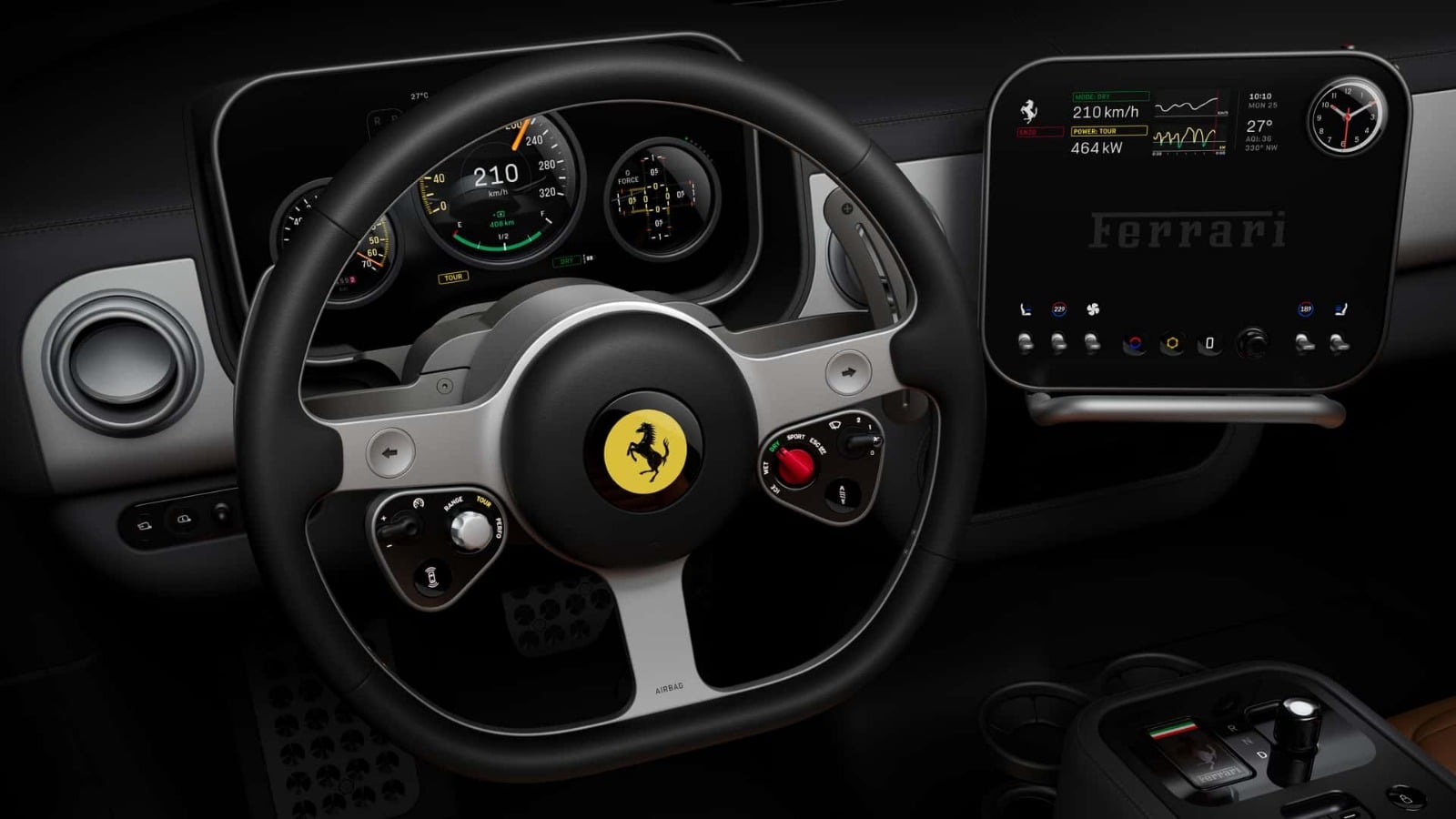
Ferrari has turned to space science to ensure that the transition to electric mobility does not erase the essence of its super sports cars. The Italian automaker’s CEO, Benedetto Vigna, has revealed unprecedented details about the development of the Luce EV, the brand’s first all-electric vehicle, detailing the complex engineering work focused on taming acceleration and preserving Maranello’s classic handling.
The executive explained that the instantaneous torque of the electric motors generates an excessively linear acceleration that, at extreme levels, can “disturb the human brain”. To get around this anatomical issue, Ferrari consulted medical centers and entered into a partnership with NASA. The goal of the joint study was to determine exactly what the limit of G-force and continuous acceleration is that begins to cause physical discomfort to occupants.
SEE ALSO:
For Vigna, driving pleasure involves multiple factors — referred to by the automaker as the “five pillars” of automotive emotion — that go far beyond speed statistics from zero to 100 km/h. Although competing brands bet on straight-line technical brutality, Ferrari argues that the true performance of a supercar lies in sensory perception.
In this context, the main dynamic challenge of the project lies in the transversal acceleration. The excess weight inherent in large battery packs can compromise directional stability and cause a feeling of disconnection or skidding when cornering. To prevent the car from looking heavy or artificial, the manufacturer works on reducing structural mass and strategically redistributing components in the chassis, bringing the Luce EV’s balance closer to that of its traditional combustion models.
Interactivity behind the wheel has also been rethought. Unlike other electric cars, which use steering wheel paddles primarily to adjust the level of regenerative braking, the Ferrari Luce will use this feature to modulate power delivery. According to the CEO, the system will provide a “torque shift”, simulating the jerks and engagement of a real transmission to ensure a visceral touch. With a range of around 500 kilometers, the model will have a strong vocation as a “Grand Tourer”, designed for prolonged use and not just for fast laps on the tracks.



