Project warns of waste of valuable metals in disposable electronics and proves feasibility of "free energy" with recycled materials
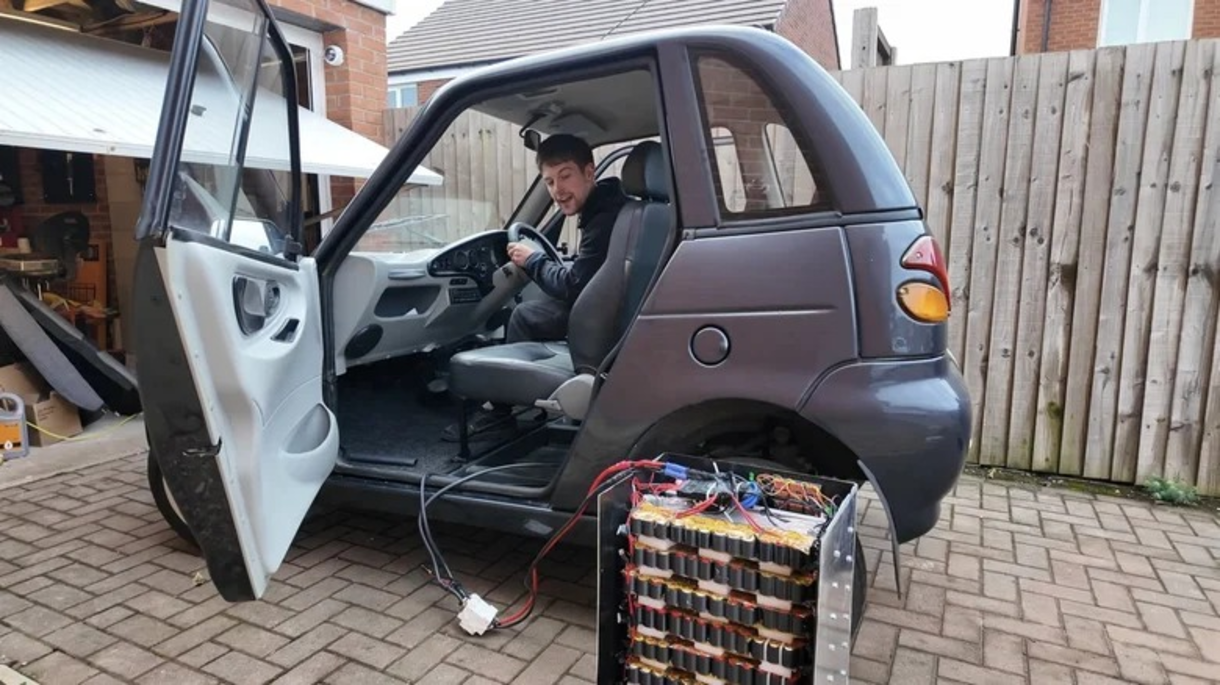
The British Chris Doel demonstrated, in his latest project, a more ‘sustainable’ use for 500 vapes deprived. By repurposing lithium-ion cells from e-cigarettes — which would otherwise be destined for landfills — Doel built a working battery to power a G-Wiz, an electric microcar known for its simplified mechanics.
The choice for the G-Wiz — technically a heavy electric quad bike — was not accidental. Because it had a rudimentary electrical system, the model allowed for custom battery adaptation without the software barriers and complex management systems found in modern electric vehicles such as Tesla’s.
SEE ALSO:
The handmade battery was made up of 500 individual cells extracted from discarded vaporizers. The resulting set stores approximately 2.5 kWh of energy and operates at a voltage of 50 volts — a value technically compatible with the 48 volts of the vehicle’s original lead-acid batteries. However, safety required constraints: while the G-Wiz can demand peaks of 350 amps, Doel limited the flow to 60 amps to prevent overheating of the recycled cells.
The performance results reflect this caution: the vehicle reaches a top speed of 56 km/h with power limited to 5 kW, offering a real range of around 29 kilometers per charge. During testing, the original regenerative braking system was preserved, being able to return 10 amps of current to the improvised battery pack.
Although the project highlights the potential to generate “free energy” from electronic waste, the author highlights the risks involved. Handling lithium cells without proper technical knowledge, for example, can cause serious fires, he warns.



