PEC guarantees safe and hygienic stopping points on the roads; see what changes in the working hours of professional drivers
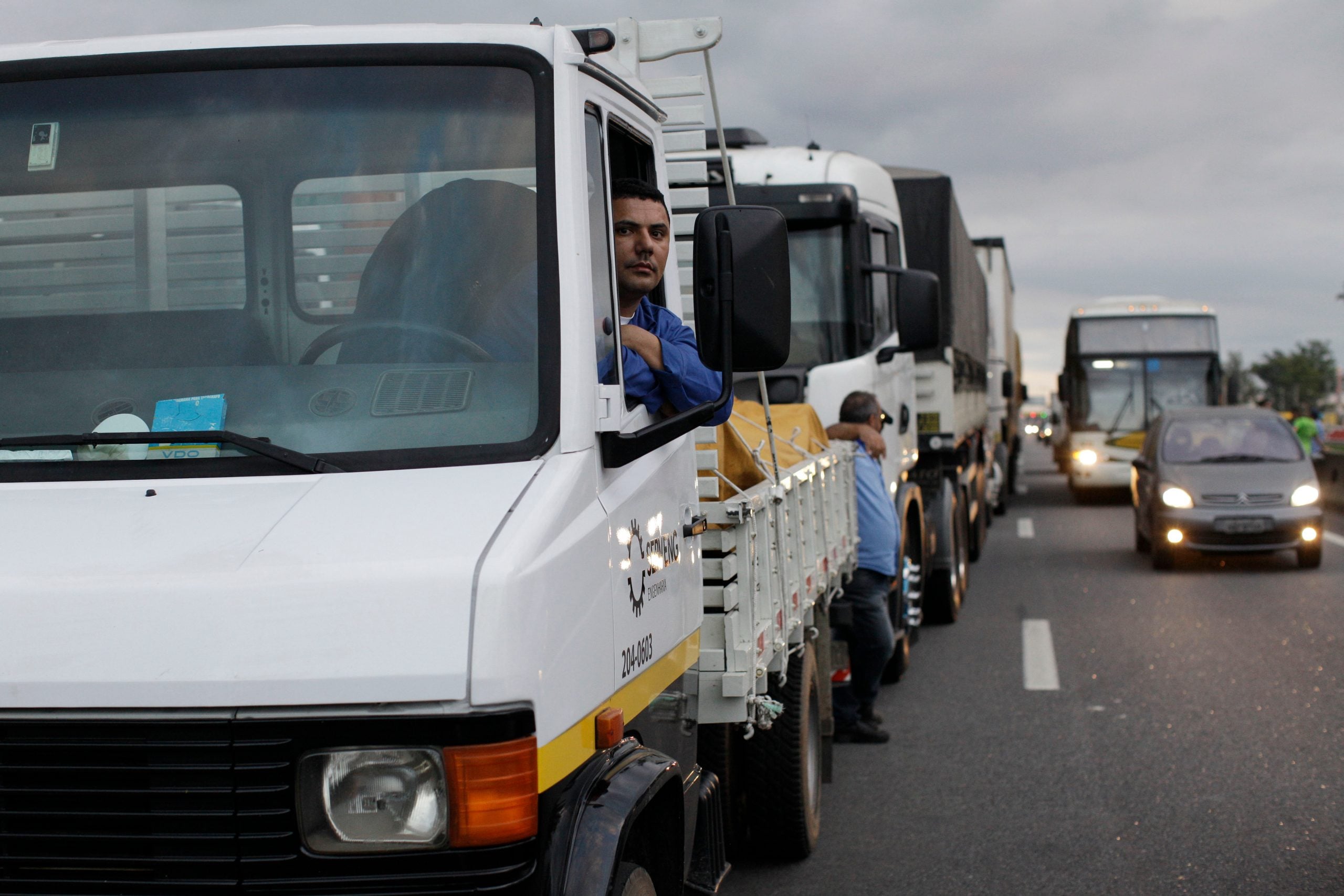
The Federal Senate unanimously approved, in two rounds, the Proposed Amendment to the Constitution that ensures the installation of stop and rest points for professional drivers at regular intervals on Brazilian highways. With 66 favorable votes in the first stage and 69 in the second, the matter now advances to the Chamber of Deputies for analysis.
The measure has as its main objective to correct distortions generated by Law 13.103/2015, known as the Truckers’ Law. The original text made it mandatory to comply with strict rest periods, but ran into the lack of adequate infrastructure on the roads, exposing professionals to insecurity and fatigue and generating undue fines.
SEE ALSO:
The new wording establishes the National Policy to Support the Activity of Professional Road Transport, determining that resting places offer minimum conditions of safety, hygiene and comfort. One of the most sensitive points for the category was pacified: until the rule is fully regulated, the driver cannot be fined or penalized for non-compliance with the rest interval if there is no adequate point previously recognized by the public authorities on the stretch traveled.
During the process, the rapporteur, Senator Esperidião Amin (PP-SC), accepted an amendment by Senator Efraim Filho (União-PB) that makes the workday more flexible. The change allows the fractionation of the daily rest interval and classifies as long-distance trips those lasting more than 24 hours. In these cases, the driver is guaranteed a minimum of eight hours of uninterrupted rest between journeys, which can be complemented by additional periods along the route.
The approval in the Legislature occurs in parallel with a movement to expand the Stop and Rest Points (PPDs) on federal highways managed by the private sector. According to the National Land Transport Agency (ANTT), eight units are already in operation on BRs 101, 153, 116 and 163, serving strategic logistics routes in the states of Santa Catarina, Goiás, Tocantins, Rio de Janeiro, Minas Gerais, São Paulo and Pará.



