During a holiday in China, manufacturer Nio set records for its system that changes the battery of electric cars instead of recharging them
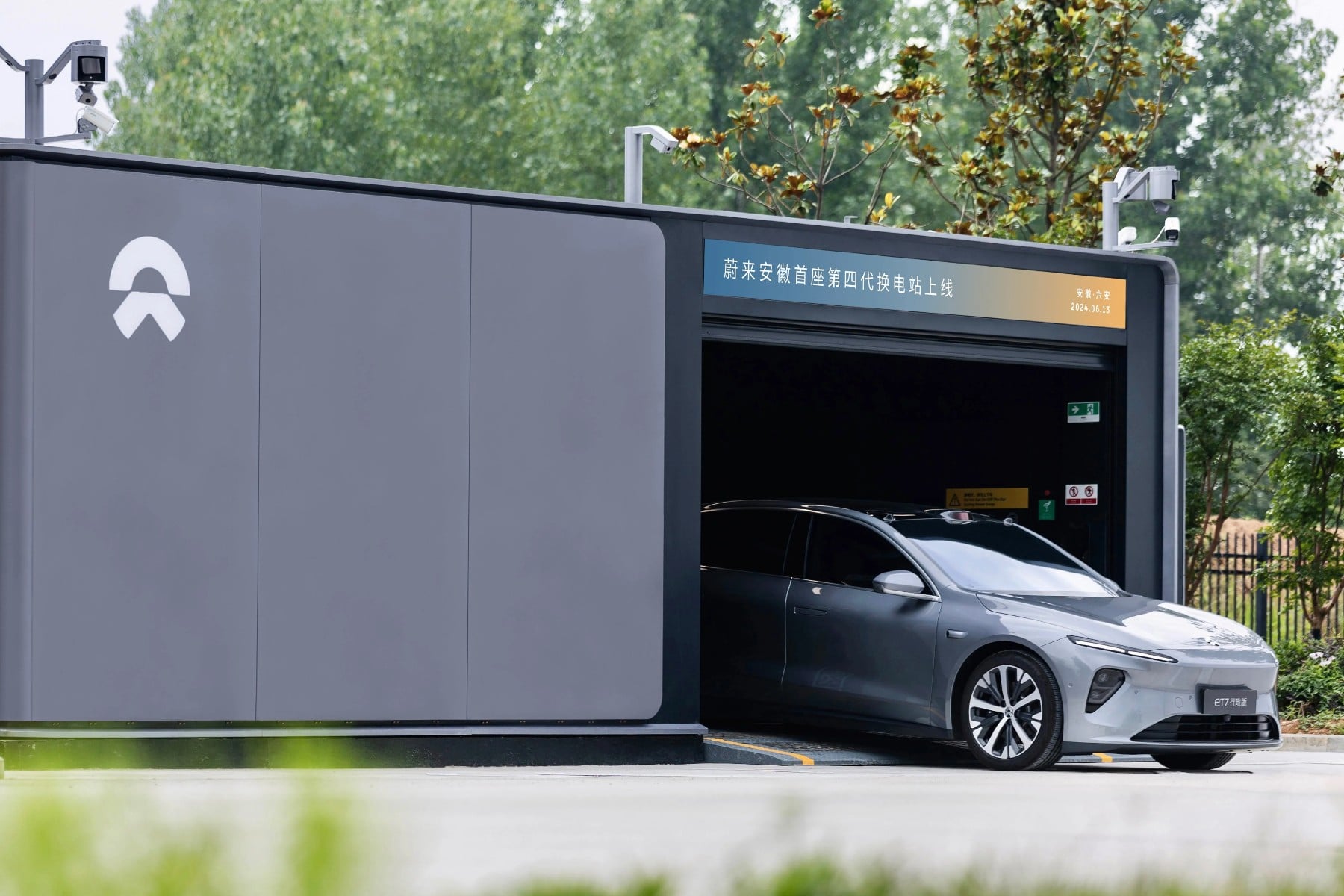
Driven by the intense influx of Lunar New Year travel, Chinese automaker Nio recorded daily battery change records for four consecutive days in February 2026. The peak of demand was reached on Saturday (21), with the impressive mark of 175,976 replacements in 24 hours. In practical terms, the network served one vehicle every half a second in China, attesting to the capacity of its infrastructure for extreme on-demand exchanges.
The sequence of records began on February 18, with 158,290 exchanges, a volume that gradually grew until the apex on the 21st. The feat takes place in the same month that the company celebrated the historic milestone of 100 million changes made since its foundation, validating once and for all the replaceable battery model in the largest automotive market in the world.
SEE ALSO:
Nio’s system has evolved significantly since 2018. In the first stations installed, the replacement process took almost five minutes, the compartments stored only five batteries and the daily capacity did not exceed 120 calls, even requiring manual assistance for the proper positioning of the cars.
Currently, with the implementation of the fourth generation units, the physical change time has plummeted to just 2 minutes and 24 seconds. The storage capacity jumped to 23 batteries per point, which allows up to 480 daily services to be carried out in each location, speeding up the flow of customers in an unprecedented way.
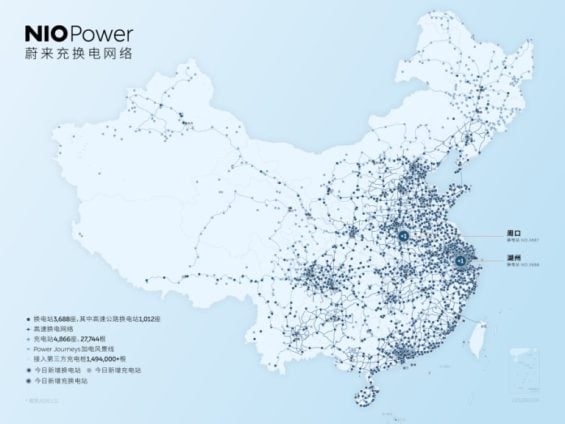
Throughout China, Nio already operates more than 8,600 stations, of which 3,700 are exclusively for battery swapping and about a thousand are strategically installed along highways. This capillarity enables long-distance travel without the so-called “autonomy anxiety”, connecting the highways of 16 large urban agglomerations and more than 550 cities.
For 2026, the automaker’s schedule foresees the start of large-scale construction of the fifth-generation stations and the addition of a thousand new units to the network. The plan also includes the inauguration of a 3,133-kilometer electric route to the west, the Silk Road, which will have 33 dedicated stations. The expansion reinforces the thesis that quick-change infrastructure is scalable and represents a concrete solution for the future of sustainable electric mobility.



