Verticalization and control of battery production give Asian automakers an advantage over traditional competitors
The opening of new factories and the expansion of operations by Chinese automakers in Brazil will keep vehicles of these brands at lower prices than traditional competitors in the domestic market. The indication is from a study by the Zag Work consultancy, published by Folha de S. Paulo, which points to production efficiency and the integration of the supply chain as the real responsible for this competitive advantage, relegating government subsidies to a secondary role.
By nationalizing production, Asian manufacturers are able to import domestically developed components at significantly lower operating costs. The survey illustrates this structural disparity with the values practiced in the market of origin of the brands. In China, a Tesla Model 3 is priced at $28,893. On the other hand, an equivalent vehicle from a local automaker is sold for US$ 24,190. The survey attributes this difference to the verticalization of manufacturing and the optimization of resources in areas such as research, development and administrative management.
SEE ALSO:
The industrial strategy of these companies is based on the direct control of essential components for vehicles. The manufacture of batteries generates significant gains in scale, a result recorded in the balance sheet of the Chinese industry in 2025, which accounted for the production of 34.5 million automobiles – a volume higher than the sum of the units manufactured in the United States and Europe. With idle capacity in their headquarters, the companies redirected their focus to the export and supply of parts to subsidiaries installed in countries such as Brazil.
For Rogelio Golfarb, founder of Zag Work, the consolidated vertical integration in Asia shields the Brazilian operation against cost fluctuations. Given this scenario, the consultancy projects that Chinese brands will reach 35% share of sales in Brazil by 2035. The growth is driven by the profile of the national consumer: data from Webmotors Autoinsights indicate that 40% of buyers prioritize SUVs, the exact segment that concentrates the assembly lines of these automakers.
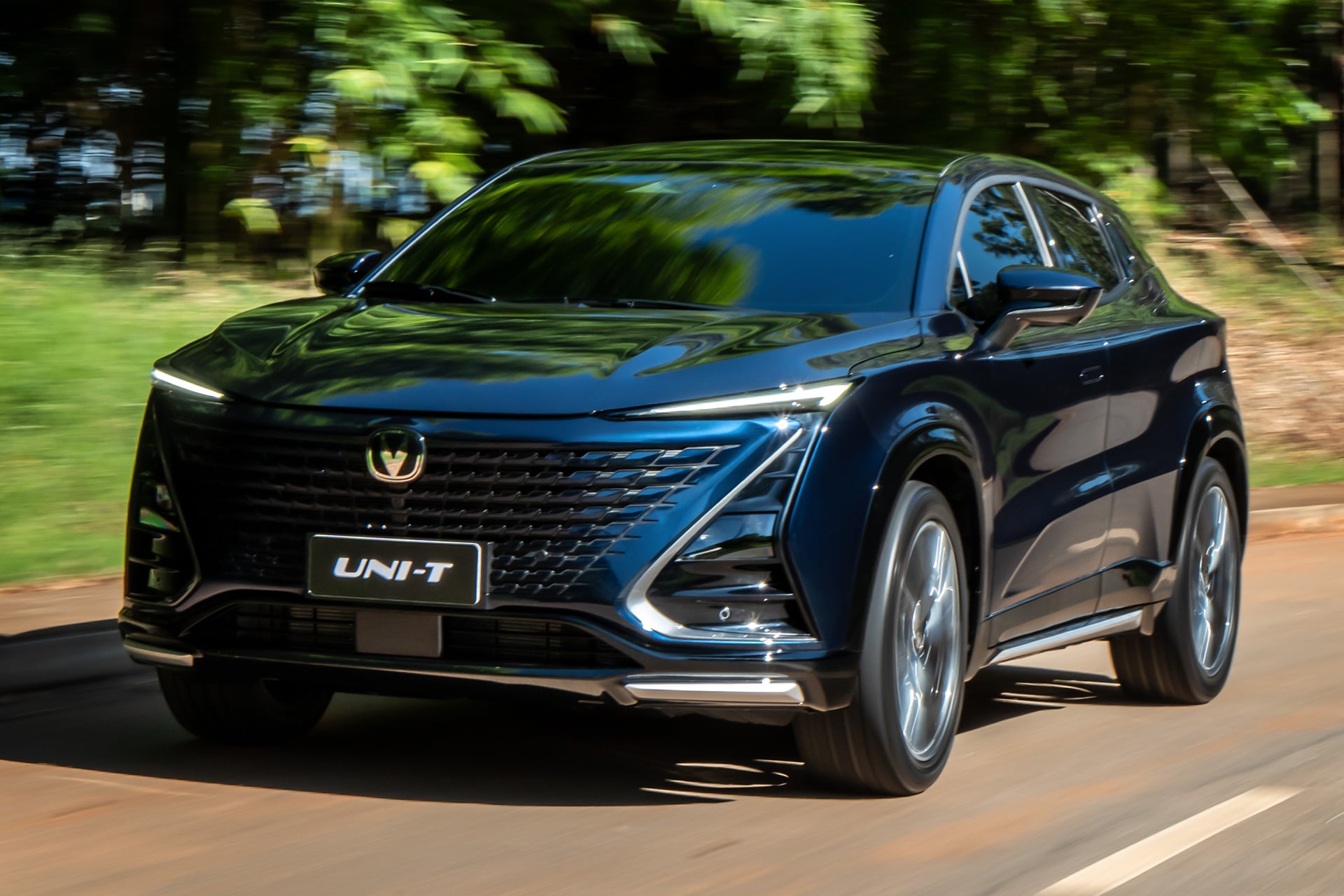
An example of this offensive in the local market is Caoa Changan Uni-T. The utility is equipped with a 1.5 turbo flex engine with 180 hp and 30,6 kgfm, sold with a starting price of R$ 169.990.



