Patent at the INPI anticipates a robust utility vehicle larger than the Bronco Sport; model combines electric motors and combustion generator.
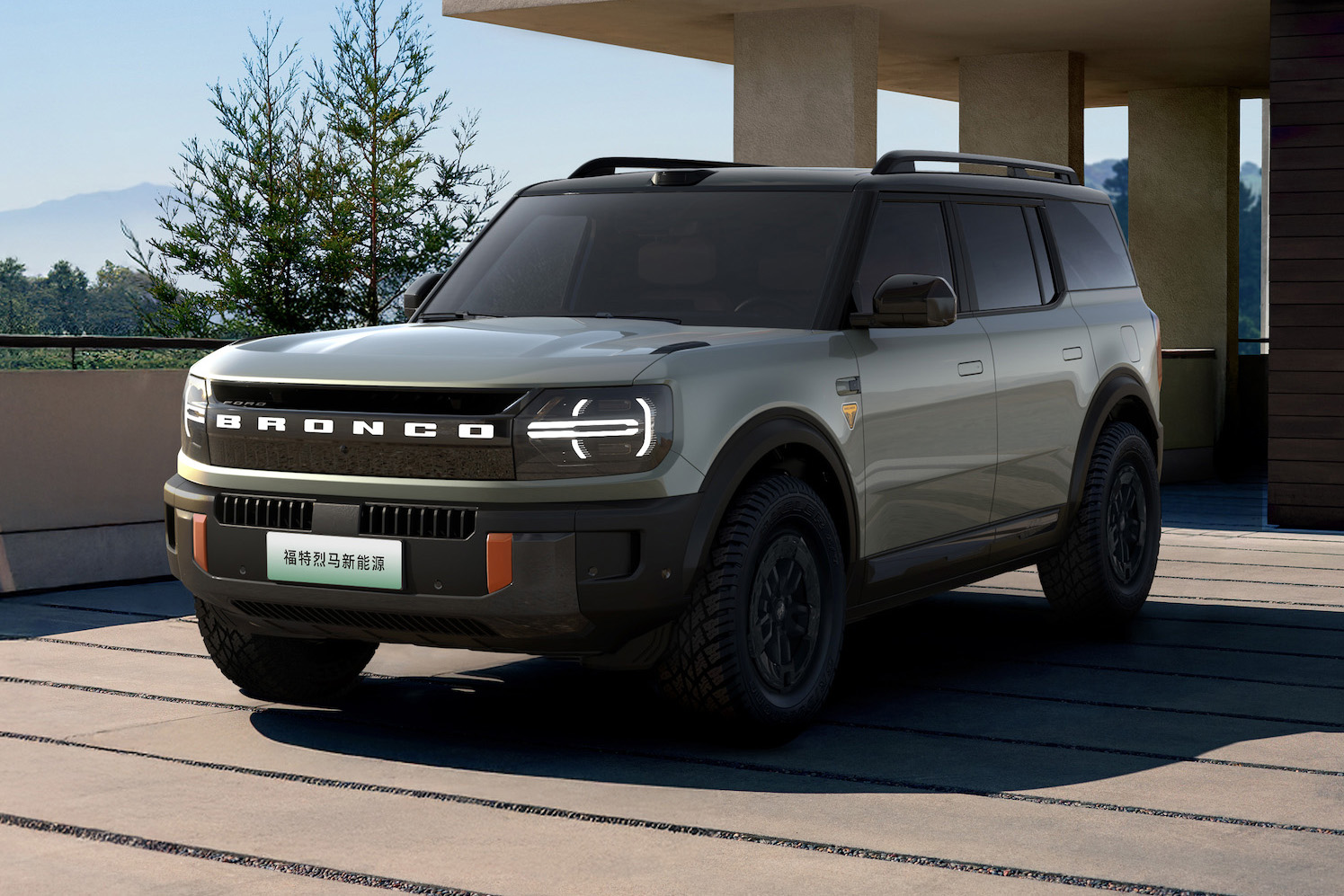
Ford has filed with the INPI (National Institute of Industrial Property) the industrial designs of the new Chinese Ford Bronco, 100% electric, raising speculation that the ‘electric Broncão’ may reach the national market.
Unlike a simple adaptation of a combustion car, the model was designed on an architecture dedicated to electrification, which allowed engineering to adopt specific design and space use solutions.
SEE ALSO:

In the Chinese market, the utility is offered in two engine configurations. The purely electric version (BEV) is equipped with two motors — one on each axle — which deliver a combined power of 445 hp and torque of 72.4 kgfm. The set is powered by a 105.4 kWh battery, giving a range of approximately 650 km by the CLTC cycle.
The second option uses an extended range system (EREV). Although it maintains all-wheel drive and two electric motors (with about 416 hp and 77,5 kgfm), this version incorporates a combustion engine that works exclusively as an energy generator, without mechanical connection to the wheels. With this technology, the vehicle can surpass the 1,200 km mark of combined range.
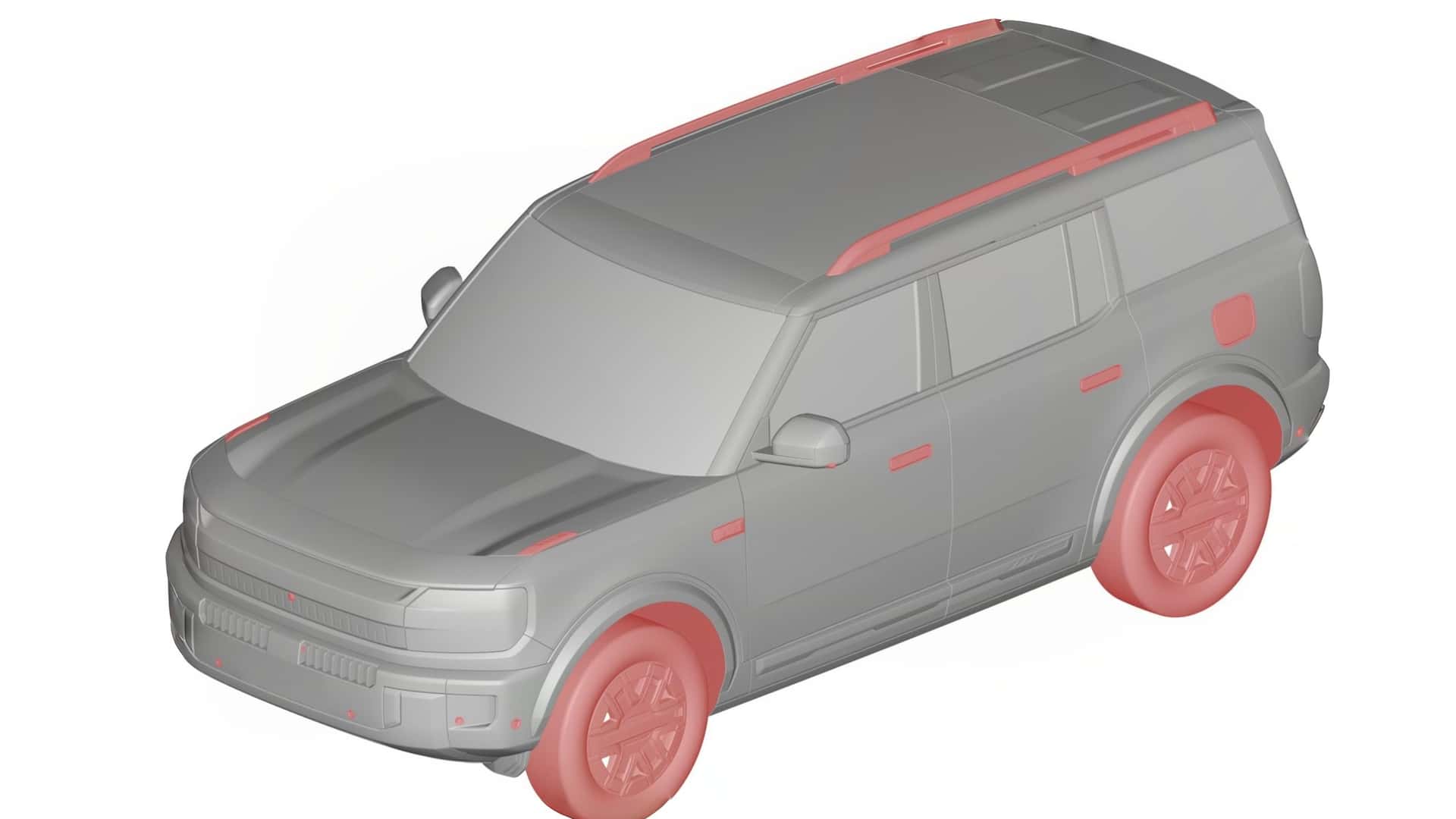
Aesthetically, the records in Brazil confirm the fidelity to the Asian project. The boxy silhouette and flat roof preserve the robust DNA of the line, while the closed front grille and cleaner surfaces denote the aerodynamic efficiency necessary for electric cars. A functional highlight of the BEV version is the presence of a front trunk (frunk), made possible by the absence of the combustion engine under the hood, ideal for storing charging cables.
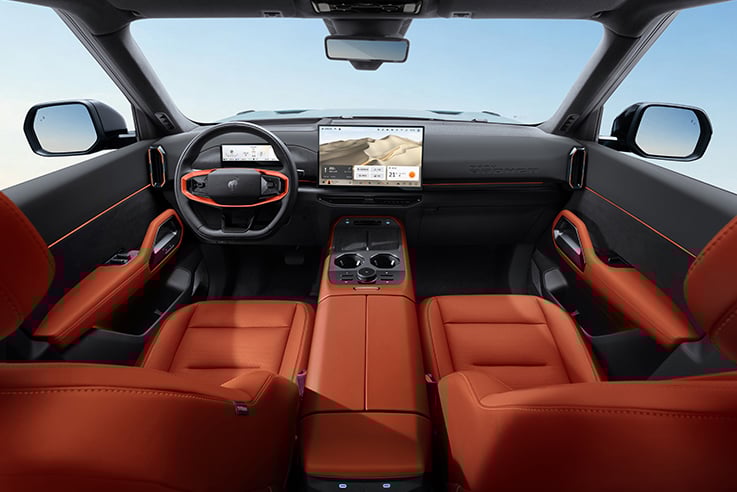
The interior follows the segment’s digitalization trend, with large screens for instrumentation and infotainment, as well as advanced driving assistance systems (ADAS). The registration of the patent does not confirm the immediate launch, but it ensures the protection of Ford’s intellectual property in the country for eventual future commercialization.



